
Why Electronic Stability Control Matters for Everyday Driving
>> Automobile>> Why Electronic Stability Control Matters for Everyday Driving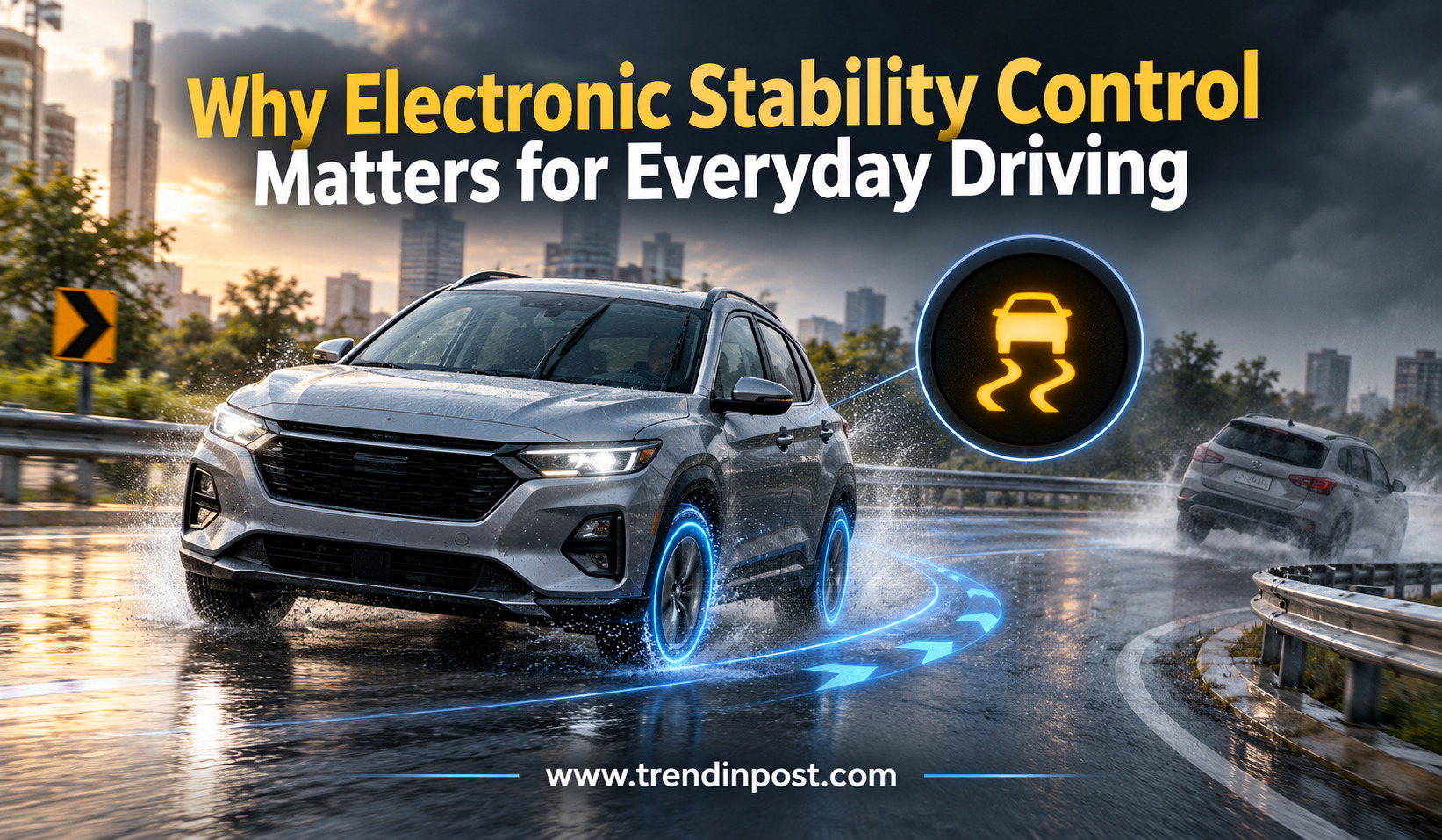
Why Electronic Stability Control Matters for Everyday Driving
Modern cars are equipped with more safety technology than ever before, but some features work so quietly that drivers may rarely notice them. Electronic Stability Control, commonly known as ESC, is one of those important technologies. It does not make headlines like airbags, advanced driver assistance systems or automatic emergency braking, yet it can play a crucial role when a vehicle begins to lose control.
For everyday drivers, ESC is particularly useful because unexpected situations can happen during normal journeys. A sudden obstacle, slippery road, sharp steering movement or loss of traction can cause a vehicle to move away from the direction the driver intended. ESC is designed to recognize this type of instability and help the driver regain control.
As road safety continues to become a bigger consideration for car buyers, understanding how stability control works can help people make better-informed decisions when choosing a vehicle.
What Is Electronic Stability Control?
Electronic Stability Control is an electronic safety system that monitors a vehicle’s movement and compares it with the driver’s steering input. When the system detects that the vehicle is not following the intended path, it can automatically apply braking to individual wheels and, in some situations, reduce engine power.
The purpose is not to take over driving. Instead, ESC works in the background to assist the driver when the car begins to skid or become unstable.
For example, imagine a driver turning sharply to avoid an unexpected obstacle. The steering wheel may be turned in one direction while the vehicle’s actual movement starts heading somewhere else. ESC can identify this difference and intervene quickly to help bring the vehicle closer to the driver’s intended path.
This intervention can happen within fractions of a second, making the technology particularly valuable during emergency situations when a driver may not have enough time to react perfectly.
How Does ESC Work?
ESC relies on several sensors positioned around the vehicle. These sensors continuously monitor information such as steering angle, wheel speed, vehicle rotation and lateral movement. A computer analyzes this information to determine whether the car is behaving as expected.
Under normal conditions, the system does nothing noticeable. The driver remains fully responsible for steering, acceleration and braking.
When the system detects instability, however, it can selectively brake one or more wheels. The system may also reduce engine torque depending on the situation. By making these small adjustments, ESC attempts to stabilize the vehicle and help it follow the driver’s steering direction.
The technology becomes especially relevant when there is a difference between where the driver wants the car to go and where the vehicle is actually moving.
Why ESC Matters in Everyday Driving
Stability control is not only useful for high-speed driving or extreme road conditions. Everyday roads can produce situations where traction suddenly changes. Wet surfaces, loose gravel, uneven roads and abrupt steering inputs can all affect vehicle stability.
One of the biggest advantages of ESC is that it can respond when a driver makes an emergency maneuver. A person may instinctively turn the steering wheel quickly to avoid another vehicle, pedestrian or road hazard. While avoiding the obstacle is important, a sudden steering movement can sometimes make the vehicle unstable.
ESC can help reduce the consequences of such instability by applying braking forces to individual wheels.
This can be particularly useful for drivers who may not have advanced vehicle-control skills. While ESC cannot eliminate every accident, it provides an additional layer of electronic assistance during situations where maintaining the intended path becomes difficult.
ESC and Wet Roads
Rain can significantly change driving conditions. Water reduces the available grip between tires and the road, while standing water can create additional risks. If a vehicle begins to lose traction while cornering, the driver may find it difficult to correct the movement quickly.
ESC can help when the vehicle starts to deviate from its intended direction. The system can detect the difference between steering input and actual vehicle movement and make braking adjustments designed to improve stability.
However, drivers should not treat ESC as permission to drive faster in poor weather. Tires, road speed and driving behavior remain critical factors. ESC is a safety aid, not a replacement for careful driving.
Understeer and Oversteer: Where ESC Can Help
Two common forms of vehicle instability are understeer and oversteer.
Understeer occurs when the front tires lose grip and the vehicle turns less than the driver expects. The car may continue moving toward the outside of a corner despite the steering input.
Oversteer happens when the rear of the vehicle loses grip and begins moving outward. This can cause the car to rotate more than the driver intended.
ESC is designed to identify these types of directional instability and intervene where appropriate. By controlling braking at individual wheels and potentially reducing engine power, the system can help the vehicle return toward a more stable path.
The actual response depends on the vehicle, road conditions, tire grip and the severity of the situation.
ESC vs Traction Control
ESC and traction control are related technologies, but they do not perform exactly the same job.
Traction control primarily focuses on preventing excessive wheelspin during acceleration. If a driven wheel loses grip, the system can reduce engine power or apply braking to help restore traction.
ESC has a broader purpose. It monitors the vehicle’s overall directional stability and can intervene when the car begins moving differently from the driver’s intended direction.
In many modern vehicles, these systems work together as part of an integrated electronic safety system.
| Feature | Main Purpose | Typical Situation |
| ABS | Helps prevent wheel lock during braking | Hard braking |
| Traction Control | Limits excessive wheelspin | Acceleration on slippery surfaces |
| ESC | Helps maintain directional stability | Skidding or sudden maneuver |
| Brake Assist | Helps provide stronger braking support | Emergency braking |
Why ESC Is Important for Different Types of Drivers
Different drivers can benefit from electronic stability control. New drivers may not have enough experience to correct a sudden skid smoothly. Experienced drivers can also make mistakes when confronted with an unexpected road hazard.
Urban driving creates its own challenges. Traffic can change quickly, and drivers may need to brake or steer suddenly. On highways, higher speeds mean that losing directional stability can become more serious.
ESC can therefore provide an additional safety margin across different driving environments. It is not limited to a particular type of driver or road.
ESC Does Not Replace Good Driving Habits
Although ESC is an important safety feature, drivers should understand its limitations. The system cannot create additional tire grip when the road surface provides very little traction.
For example, driving too fast on a wet or icy road can still be dangerous even when ESC is active. Worn tires, incorrect tire pressure and poor road conditions can also reduce overall vehicle control.
Drivers should continue to maintain appropriate speeds, leave sufficient following distance and use smooth steering and braking inputs.
The most effective approach is to consider ESC one part of a wider vehicle safety package rather than a system that guarantees protection.
What Should Car Buyers Check?
When purchasing a new or used vehicle, safety equipment should be considered alongside price, performance, fuel economy and comfort. Buyers should confirm what electronic stability features are included in the specific variant they are considering.
It is also worth understanding whether the vehicle offers additional technologies such as ABS, traction control, hill-start assistance and other driver-assistance features.
A vehicle with a strong combination of passive and active safety systems can provide greater protection across a wider range of driving situations.
Key things to consider include:
- Whether ESC is standard on the specific variant
- The condition and quality of the tires
- ABS and traction-control availability
- Other active safety technologies
- Vehicle safety ratings and crash-test performance
The Growing Role of Electronic Safety Technology
Vehicle safety has moved beyond simply protecting occupants after a crash. Modern systems increasingly focus on helping drivers avoid losing control in the first place.
ESC represents an important part of this transition. Its ability to monitor vehicle movement continuously means it can respond faster than a driver might be able to in some emergency situations.
As cars become increasingly connected and software-driven, electronic safety systems are likely to become even more sophisticated. However, the basic objective remains the same: help drivers maintain control when conditions suddenly become difficult.
For everyday motorists, that makes ESC more than just another feature listed in a vehicle brochure. It is a technology designed to provide assistance precisely when a normal journey takes an unexpected turn.
Final Thoughts
Electronic Stability Control may operate quietly in the background, but its contribution to everyday vehicle safety can be significant. By monitoring steering input and vehicle movement, the system can detect instability and make rapid braking or power adjustments to help keep the car on its intended path.
Its value becomes especially clear during sudden maneuvers, slippery conditions and situations where a vehicle begins to skid. At the same time, ESC should never encourage drivers to ignore road conditions or exceed safe speeds.
For car buyers, checking for ESC is therefore a sensible part of evaluating a vehicle’s safety equipment. Combined with good tires, responsible driving and other safety technologies, stability control can provide an important extra layer of protection on everyday journeys.
FAQs
1. What does ESC mean in a car?
ESC stands for Electronic Stability Control. It is a safety system that helps a vehicle maintain directional stability when it detects that the car is beginning to skid or move away from the driver’s intended path.
2. Is ESC the same as traction control?
No. Traction control mainly helps prevent wheelspin during acceleration, while ESC focuses more broadly on maintaining the vehicle’s directional stability.
3. Does ESC work on wet roads?
Yes. ESC can assist when a vehicle begins to lose directional stability on wet or slippery roads. However, it cannot overcome the basic limits of tire grip, so drivers still need to reduce speed and drive carefully.
4. Can ESC prevent every accident?
No. ESC can help reduce the risk of losing control in certain situations, but it cannot prevent every crash. Driver behavior, road conditions, tires and vehicle speed remain extremely important.
5. Should I look for ESC when buying a car?
Yes. ESC is an important active safety feature and should be considered when comparing vehicles, along with ABS, traction control, airbags and other available safety technologies.
Related Post

What Makes Honda Scooters Popular Among Urban Riders?
Honda scooters have become a familiar sight on Indian city roads. From crowded office routes…