
What Makes a Car Safer for Long Highway Journeys?
>> Automobile>> What Makes a Car Safer for Long Highway Journeys?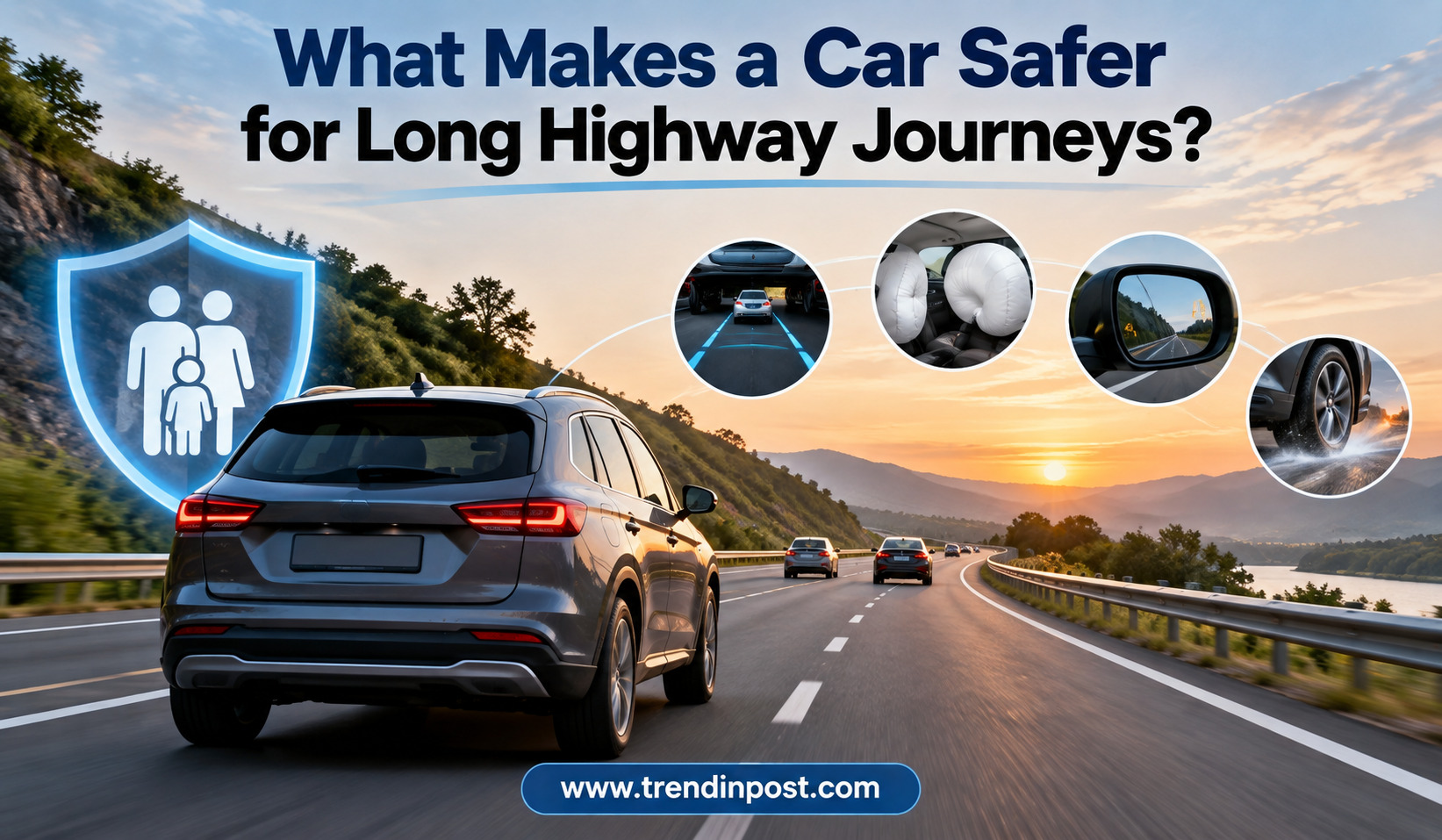
What Makes a Car Safer for Long Highway Journeys?
Long highway journeys can be comfortable and enjoyable, but they also place different demands on a vehicle compared with short city trips. Higher speeds, longer driving hours, changing weather and fast-moving traffic mean that vehicle safety becomes especially important. For this reason, buyers looking for a car for frequent road trips are increasingly paying attention to safety equipment, driving comfort and vehicle stability rather than focusing only on engine performance or fuel economy.
A safe highway car is not defined by a single feature. Instead, it combines strong structural protection, effective braking, stable handling, good visibility and technologies that can help the driver recognize potential hazards. Driver behavior remains the most important factor, but a well-equipped vehicle can provide an additional layer of protection when unexpected situations occur.
Strong Vehicle Structure Is the First Line of Protection
The physical structure of a car plays an important role in occupant safety. During a collision, the body structure is expected to manage crash energy while maintaining a protective space around passengers.
Modern vehicles are engineered with different structural zones designed to deform in controlled ways during an impact. At the same time, the passenger compartment is designed to provide greater resistance to deformation.
For highway travel, this becomes particularly important because collisions at higher speeds can involve considerable energy. Buyers should therefore look beyond the number of airbags and consider the overall crash performance of the vehicle.
Independent crash-test ratings can provide useful information because they assess how a particular vehicle performs in controlled collision scenarios. However, ratings should be considered alongside the vehicle’s available safety equipment and the specific variant being purchased.
Reliable Braking Is Essential at Highway Speeds
Braking performance becomes increasingly important as vehicle speed rises. A car traveling quickly covers a significant distance before the driver can even begin responding to a hazard.
Anti-lock braking systems, commonly known as ABS, help prevent the wheels from locking during hard braking. This can allow the driver to maintain steering control while slowing the vehicle.
Electronic Brakeforce Distribution can also help distribute braking force according to the vehicle’s conditions, while Brake Assist can provide additional braking support when the system detects an emergency stop.
These technologies work together to improve control, but they cannot overcome the limits of tire grip or poor driving decisions. Maintaining a safe speed and leaving sufficient distance from the vehicle ahead remain essential.
Electronic Stability Control Adds Another Safety Layer
Highway conditions can change quickly. A sudden steering maneuver to avoid an obstacle may cause a vehicle to become unstable, particularly if the road surface is wet or slippery.
Electronic Stability Control, or ESC, monitors vehicle movement and steering inputs. If it detects that the car is beginning to move differently from the driver’s intended direction, it can selectively apply braking and, in some situations, reduce engine power.
This technology is valuable because drivers may not always have enough time or experience to correct a skid smoothly. ESC does not make a car immune to losing control, but it can provide important assistance when the vehicle begins to deviate from its intended path.
Tires Have a Major Impact on Highway Safety
Even a car equipped with advanced safety technology depends heavily on its tires. Tires are the only components directly connecting the vehicle to the road, which makes their condition critical for braking, cornering and acceleration.
Tire pressure should be checked regularly, particularly before a long journey. Underinflation or overinflation can affect handling and braking behavior. Uneven tread wear should also be addressed before undertaking a lengthy highway trip.
Drivers should pay attention to tread depth and visible damage as well. A tire that appears acceptable for short city journeys may not be suitable for extended high-speed driving.
Before a long highway journey, drivers should check:
- Tire pressure and tread condition
- Spare tire or tire-repair equipment
- Brake condition
- Headlights, indicators and other exterior lights
These simple checks can prevent minor vehicle problems from becoming major concerns during a road trip.
Driver-Assistance Technology Can Reduce Workload
Modern cars increasingly offer driver-assistance systems designed to support drivers during highway travel. These technologies do not turn a conventional vehicle into a fully autonomous car, but they can help reduce certain risks.
Adaptive Cruise Control, for example, can automatically adjust the vehicle’s speed to maintain a selected gap from traffic ahead. This can make long stretches of highway driving less tiring when traffic conditions are suitable.
Lane Departure Warning can alert the driver if the vehicle begins drifting from its lane without an apparent steering correction. Some vehicles also offer Lane Keeping Assist, which can provide limited steering assistance.
Blind Spot Monitoring is another useful feature. It can warn drivers about vehicles traveling alongside or slightly behind the car, an area that may be difficult to see through conventional mirrors.
Safety Technology and Highway Driving
| Safety Feature | Main Benefit | Highway Use |
| ABS | Helps prevent wheel lock during hard braking | Emergency stops |
| ESC | Helps maintain directional stability | Sudden maneuvers |
| Adaptive Cruise Control | Helps maintain a selected gap | Long highway stretches |
| Blind Spot Monitoring | Warns about vehicles in difficult-to-see areas | Lane changes |
| Lane Keeping Assist | Provides steering support during lane drift | Extended highway driving |
| Forward Collision Warning | Alerts about potential frontal collisions | Traffic and sudden slowing |
The usefulness of these technologies depends on the vehicle, road conditions and the driver’s understanding of the system. Drivers should always read the owner’s manual before relying on advanced assistance features.
Good Visibility Can Make a Major Difference
A safe highway car should provide the driver with a clear view of the road and surrounding traffic. Visibility is sometimes overlooked when buyers compare specifications, but it can have a direct impact on decision-making.
Large blind spots can make lane changes more difficult, while poorly positioned mirrors can limit awareness of vehicles approaching from behind. A well-designed driving position, effective mirrors and appropriately sized windows can make it easier to monitor surrounding traffic.
Automatic headlights, rain-sensing wipers and rear-view cameras can also support visibility in changing conditions. However, these features should complement, rather than replace, active observation by the driver.
Comfortable Seating Is Also a Safety Consideration
Comfort may not initially appear to be a safety feature, but it matters during long-distance driving. A driver sitting in an uncomfortable position for several hours can become tired, distracted or less responsive.
Seat support, steering-wheel adjustment and a suitable driving position can help reduce physical fatigue. Good cabin ergonomics allow the driver to operate controls without taking unnecessary attention away from the road.
Climate control can also contribute to comfort during long journeys. A cabin that becomes excessively hot or cold may increase discomfort and distraction.
The goal is not simply to create a luxurious interior. A well-designed driving environment helps the driver remain comfortable and focused for longer periods.
Driver Fatigue Remains a Major Risk
Even the safest car cannot compensate for a severely tired driver. Highway journeys often involve extended periods of repetitive driving, and fatigue can gradually reduce reaction speed and concentration.
Some modern vehicles offer driver-attention monitoring systems that can identify patterns associated with reduced alertness. These systems may provide a warning suggesting that the driver take a break.
However, technology should not be used as a substitute for rest. Drivers should plan breaks during long trips and avoid continuing when they feel sleepy.
Good highway-driving habits include:
- Taking regular breaks on long journeys
- Maintaining a safe following distance
- Avoiding excessive speed
- Staying focused instead of using a phone while driving
These habits remain important regardless of how many safety systems a vehicle provides.
Lighting and Visibility in Poor Weather
Highway journeys may involve driving at night, during heavy rain or through areas with reduced visibility. Effective lighting can therefore be an important part of vehicle safety.
LED headlights can provide strong illumination on some vehicles, while automatic high-beam systems can adjust lighting depending on surrounding traffic. Fog lamps and effective rear lighting may also help in specific conditions.
Rain can make road markings and other vehicles more difficult to see. Good windshield wipers, a clean windshield and functioning lights can make a meaningful difference.
Drivers should also remember that advanced lighting technology does not eliminate the need to reduce speed when visibility becomes poor.
What Should Buyers Look for in a Highway Car?
When evaluating vehicles for frequent highway travel, buyers should consider the complete safety package rather than focusing on one specification. A car with strong crash protection, dependable braking, stable handling and useful driver assistance can offer a more balanced safety proposition.
Crash-test performance is an important starting point, but the exact variant matters too. A particular safety feature may be standard on one trim and optional or unavailable on another.
It is also worth considering tire quality, seating comfort, visibility and the ease with which the driver can operate important controls.
The Growing Importance of Active Safety
The automotive industry is increasingly moving toward technologies that can help drivers avoid crashes rather than only protect occupants after an impact. Features such as automatic emergency braking, blind spot detection and adaptive cruise control are becoming more widely available.
This shift is particularly relevant for highway driving, where vehicles operate at higher speeds and unexpected changes in traffic can happen quickly.
However, these systems are best understood as driver assistance. They are not a replacement for attention, judgment or responsible driving.
Final Thoughts
A safer car for long highway journeys is the result of several factors working together. Strong construction provides protection during a crash, while ABS and ESC help the driver maintain control. Quality tires, good visibility and effective lighting support everyday vehicle operation, while modern driver-assistance technologies can provide additional warnings and assistance.
Comfort and fatigue management also deserve attention because a driver who remains alert and physically comfortable is better positioned to respond to changing road conditions.
For buyers planning frequent highway travel, the best approach is to look at the vehicle as a complete safety package. Instead of choosing a car based on one impressive feature, consider its crash performance, braking, stability, visibility, tires, driver-assistance systems and overall driving environment.
Ultimately, technology can support safer journeys, but responsible driving remains at the center of highway safety.
FAQs
1. What is the most important safety feature for highway driving?
There is no single feature that guarantees safety. Strong crash protection, ABS, ESC, good tires and effective driver-assistance systems can work together to provide a stronger overall safety package.
2. Is Electronic Stability Control important for highway travel?
Yes. ESC can help a vehicle maintain directional stability when it detects a skid or sudden change in vehicle movement.
3. Are advanced driver-assistance systems necessary for long trips?
They are not essential, but features such as adaptive cruise control, blind spot monitoring and lane assistance can provide useful support during extended highway driving.
4. How important are tires for highway safety?
Tires are extremely important because they provide the vehicle’s contact with the road. Correct pressure, sufficient tread and good overall condition are essential for safe braking and handling.
5. Does a comfortable car make highway driving safer?
Comfort can contribute to safety by helping reduce driver fatigue and discomfort during long journeys. A supportive seat and good driving position can help the driver remain focused.
Related Post

Ather Electric Scooters: What Makes Them Different?
Ather has developed a distinctive position in India's electric scooter market by treating an electric…