
Honda QC3 Electric Scooter: Price, Claimed Range and Charging Details
>> Automobile>> Honda QC3 Electric Scooter: Price, Claimed Range and Charging Details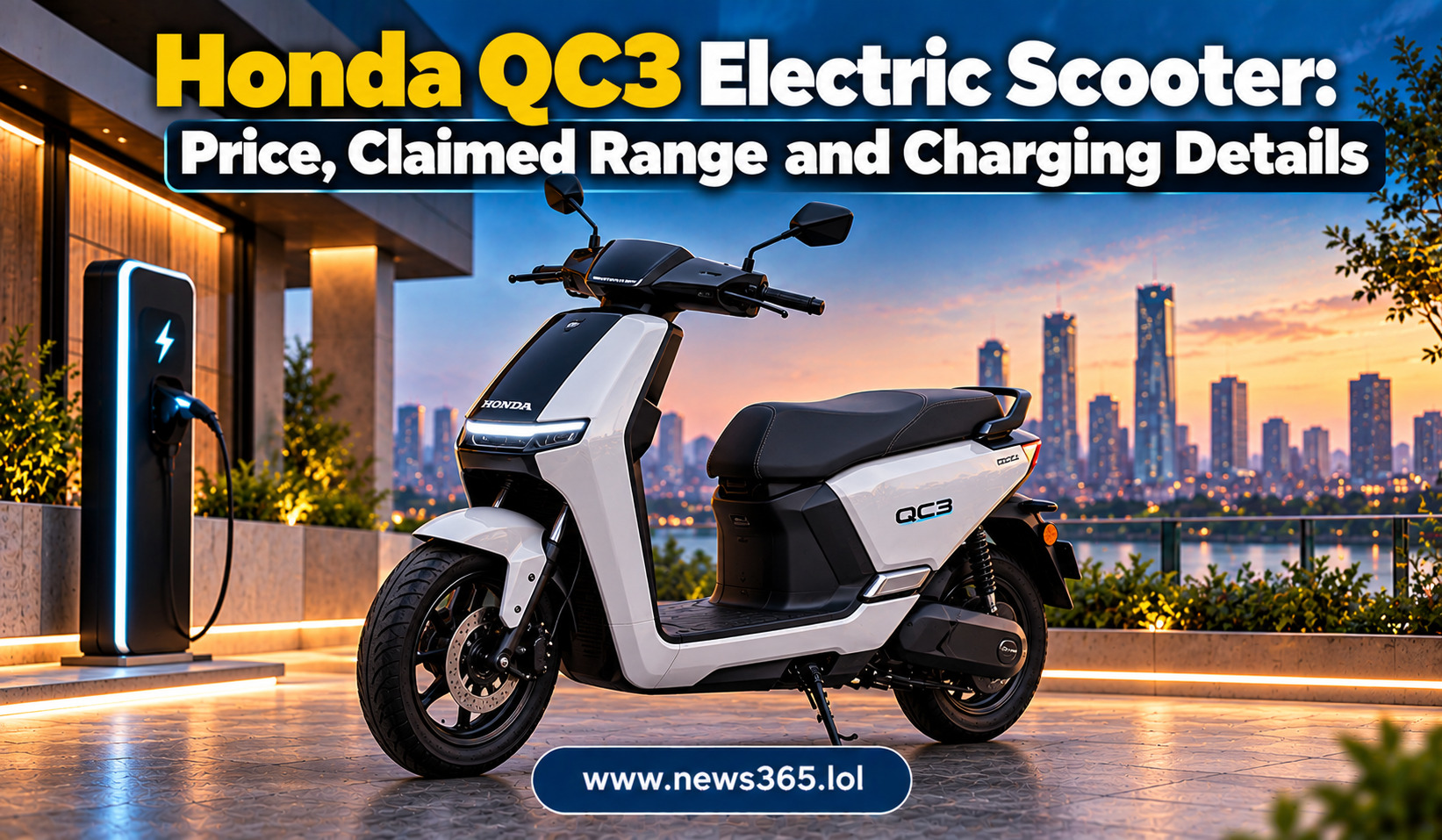
Honda QC3 Electric Scooter: Price, Claimed Range and Charging Details
Honda Motorcycle & Scooter India (HMSI) has expanded its electric two-wheeler portfolio with the Honda QC3, a family-oriented electric scooter designed for everyday commuting. With a 3kWh battery, a claimed range of 145km, connected technology and generous under-seat storage, the QC3 aims to offer a practical alternative to conventional petrol scooters.
The QC3 is Honda’s third electric scooter for the Indian market, joining the QC1 and Activa e:. Unlike the Activa e:, which uses removable batteries, the QC3 comes with a fixed battery pack that can be charged at home. Its combination of range, storage capacity and digital features makes it an interesting option for urban commuters and families.
Honda launched the QC3 in India in September 2026 at an introductory ex-showroom price of ₹1.35 lakh. Here’s a closer look at its price, battery specifications, claimed range, charging time and important features.
Honda QC3 Price in India and Availability
The Honda QC3 is priced at ₹1.35 lakh (ex-showroom, Delhi). It is positioned above the more affordable QC1 and targets customers who need a longer claimed range and additional convenience features.
The scooter is offered in a standard configuration, with four colour options:
- Matt Photon Gray Metallic
- Pearl Precious White
- Pearl Shallow Blue
- Pearl Siren Blue
Honda initially introduced the QC3 in five cities: Delhi, Agra, Cuttack, Surat and Kollam. Sales are being handled through selected Honda RedWing dealerships, with a phased expansion planned for other markets.
Bookings opened with a token amount of ₹5,000 through Honda’s website and participating dealerships. Availability and delivery schedules can vary depending on the city and dealership.
The ₹1.35 lakh figure is the announced ex-showroom Delhi price. Registration, insurance and other applicable charges will increase the final on-road cost.
Honda QC3 Battery Capacity and Claimed Range
Battery capacity and driving range are important considerations when purchasing an electric scooter. The Honda QC3 comes with a fixed 3kWh lithium-ion battery pack designed for regular urban commuting.
Honda claims an IDC-certified range of 145km on a full charge. This makes the QC3 the longest-range electric scooter in Honda’s Indian lineup based on its announced specifications.
The fixed battery arrangement means owners do not need to remove the battery and carry it indoors for charging. Instead, they can connect the scooter to a suitable electrical supply using its charging arrangement.
The 145km figure is based on the Indian Driving Conditions (IDC) test cycle. Actual range can be lower depending on traffic, rider weight, road conditions, acceleration, riding speed and weather. Frequent high-speed riding and carrying a passenger can also influence battery consumption.
For buyers planning daily office commutes, shopping trips and other city journeys, the claimed range provides a useful reference. However, it is sensible to maintain a charging buffer rather than planning every journey around the maximum certified figure.
Honda QC3 Charging Time and Convenience
Charging time is another important aspect of the QC3’s ownership experience. Honda states that its 3kWh battery takes approximately four hours to charge from 0% to 100%.
The company also quotes a charging time of around two hours and 40 minutes for a 0% to 80% charge. This allows riders to restore a substantial portion of the battery capacity during a shorter charging session.
Since the QC3 uses a fixed battery, home charging is particularly relevant. Owners with suitable parking and electrical connections can charge the scooter overnight or whenever it is not in use.
Unlike electric scooters that depend on removable batteries or battery-swapping networks, the QC3 follows a more conventional plug-in charging approach.
Charging duration can vary with electricity supply conditions, battery temperature and the charging equipment being used. Buyers should confirm the recommended charging procedure and equipment with an authorised Honda dealership.
Electric Motor and Riding Performance
The Honda QC3 uses a hub-mounted electric motor that delivers power directly to the rear wheel. This arrangement is commonly used in urban electric scooters because it offers a relatively simple drivetrain layout.
Honda has positioned the QC3 around everyday mobility rather than high-performance riding. Its intended use includes city commuting, short-distance travel and regular family requirements.
The automatic transmission makes it straightforward to operate, particularly for riders moving from conventional petrol scooters. Electric power delivery also eliminates the need for traditional gear changes.
Honda has not provided a sufficiently detailed official motor-output specification in the launch information used for this article. Therefore, buyers should refer to the latest manufacturer specification sheet for confirmed power, torque and top-speed figures rather than relying on unverified online estimates.
Honda QC3 Design and Practical Features
The QC3 follows a practical family-scooter design with a comfortable-looking seat, a broad floorboard and storage space intended for everyday belongings.
One of its biggest advantages is the 32-litre under-seat storage compartment. This is useful for carrying groceries, bags, rainwear and other daily essentials. It also gives the QC3 a practical advantage over scooters with smaller storage areas.
The scooter receives a front disc brake and alloy wheels. Its overall hardware package is designed around regular urban use rather than aggressive performance riding.
The four colour choices provide buyers with different styling options, while the familiar scooter layout makes the QC3 approachable for customers who are new to electric mobility.
Honda QC3 Features and Smart Connectivity
The Honda QC3 receives a 5-inch TFT instrument display that provides information about speed, battery status and other riding details.
It also supports Honda RoadSync connectivity, which brings smartphone-related functions to the scooter. Turn-by-turn navigation is one of the useful features for commuters travelling through unfamiliar city routes.
Other connected functions include Bluetooth connectivity and call or message notifications, depending on the supported configuration and smartphone compatibility.
The QC3 also comes with a Smart Key system, adding convenience when accessing and operating the scooter. These features give it a more technology-focused experience than a basic commuter electric scooter.
For buyers who regularly use navigation and smartphone connectivity while travelling, the digital display and connected features could be useful additions.
Honda QC3 Compared with Other Electric Scooters
The Honda QC3 competes in India’s growing family electric scooter segment. Its alternatives include the TVS iQube 3.1kWh, Bajaj Chetak C3502, Vida VX2 Plus and Ather’s Konarc range.
The TVS iQube focuses on everyday comfort and practical commuting, while the Bajaj Chetak offers a metal-body design and premium styling. Vida’s VX2 Plus targets customers looking for a more accessible electric scooter, whereas the Ather Konarc places emphasis on its platform, connected technology and range choices.
The QC3 differentiates itself through its 3kWh fixed battery, 145km claimed IDC range, 32-litre storage and Honda RoadSync connectivity.
The wider premium vehicle market is also changing as electric mobility becomes more prominent. For example, the popular luxury car segments among UK buyers illustrate how customer preferences differ across vehicle categories and price points. In India’s two-wheeler market, practical electric scooters such as the QC3 represent a more accessible part of this broader transition towards electric transportation.
Is the Honda QC3 Worth Considering?
The Honda QC3 offers a practical combination of battery capacity, claimed range, storage and connected features. Its 3kWh battery and 145km IDC range make it an interesting option for buyers who want an electric scooter for regular city commuting.
The four-hour full charging time, 32-litre storage compartment, TFT display and Smart Key system add to its everyday convenience. Its ₹1.35 lakh ex-showroom price places it in competition with several established electric scooters.
However, buyers should compare real-world range, charging convenience, dealership availability and on-road pricing before making a decision. It is also worth taking a test ride to evaluate seat comfort, handling, braking and overall ride quality.
Overall, the Honda QC3 strengthens Honda’s electric scooter portfolio with a family-focused offering. Its success will depend on how effectively Honda expands availability, supports customers after purchase and competes with established electric two-wheeler brands.
Related Post
Electric vs Petrol Cars: Which Is Better for Daily Commuting?
The choice between an electric car and a petrol car is becoming increasingly relevant for…