How Digital Instrument Clusters Changed Car Interiors
>> Automobile>> How Digital Instrument Clusters Changed Car Interiors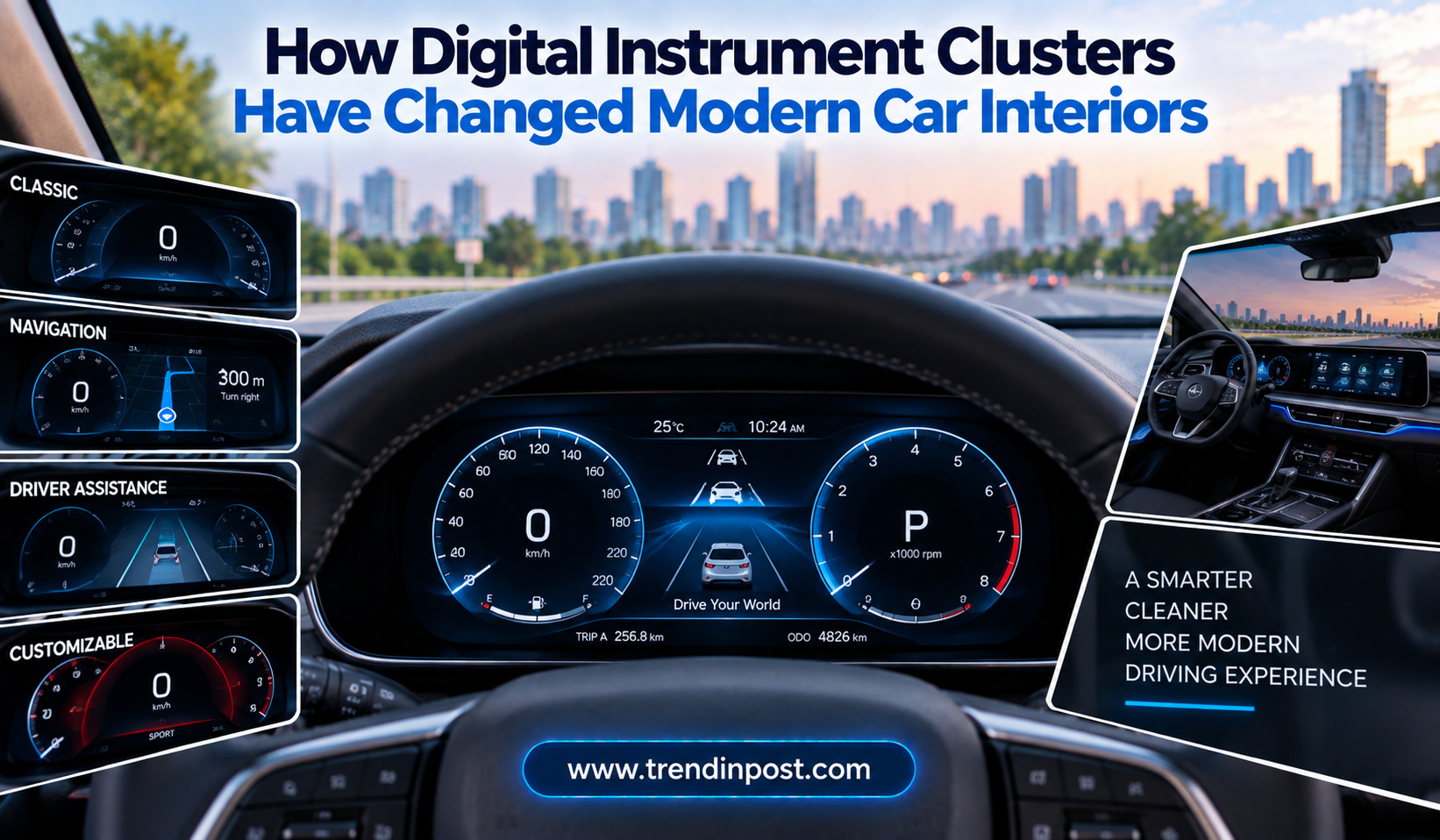
How Digital Instrument Clusters Changed Car Interiors
Car interiors have changed significantly over the past decade, and one of the most noticeable developments is the move from traditional analogue gauges to digital instrument clusters. What was once limited to premium and luxury vehicles is now becoming increasingly common across different segments. Modern cars are using digital displays not only to show speed and engine information but also to provide navigation, driving alerts, vehicle settings and other useful information in front of the driver.
The instrument cluster has always been an important part of the driving experience because it communicates essential information without requiring the driver to look away from the road for long. With digital technology, manufacturers have gained much more flexibility in how that information is displayed. Drivers can now see a combination of traditional-style gauges, graphics, maps, warning messages and vehicle data on the same screen.
From Analogue Gauges to Digital Displays
Traditional instrument clusters generally consisted of physical dials for speed and engine revolutions, along with smaller displays for fuel level, temperature and warning indicators. Their design was straightforward and easy to understand, but manufacturers had limited options when it came to changing the appearance or adding new information.
Digital instrument clusters have changed this approach. Instead of relying entirely on mechanical needles and fixed markings, the driver information is displayed on a screen. Depending on the vehicle, the display can be configured in different layouts and can show additional information based on the driving situation.
This transformation has also allowed car designers to create cleaner-looking dashboards. Large screens and simplified controls can make the cabin feel more modern, while digital graphics allow manufacturers to give different models their own visual identity.
More Information Without a Crowded Dashboard
One of the biggest advantages of a digital instrument cluster is its ability to display more information without requiring additional physical gauges. A single screen can replace several traditional elements while still keeping the most important information easily visible.
For example, a driver may see the vehicle’s speed, fuel efficiency, navigation directions and driver-assistance alerts within the same cluster. In some vehicles, the display can change according to the selected driving mode or the type of information the driver wants to prioritize.
This does not necessarily mean that every car should display more information all the time. A well-designed digital cluster focuses on presenting useful information clearly. Too many graphics, notifications or animations can become distracting, which makes interface design an important part of modern car development.
Navigation Has Become Part of the Driver’s View
Digital clusters have also changed the way drivers interact with navigation systems. In older vehicles, navigation information was usually displayed on a central infotainment screen. Drivers had to glance toward the middle of the dashboard to check directions.
Many modern cars can now display turn-by-turn navigation information directly in front of the driver. Some systems can show arrows, road names, upcoming turns and distance information within the instrument cluster.
This approach can make navigation easier to follow because the driver does not need to repeatedly look toward the centre screen. When combined with a head-up display, some vehicles can provide navigation information through multiple visual points while keeping the driver’s attention closer to the road.
Digital Clusters and Driver Assistance
The growth of advanced driver-assistance systems has further increased the importance of digital instrument displays. Features such as adaptive cruise control, lane-keeping assistance, forward collision warnings and blind-spot monitoring often need to communicate their status to the driver.
A digital cluster can visually explain these functions more clearly than a small warning light. For example, a vehicle may display lane markings, a vehicle ahead or a warning symbol when a driver-assistance system detects a potential issue.
This makes the instrument cluster more than a simple information panel. It has become an important communication interface between the vehicle and the driver.
Key changes brought by digital clusters include:
- Customisable display layouts and themes
- Navigation and driving information directly in front of the driver
- Clearer presentation of driver-assistance alerts
- Greater integration with vehicle and infotainment systems
Greater Personalisation Inside the Cabin
Another important change is personalisation. Traditional analogue clusters generally looked the same every time the car was started. Digital systems can offer different layouts, themes and information combinations.
Some vehicles allow drivers to choose between a classic gauge-style layout and a more modern digital design. Others may automatically adjust the display depending on the selected driving mode.
For manufacturers, this flexibility also provides an opportunity to create a stronger connection between the vehicle’s interior design and its brand identity. A performance-oriented model can use a sportier layout, while a luxury vehicle may focus on minimal graphics and premium-looking displays.
How Digital Instrument Clusters Affect Interior Design
The introduction of digital clusters has influenced dashboard design beyond the screen itself. Designers now have greater freedom to create wider display panels and visually connected dashboards.
Some modern vehicles feature instrument clusters positioned beside large infotainment screens, while others use a single wide display stretching across much of the dashboard. This creates a more technology-focused appearance and can reduce the number of separate controls.
At the same time, manufacturers still need to balance technology with usability. Physical buttons and controls remain useful for functions that drivers need to access quickly. A completely screen-based interior may look futuristic, but it can become frustrating if basic functions require multiple touchscreen steps.
Digital Instrument Clusters vs Traditional Analogue Clusters
| Feature | Traditional Analogue Cluster | Digital Instrument Cluster |
| Speed display | Fixed physical gauge | Customisable digital display |
| Information | Mostly basic vehicle data | Vehicle, navigation and driving data |
| Personalisation | Very limited | Multiple layouts and themes |
| Navigation | Usually separate screen | Can appear directly in cluster |
| Driver-assistance alerts | Warning lights | Graphics, symbols and visual alerts |
| Design flexibility | Limited | High |
| Software updates | Minimal | Possible on supported systems |
The table highlights why digital clusters have become increasingly attractive to manufacturers. Their biggest strength is flexibility. The same display hardware can potentially present different information through software, reducing the need for multiple physical components.
The Role of Software in Modern Clusters
Modern digital instrument clusters are increasingly software-driven. This means the functionality of the display can depend on the vehicle’s software, connectivity and electronic architecture.
Software updates can potentially improve display functions, modify graphics or introduce new features on compatible vehicles. This is part of a larger change in the automotive industry, where vehicles are becoming increasingly similar to connected electronic devices.
However, software complexity also introduces new challenges. Manufacturers need to ensure that displays remain responsive, reliable and easy to understand. A digital cluster is still responsible for showing critical information, so clarity and reliability are more important than simply adding more features.
Are Digital Clusters Better for Every Driver?
Digital instrument clusters offer clear advantages, but they are not automatically better in every situation. Some drivers prefer the simplicity and familiarity of analogue gauges. A physical needle can be instantly understood without requiring the driver to learn a new interface.
Digital systems can also become distracting when manufacturers place too much information on the screen. Bright animations, excessive graphics or frequent notifications can take attention away from driving.
The best digital clusters therefore follow a simple principle: display the right information at the right time. Important safety and driving information should remain easy to identify, while secondary information should not dominate the driver’s view.
What Buyers Should Check Before Choosing a Digital Cluster
A digital cluster can look impressive in a showroom, but buyers should evaluate how useful it is during actual driving. Screen size alone does not determine quality. The clarity of the graphics, ease of reading, responsiveness and available information are equally important.
Drivers should also check whether the cluster supports navigation integration, driving modes and advanced safety features. It is worth checking whether the display can be customised or whether its layout is fixed.
Buyers should pay attention to:
- Screen readability in bright sunlight
- Ease of accessing important information
- Navigation and smartphone integration
- Driver-assistance information
- Customisation and available display layouts
The Future of Digital Car Interiors
Digital instrument clusters are likely to become even more connected with other parts of the vehicle. Instead of treating the instrument cluster, infotainment screen and head-up display as separate systems, manufacturers are increasingly developing them as parts of one digital interface.
Future systems could offer more intelligent information management, showing only the information relevant to the current driving situation. Electric vehicles may also use clusters to provide more detailed battery, charging and energy-consumption information.
The technology may continue to evolve, but the basic purpose of the instrument cluster will remain the same: giving drivers important information quickly and clearly.
Final Thoughts
Digital instrument clusters have transformed one of the most familiar parts of the car interior. They have replaced many fixed gauges with flexible displays capable of showing navigation, vehicle information, driver-assistance alerts and personalised layouts.
Their impact goes beyond appearance. Digital clusters are helping manufacturers rethink dashboard design and connect different vehicle systems through software. At the same time, their success depends on good interface design. A modern display should make driving information easier to understand, not simply add more technology.
As cars become more connected and software-driven, the instrument cluster will likely remain one of the most important interfaces inside the cabin. The future of car interiors may be increasingly digital, but usability and driver focus will continue to determine which technologies genuinely improve the driving experience.
FAQs
1. What is a digital instrument cluster?
A digital instrument cluster is an electronic display positioned in front of the driver. It can show information such as speed, engine or motor data, fuel or battery level, navigation directions and safety alerts.
2. How is a digital cluster different from an analogue cluster?
An analogue cluster uses physical gauges and needles, while a digital cluster uses a screen. Digital systems generally offer greater flexibility in displaying and organising information.
3. Can digital instrument clusters show navigation?
Yes. Many modern vehicles can display turn-by-turn navigation information directly within the instrument cluster, depending on the vehicle and its infotainment system.
4. Do digital clusters improve safety?
They can improve information visibility by presenting navigation and driver-assistance alerts directly in the driver’s field of view. Their effectiveness depends on how clearly the information is designed and presented.
5. Can drivers customise a digital instrument cluster?
Many modern systems offer different layouts, themes or information views. The level of customisation varies between manufacturers and models.
Related Post

How Ground Clearance Affects Everyday Car Driving
Ground clearance is one of the car specifications that often gets overlooked until a vehicle…