How Condition Affects the Value of a Luxury Watch
>> LifeStyle>> How Condition Affects the Value of a Luxury Watch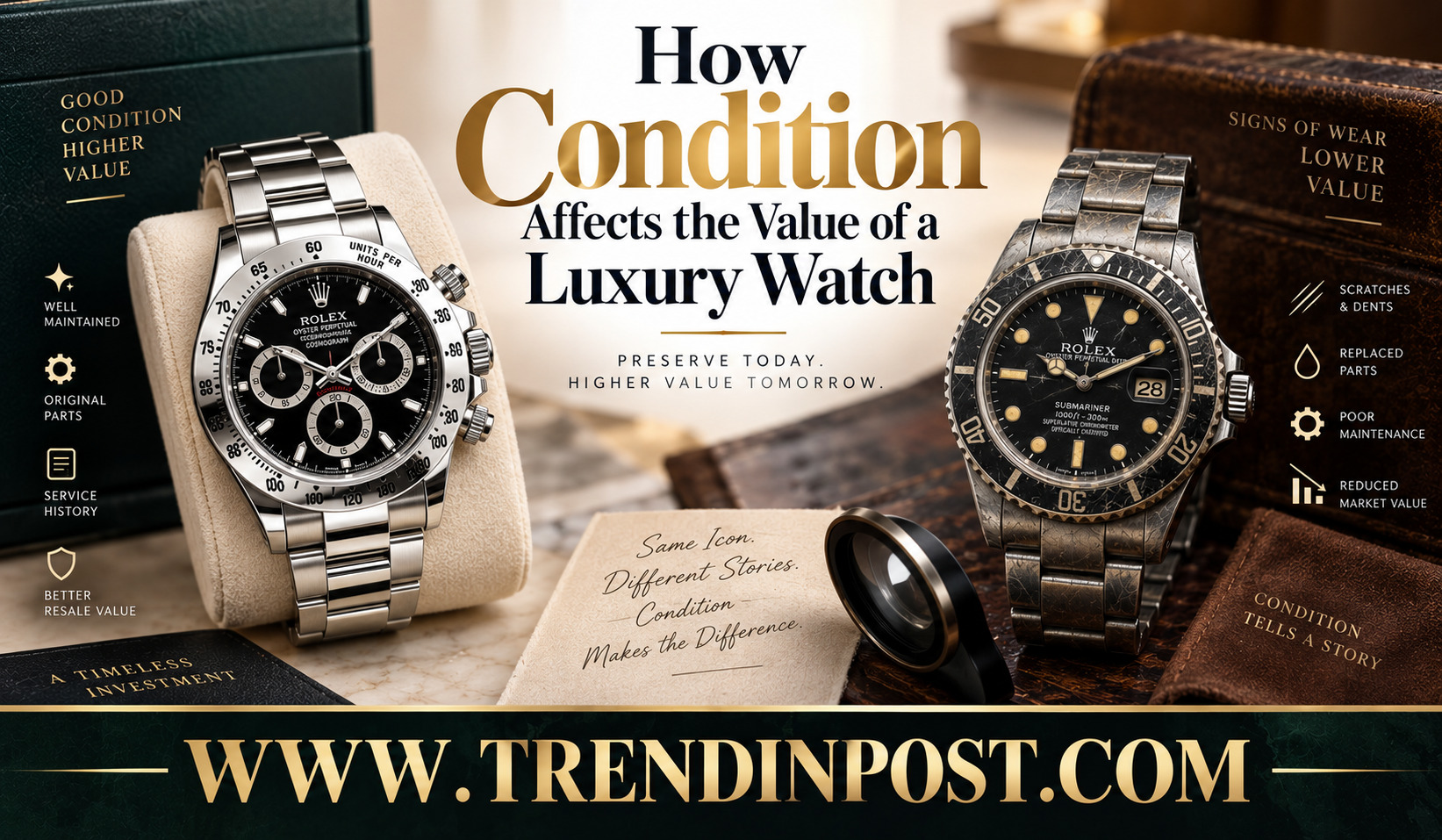
How Condition Affects the Value of a Luxury Watch
Introduction
Two identical watches can sell for wildly different prices, and the only difference is how they were treated. That single factor, condition, often matters more to resale value than brand reputation or even original rarity. Understanding exactly what collectors and dealers look for can help any owner protect the long-term value of a luxury watch.
Why Condition Rules Secondary Market Value
A watch’s condition and the completeness of its accompanying documentation can make an enormous difference in resale outcomes, sometimes marking the line between a healthy profit and an outright loss. This holds true even for the most desirable references from top brands.
Buyers on the secondary market are essentially purchasing trust as much as they are purchasing an object. A watch in poor condition raises questions about how it was worn, stored, and serviced over its lifetime, and that uncertainty gets reflected directly in the price a buyer is willing to pay.
Grading a Watch: What Collectors Check
Serious buyers examine several specific details before deciding what a watch is actually worth:
- Case and bracelet wear: Deep scratches, dents, or over-polishing that softens original edges all reduce value.
- Dial condition: Fading, discoloration, or damage to printed text lowers desirability significantly.
- Crystal condition: Scratches or chips on the crystal are relatively easy to fix, but their presence still affects first impressions.
- Movement performance: Accuracy and smooth operation matter, along with a clean service history.
- Overall originality: Unmodified, unpolished examples generally command stronger prices than heavily serviced or altered pieces.
Each of these factors gets weighed together rather than judged in isolation, since a watch can be strong in one area and weak in another.
Original Parts vs Replaced Parts
Collectors generally place a premium on watches that retain their original components. A replaced dial, aftermarket bezel insert, or non-original hands can significantly reduce a watch’s value compared to an all-original example, even if the replacement parts function perfectly well.
This preference runs especially deep with vintage pieces, where originality often matters more than pristine appearance. A lightly worn, all-original vintage watch frequently outperforms a heavily polished or part-swapped example in better cosmetic shape.
Box, Papers, and Service History
Physical condition is only part of the picture. Original box, papers, and warranty cards add real, measurable value on top of the watch itself, since they help confirm authenticity and original purchase details.
| Documentation | Effect on Value |
| Full box and papers | Strongest positive impact, confirms authenticity and history |
| Papers only, no box | Still valuable, though slightly less than a complete set |
| No box or papers | Noticeably reduces buyer confidence and resale price |
| Documented service history | Reassures buyers about maintenance and mechanical condition |
A complete paper trail turns a watch from an unknown quantity into a well documented, easily verified purchase, which buyers are consistently willing to pay more for.
Patina: Flaw or Feature
Not every sign of age counts against a watch. Patina, the natural discoloration or fading that develops on dials, lume, or certain metals over decades, is often celebrated among vintage watch collectors rather than penalized.
The key distinction is whether the aging developed naturally and evenly over time, or whether it resulted from damage, poor storage, or a botched repair. Even, attractive patina can actually increase desirability on certain vintage references, while damage-related discoloration almost always hurts value.
Simple Care Habits That Protect Value
A few consistent habits go a long way toward preserving a watch’s condition and, by extension, its future resale value:
- Store it properly: Use a dedicated watch box or pouch rather than leaving it loose in a drawer.
- Avoid unnecessary polishing: Repeated polishing gradually removes metal and softens original case lines.
- Keep documentation together: Store the box, papers, and any service receipts in one safe location.
- Service through reputable channels: Choose authorized service centers or trusted independent watchmakers who use correct parts.
- Avoid extreme conditions: Excessive heat, moisture, and magnetic fields can all affect long-term performance.
None of these habits require much effort, yet together they meaningfully protect a watch’s condition over years of ownership.
Key Takeaways
- Condition often decides the final price: It can matter as much as brand or rarity in resale outcomes.
- Collectors check multiple details together: Case, dial, crystal, movement, and originality all factor into an overall grade.
- Original parts carry real value: Replaced components typically reduce a watch’s worth, even when they function properly.
- Documentation adds measurable value: Box, papers, and service history all boost buyer confidence and price.
- Patina is not always a flaw: Naturally developed aging can be prized, while damage-related wear rarely is.
- Small habits protect long-term value: Proper storage and careful servicing go a long way over time.
FAQs
Does polishing a watch always hurt its resale value?
Not always, though excessive or repeated polishing can soften original case lines and reduce value for originality-focused buyers.
Is patina considered damage or a desirable trait?
It depends, since naturally developed, even patina is often prized, while damage-related discoloration usually is not.
How much does missing the original box and papers actually matter?
It can meaningfully reduce resale value, since documentation helps confirm authenticity and purchase history.
Are replaced parts always obvious to buyers?
Not always to a casual buyer, though experienced collectors and dealers often can identify non-original components.
What is the single most important condition factor for resale value?
There is no single factor, since case wear, dial condition, movement performance, and documentation are all weighed together.
Conclusion
The condition of a luxury watch shapes its value just as much as brand name or rarity ever could. Original parts, careful storage, complete documentation, and honest wear patterns all combine to determine what a buyer is willing to pay. Owners who treat their watches with a little extra care today are simply protecting the value that decision represents down the road.
Related Post
How Watch Collectors Evaluate Rare Timepieces
Introduction A polished case can quietly erase thousands of dollars in value. Learning how watch…