

Gold vs Steel Luxury Watches: Which Looks Better?
>> LifeStyle>> Gold vs Steel Luxury Watches: Which Looks Better?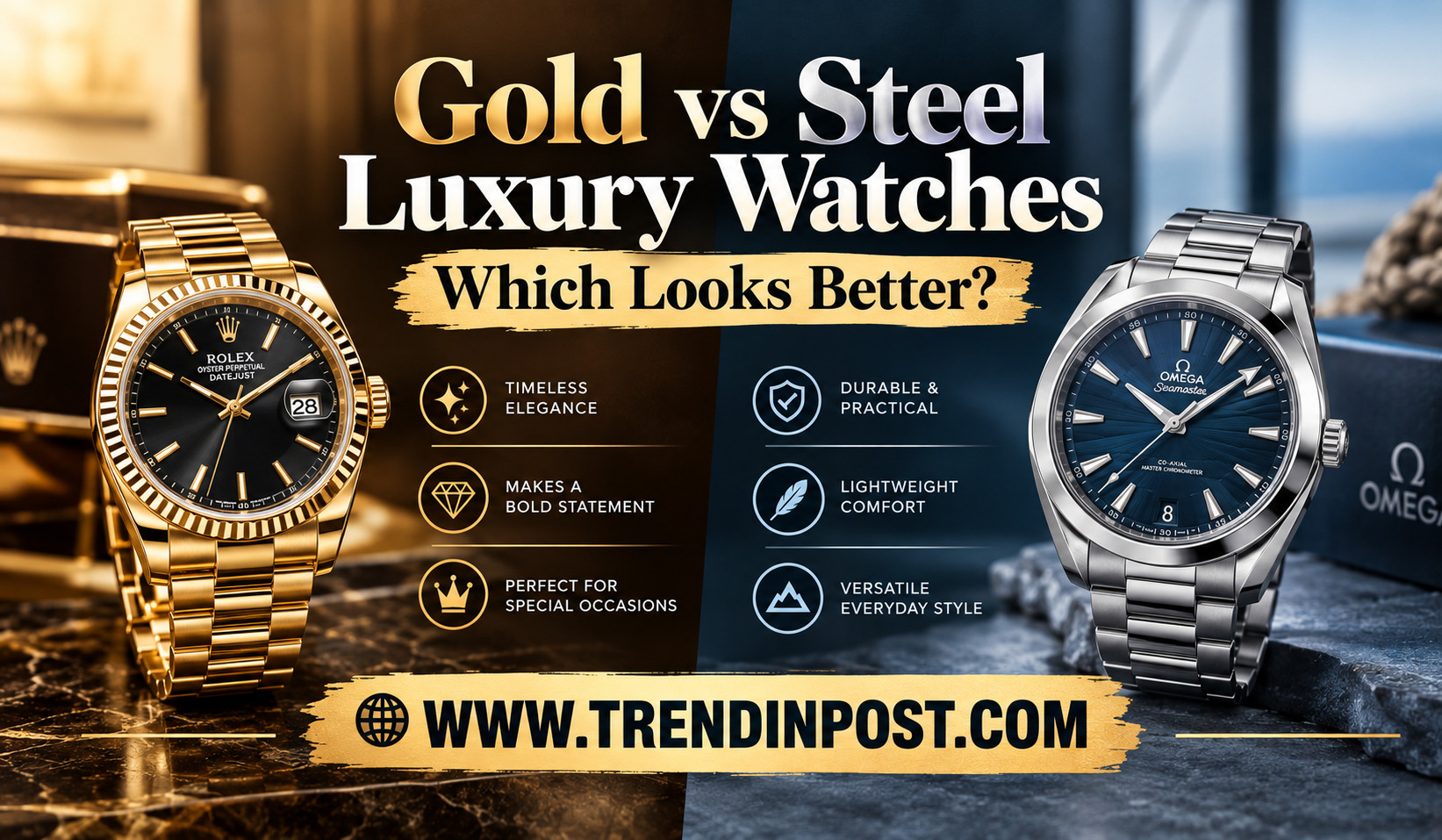
Gold vs Steel Luxury Watches: Which Looks Better?
Introduction
The same Rolex can cost four times more just by swapping steel for gold. Gold vs steel is one of the oldest debates in luxury watches, and it comes down to more than just looks. This guide compares both metals across price, weight, durability, and resale, so you can decide which one actually suits how you wear a watch.
Why the Same Watch Costs So Differently
Gold cases cost more mainly because of raw material, not just design work. A gold Rolex Day-Date uses around 150 grams of yellow gold in its case and bracelet, and gold sits far higher in price per gram than steel.
That gap shows clearly in retail pricing. A steel Rolex Submariner lists well below its solid gold counterpart, sometimes at less than a quarter of the price for the same model. Steel remains cheap to source and process, while gold carries both material cost and extra production steps for casting and polishing.
Weight and Wearing Comfort
Gold is roughly 94 percent denser than steel, so a gold watch of the same size feels noticeably heavier on the wrist.
| Metal | Density (g/cm³) | Feel on Wrist |
| Stainless steel | About 7.9 | Light and sporty |
| 18 karat gold | About 15.3 to 19.3 | Substantial and solid |
| Platinum | About 20.3 to 21.4 | Heaviest of the common options |
Some buyers enjoy the heft of gold as a sign of quality, while others find steel more comfortable for daily wear, especially with larger case sizes.
Look and Everyday Practicality
Steel gives a watch a cooler, more casual tone that works well with everyday clothing, sport coats, and active wear.
Gold leans formal and warm, standing out more under any light and pairing naturally with dressier outfits. Yellow gold reads as the most traditional choice, while rose gold and white gold offer a softer or cooler alternative for buyers who want gold’s status without the classic yellow tone.
- Steel resists scratches better in daily knocks and scrapes.
- Gold shows small scratches more easily, though polishing can restore its shine.
- Steel blends into casual settings without drawing much attention.
- Gold draws more attention, which some buyers want and others prefer to avoid.
Durability and Long Term Care
Steel handles rough daily use with less concern, which is part of why so many sport watches stick with it.
Gold is softer and needs more careful handling to avoid dents and deep scratches over years of wear. Regular polishing keeps a gold case looking sharp, though repeated polishing over decades can slightly soften original case edges on vintage pieces.
Two tone watches, mixing steel and gold in the same case, aim to balance the practicality of steel with the visual lift of gold, though they remain a matter of personal taste.
Resale Value Between the Two
Resale patterns between gold and steel vary by brand and model rather than following one simple rule.
In some collector circles, steel sport watches have actually commanded higher premiums than their gold counterparts, since steel versions of certain references are harder to find in top original condition. In other cases, particularly with dress watches and vintage pieces, gold models hold a stronger resale premium tied to their material value.
Buyers chasing pure investment value should research the specific model and reference, since gold vs steel resale performance is not consistent across the whole market.
Which Metal Fits Which Buyer
Someone who wants a lighter, more casual watch for daily wear across different settings usually leans toward steel. Someone who wants a heavier, more formal presence, and does not mind extra care, usually leans toward gold.
Two tone options exist for buyers who want a middle ground between the two looks. Budget also plays a large role, since gold almost always costs significantly more for the same base model.
Key Takeaways
- Price: Gold costs several times more than steel for the same watch model.
- Weight: Gold is far denser than steel, giving it a noticeably heavier feel.
- Look: Steel suits casual wear, while gold suits formal and statement pieces.
- Durability: Steel resists daily wear better, while gold needs more careful handling.
- Resale: Value retention depends on the specific model rather than the metal alone.
FAQs
Is gold or steel more durable for daily wear?
Steel generally holds up better against daily scratches and knocks than gold.
Why is a gold watch so much more expensive than the same steel model?
Gold costs far more per gram than steel and adds extra production steps, which raises the retail price significantly.
Does gold hold its value better than steel?
It depends on the specific model, since some steel sport watches actually command higher resale premiums than their gold versions.
Is two tone a good compromise between gold and steel?
Yes, two tone combines both metals in one case, offering a middle ground in look, weight, and price.
Which metal is heavier, gold or platinum?
Platinum is denser than gold, making it the heaviest common option among luxury watch case metals.
Conclusion
Gold vs steel luxury watches comes down to how you want a watch to feel and where you plan to wear it. Steel offers a lighter, more casual, and more affordable option, while gold offers weight, formality, and a higher price tag. Neither metal is objectively better, so the right pick depends on your budget, your wardrobe, and how much daily wear and tear your watch needs to survive.
Related Post

How Social Media Is Changing Luxury Watch Collecting
Introduction You see a watch on your feed three times in one day, and suddenly…