

How Watch Collectors Evaluate Rare Timepieces
>> LifeStyle>> How Watch Collectors Evaluate Rare Timepieces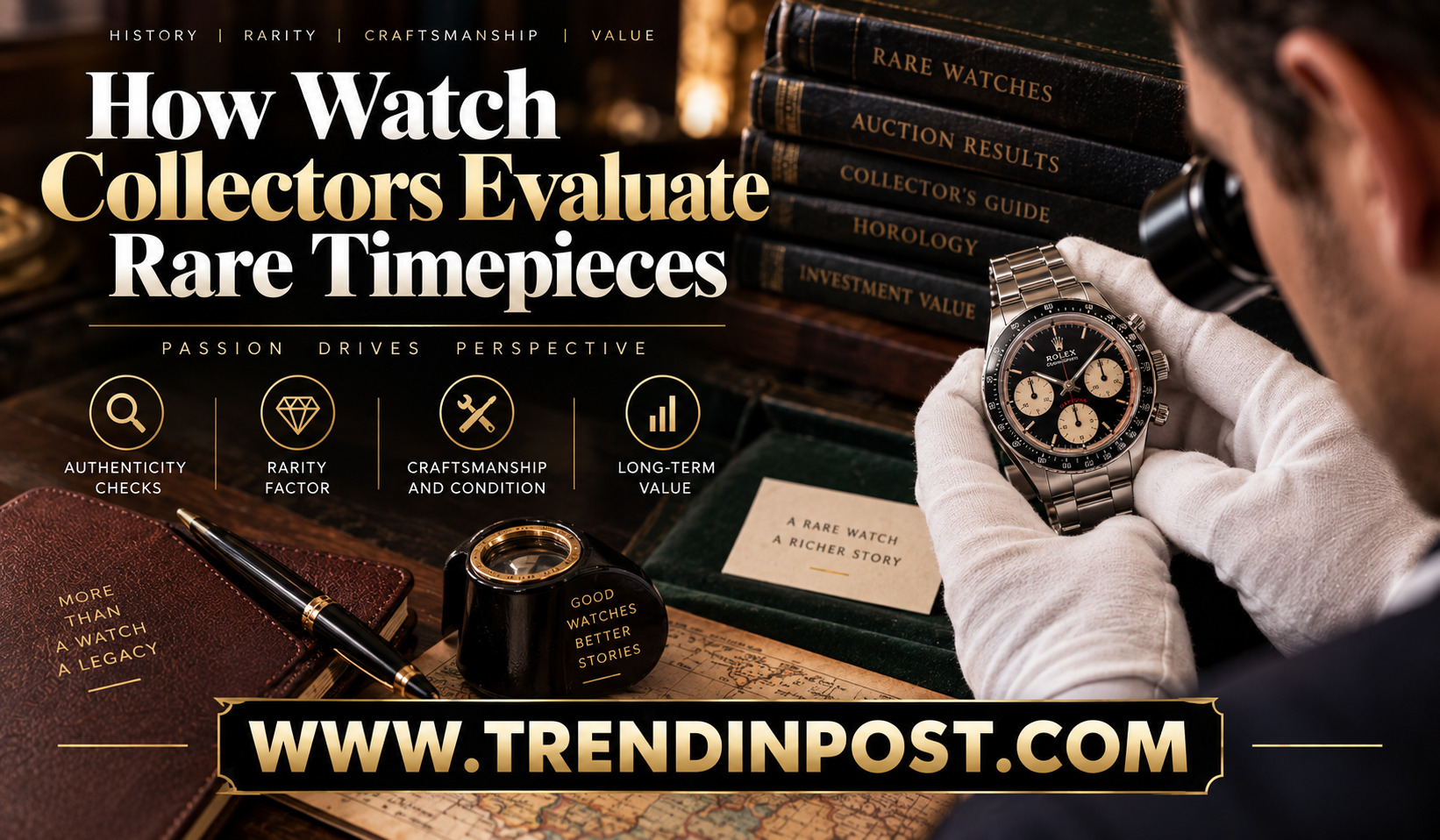
How Watch Collectors Evaluate Rare Timepieces
Introduction
A polished case can quietly erase thousands of dollars in value. Learning how watch collectors evaluate rare timepieces reveals a process built on small details, not just brand names or price tags. This guide breaks down the factors serious collectors check before deciding whether a rare watch is worth buying.
Condition Comes Before Everything Else
Experienced collectors almost always start with condition, since it shapes every other judgment about a watch.
They look for clean, unpolished or only lightly polished cases, since heavy polishing softens original edges and lines. Sharp case edges and original proportions matter more to serious buyers than a shiny surface achieved through repeated buffing.
Over polishing is considered one of the most damaging issues in vintage watch collecting, since it permanently changes the case and cannot be undone.
Originality of Parts and Dial
The dial often carries the most weight in a rare watch evaluation, since it is also the most visible sign of originality.
Collectors examine print quality, font accuracy, and signature placement on the dial for consistency with known genuine examples. A dial with light, even aging often reads as more desirable than one that looks freshly refinished, since restoration removes character and historical accuracy.
Original crowns, hands, bezels, and bracelets also matter. Replacement or aftermarket parts, even small ones, can meaningfully lower a rare watch’s value to a serious buyer.
Provenance and Ownership History
Provenance means the documented history of who owned a watch and how it moved through the market over time.
A verifiable connection to a notable owner or event can raise both interest and price. Even without a famous name attached, a clear paper trail showing consistent, careful ownership adds confidence for a buyer.
| Provenance Signal | What It Suggests |
| Original sales receipt | Confirms purchase date and first owner |
| Service records | Shows consistent maintenance over time |
| Notable past owner | Can significantly raise collector interest |
| Long single ownership | Suggests careful, stable care |
Completeness: Box, Papers, and Service Records
A full set, meaning the original box, papers, and any extra accessories, adds confidence and often adds resale value.
Collectors weigh completeness differently depending on rarity. A common reference missing its box and papers may see a real price reduction, while an extremely rare or hard to find piece may still attract strong interest even without a complete set. Service records matter here too, since they show whether a watch has been maintained properly or handled by unauthorized watchmakers over the years.
Rarity Within the Reference
Rarity is not just about the model name, since specific details within one reference can make certain examples far scarcer than others.
- A rare dial color or variant within a common reference can raise interest sharply.
- Early production examples sometimes carry small design details not found in later runs.
- Discontinued references become fixed in supply, which can drive long term demand higher.
- Limited runs tied to an anniversary or special edition often attract focused collector attention.
The Patek Philippe Nautilus 5711 shows this clearly. After its 2021 discontinuation, secondhand prices climbed sharply within weeks, since the supply of new examples closed permanently while demand stayed strong.
Weighing All the Factors Together
No single factor decides a rare watch’s value on its own. Collectors weigh condition, originality, provenance, and completeness together, since a strong result in one area cannot fully offset serious problems in another.
A watch in excellent original condition with modest provenance may outperform a heavily restored piece with a more interesting backstory. Ultimately, experienced collectors build a full picture from every detail rather than relying on any single signal.
Key Takeaways
- Condition leads: Case and dial condition usually matter more than any other single factor.
- Originality counts: Refinished dials and replacement parts lower value even when hard to spot.
- Provenance adds trust: A documented ownership history builds buyer confidence.
- Completeness helps: Box, papers, and service records support both value and trust.
- Rarity varies within a model: Specific variants, colors, or production periods can matter more than the base reference name.
FAQs
Does a polished case always lower a watch’s value?
Yes, heavy polishing generally lowers value among serious collectors, since it removes original case detail.
Is a refinished dial always a dealbreaker?
Not always, but it typically lowers value and desirability compared to an original, honestly aged dial.
Do I need the original box and papers to sell a rare watch?
No, though having them usually helps both the price and the speed of a sale.
Why do some references within the same model vary so much in price?
Small differences like dial color, production year, or limited runs can make certain examples far rarer than others in the same reference.
Can a watch gain value simply because a brand discontinues it?
Yes, discontinuing a popular reference permanently closes new supply, which often drives secondhand prices higher.
Conclusion
Understanding how watch collectors evaluate rare timepieces comes down to patience and close attention to small details. Condition, originality, provenance, and completeness all combine to shape a rare watch’s real value, far beyond what a reference number alone can tell you. Buyers who learn to read these signals make far better decisions than those who judge a rare watch by price or reputation alone.
Related Post

How Wellness Culture Is Reshaping the Fruit Market
Wellness culture is changing the way consumers think about food, and the fruit market is…