
How Ground Clearance Affects Everyday Car Driving
>> Automobile>> How Ground Clearance Affects Everyday Car Driving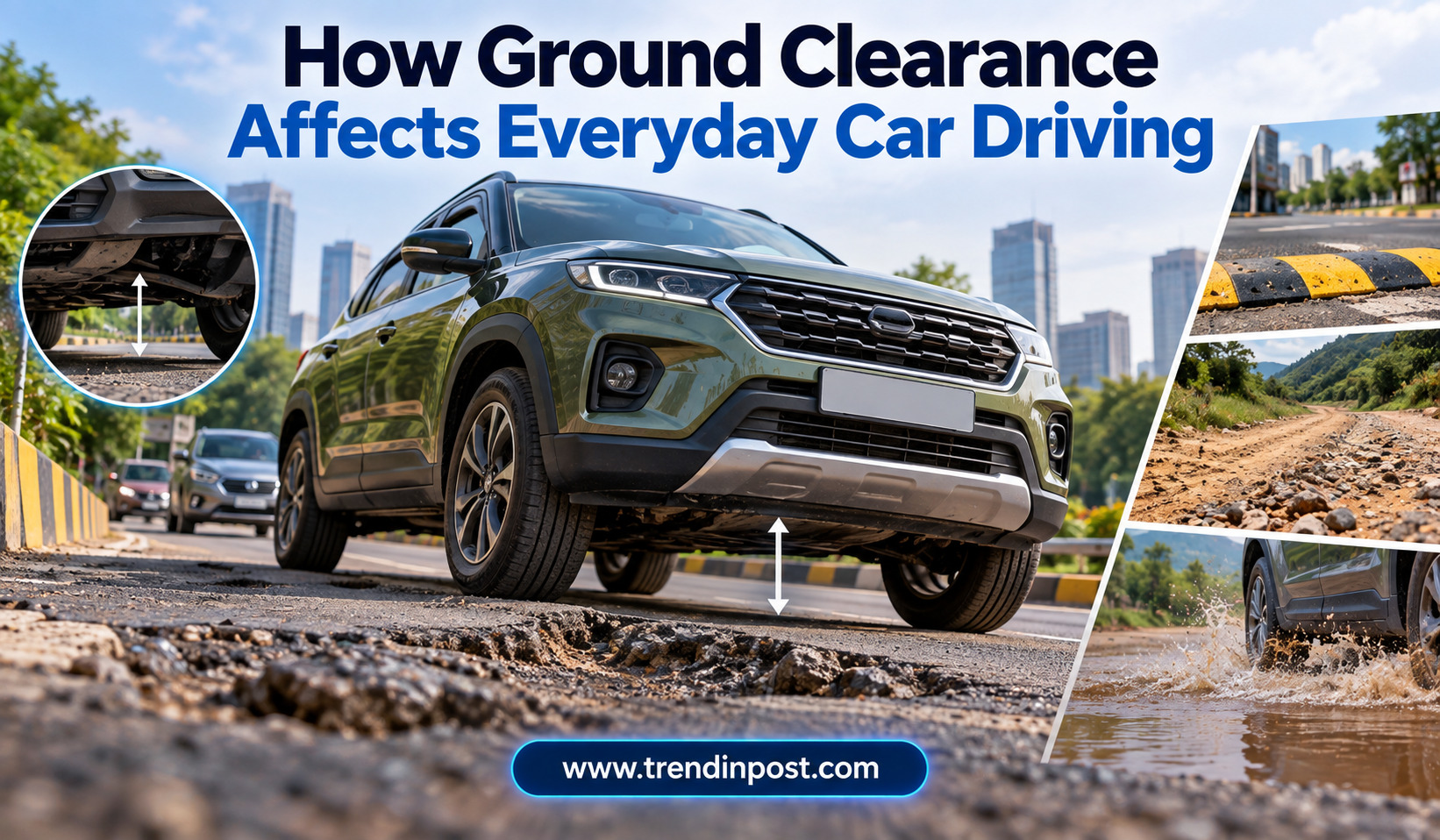
How Ground Clearance Affects Everyday Car Driving
Ground clearance is one of the car specifications that often gets overlooked until a vehicle has to deal with a steep ramp, a large speed breaker or a rough patch of road. For everyday drivers, however, the distance between the lowest part of a vehicle and the road can influence comfort, practicality and even the confidence a driver feels behind the wheel.
The importance of ground clearance varies depending on where and how a car is driven. A vehicle used mainly on smooth highways may not need the same clearance as one regularly driven through uneven urban roads or poorly surfaced rural routes. At the same time, extremely high ground clearance is not automatically better. Vehicle designers have to balance clearance with handling, aerodynamics, ride comfort and overall stability.
As SUVs and crossover models continue to attract buyers, ground clearance has become an increasingly visible part of the car-buying conversation. Understanding what the measurement actually means can help buyers choose a vehicle that better matches their daily driving conditions.
What Is Ground Clearance?
Ground clearance refers to the vertical distance between the road surface and the lowest point of a vehicle’s underside. It is generally measured when the vehicle is in a specified condition, but the exact measurement method can differ between manufacturers and markets.
A higher clearance means there is more space between the road and the underside of the car. This can reduce the chance of the vehicle’s lower components touching the ground when driving over obstacles.
However, the published ground-clearance figure does not tell the entire story. A car can have a relatively good clearance figure but still scrape because of a long wheelbase, low-hanging components or the shape of its front and rear overhangs.
Why Ground Clearance Matters in City Driving
Urban roads are not always as smooth as they appear. Speed breakers, potholes, broken road surfaces, steep parking ramps and uneven intersections can create sudden changes in road height.
A car with limited clearance may require the driver to slow down significantly and approach obstacles at an angle. If the underside touches the road repeatedly, components underneath the vehicle could potentially be damaged over time.
Vehicles with greater clearance generally offer more freedom when dealing with these conditions. This is one reason crossovers and SUVs are popular with drivers who regularly encounter uneven roads.
That does not mean a high-clearance vehicle can simply drive over every obstacle without slowing down. Speed, load and the shape of the obstacle still matter.
Ground Clearance and Speed Breakers
Speed breakers are among the most common situations where drivers notice ground clearance. A vehicle approaching a steep or poorly designed speed breaker too quickly can cause the front underside to make contact with the road.
A car with greater clearance provides additional space, but the vehicle’s approach angle and suspension movement also influence the outcome. If the front bumper sits low, it may touch before the central underside becomes an issue.
Drivers should therefore approach large speed breakers carefully regardless of vehicle type. Slowing down allows the suspension to handle the change in road height more effectively and reduces the likelihood of scraping.
Potholes and Uneven Roads
Potholes create a different challenge because the wheels may suddenly move downward while the body remains relatively high. Ground clearance can provide some additional margin between the road and the underside, but tire size and suspension design also matter.
A vehicle with suitable suspension travel can absorb uneven surfaces more effectively. If suspension travel is limited, the car may feel harsh when passing over potholes even if it has a reasonable clearance figure.
Ground clearance should therefore be considered alongside suspension tuning and tire sidewall. These factors work together to determine how a vehicle behaves on imperfect roads.
Situations where ground clearance can be especially useful include:
- Large speed breakers and raised road sections
- Deep or uneven potholes
- Steep parking and driveway ramps
- Rough roads and broken surfaces
Does Higher Ground Clearance Always Mean Better?
Not necessarily. Increasing the distance between the vehicle and the road can affect other aspects of vehicle behavior.
A taller vehicle generally has a higher center of gravity than a comparable lower vehicle. Vehicle manufacturers compensate through suspension tuning, electronic stability systems and chassis design, but the basic trade-off remains.
Lower vehicles can offer advantages in terms of road-holding feel, aerodynamic efficiency and a lower seating position. They may also feel more stable to some drivers during fast cornering.
Higher vehicles, meanwhile, can offer a commanding driving position and greater clearance over obstacles. The ideal balance depends on the driver’s priorities and typical roads.
Ground Clearance and Ride Comfort
Ground clearance itself does not determine whether a vehicle will provide a comfortable ride. Suspension design is much more directly responsible for how the vehicle absorbs bumps and road imperfections.
However, a vehicle designed for rougher roads may combine greater clearance with suspension characteristics intended to handle larger vertical movements.
This can make certain SUVs and crossovers feel more suitable for uneven roads. On the other hand, some high-performance or luxury vehicles may deliberately use lower suspension setups to improve handling and ride characteristics on smooth surfaces.
Therefore, buyers should avoid judging ride comfort based only on the clearance number.
How Passenger and Luggage Loads Affect Clearance
A vehicle’s ground clearance can change depending on how heavily it is loaded. When several passengers and luggage are added, the suspension compresses and the body can sit closer to the road.
This is particularly relevant for family road trips. A car that rarely scrapes when driven alone may behave differently when carrying five passengers and a full luggage compartment.
Drivers should be particularly careful around large speed breakers, ramps and broken roads when the vehicle is heavily loaded.
Before carrying a heavy load, it is useful to consider:
- Recommended vehicle loading limits
- Correct tire pressure
- Suspension condition
- Extra caution around steep obstacles
Overloading a vehicle is not a solution to a clearance problem and can negatively affect braking, handling and tire performance.
Ground Clearance vs Approach and Departure Angles
For buyers considering SUVs or vehicles for rougher roads, ground clearance is only one part of the equation. Approach and departure angles can also influence whether a vehicle can negotiate an obstacle without making contact.
The approach angle describes how steep an obstacle can be before the front portion of the vehicle touches it. The departure angle relates to the rear of the vehicle.
A vehicle with good ground clearance but long front or rear overhangs may still struggle with steep ramps. This explains why some vehicles with similar clearance figures can behave very differently on rough terrain.
Ground Clearance Across Different Vehicle Types
| Vehicle Type | Typical Clearance Character | Everyday Advantage |
| Sedan | Usually lower | Stable road-focused driving |
| Hatchback | Low to moderate | Easy city maneuverability |
| Crossover | Moderate to high | Balance of comfort and clearance |
| SUV | Generally higher | Better ability to handle uneven roads |
| Off-road SUV | Often very high | Greater capability on difficult terrain |
These are broad categories rather than fixed rules. Individual models can differ substantially, so buyers should always check the specifications of the exact vehicle.
How Ground Clearance Affects Highway Driving
Ground clearance is not usually the biggest consideration on well-maintained highways. Smooth roads allow lower vehicles to operate comfortably without frequent concerns about scraping.
However, highways can include construction zones, temporary diversions, damaged sections and rough shoulders. A vehicle with additional clearance can provide some extra flexibility in these conditions.
There is also a difference between clearance and high-speed stability. A driver should not assume that a higher vehicle is automatically better for highway driving. Tire quality, suspension tuning, braking performance and electronic stability control can have a much greater influence on high-speed behavior.
Ground Clearance and Monsoon Driving
Rainy conditions can expose road damage that is difficult to see. Potholes may become hidden under water, while temporary flooding can create uncertain road surfaces.
Additional ground clearance can be useful when water or uneven surfaces are encountered, but drivers should never assume that a high-clearance vehicle can safely drive through deep water.
Water depth can affect the engine, electrical systems and other vehicle components. Strong currents can also make driving through flooded areas dangerous.
The safest approach is to avoid unknown-depth water whenever possible rather than relying solely on ground clearance.
Why Tire Size Matters Too
Ground clearance and tire specifications are closely connected to the way a vehicle interacts with the road. Larger wheels do not automatically mean more useful clearance, because wheel diameter is only one part of the tire’s overall dimensions.
A tire with a taller sidewall can provide additional cushioning over rough surfaces and may contribute to a more forgiving ride. Low-profile tires can provide sharper handling but may be less forgiving over potholes.
Changing tire sizes from the manufacturer’s recommended specifications can also affect vehicle behavior, so modifications should be approached carefully.
Choosing the Right Clearance for Everyday Use
There is no single ground-clearance figure that is perfect for every driver. Someone living in an area with smooth roads may value handling and efficiency more than maximum clearance.
Another driver who regularly encounters potholes, steep ramps or broken roads may benefit from a vehicle with more space underneath.
The important point is to consider actual driving conditions rather than buying a car simply because it has the highest number in the specification sheet.
Buyers should consider:
- The condition of roads used every day
- Frequency of highway and rural travel
- Typical passenger and luggage load
- Suspension, tire and handling characteristics
Final Thoughts
Ground clearance has a direct influence on how confidently a car can deal with uneven roads, potholes, speed breakers and steep ramps. It can provide valuable additional space between the road and the vehicle’s underside, particularly for drivers dealing with challenging urban or rural conditions.
However, ground clearance should never be viewed in isolation. Suspension design, tire specifications, wheelbase, approach and departure angles, vehicle loading and driving behavior all influence real-world performance.
For everyday buyers, the best choice is not necessarily the car with the highest clearance. Instead, it is the vehicle that provides an appropriate balance between clearance, comfort, stability, handling and practicality.
As more buyers consider SUVs and crossovers for daily transportation, understanding this trade-off can help them make a more informed decision. Ground clearance may be just one number in a vehicle brochure, but its effect can become very noticeable once the car meets the realities of everyday roads.
FAQs
1. What does ground clearance mean in a car?
Ground clearance is the distance between the road surface and the lowest part of a vehicle’s underside. It indicates how much space the vehicle has to clear uneven surfaces and obstacles.
2. Is higher ground clearance always better?
No. Higher clearance can be useful on rough roads, but a lower vehicle may offer advantages in handling, aerodynamics and road-focused driving. The ideal level depends on how and where the car is used.
3. Does ground clearance affect ride comfort?
Not directly. Suspension design has a greater influence on ride comfort, although vehicles with higher clearance are often designed with suspension systems suited to uneven roads.
4. Does carrying more passengers reduce ground clearance?
Yes. A heavy passenger and luggage load can compress the suspension and reduce the distance between the vehicle and the road.
5. Is high ground clearance useful during monsoon driving?
It can provide additional space over uneven or damaged roads, but it does not make a vehicle safe to drive through deep or unknown floodwater.
Related Post
Suzuki Scooters: What Makes Them Practical for City Riding?
City riding demands a different kind of vehicle. Busy traffic, frequent stops, narrow roads, limited…