How to Set a Realistic Budget Before Buying a New Car
>> Automobile>> How to Set a Realistic Budget Before Buying a New Car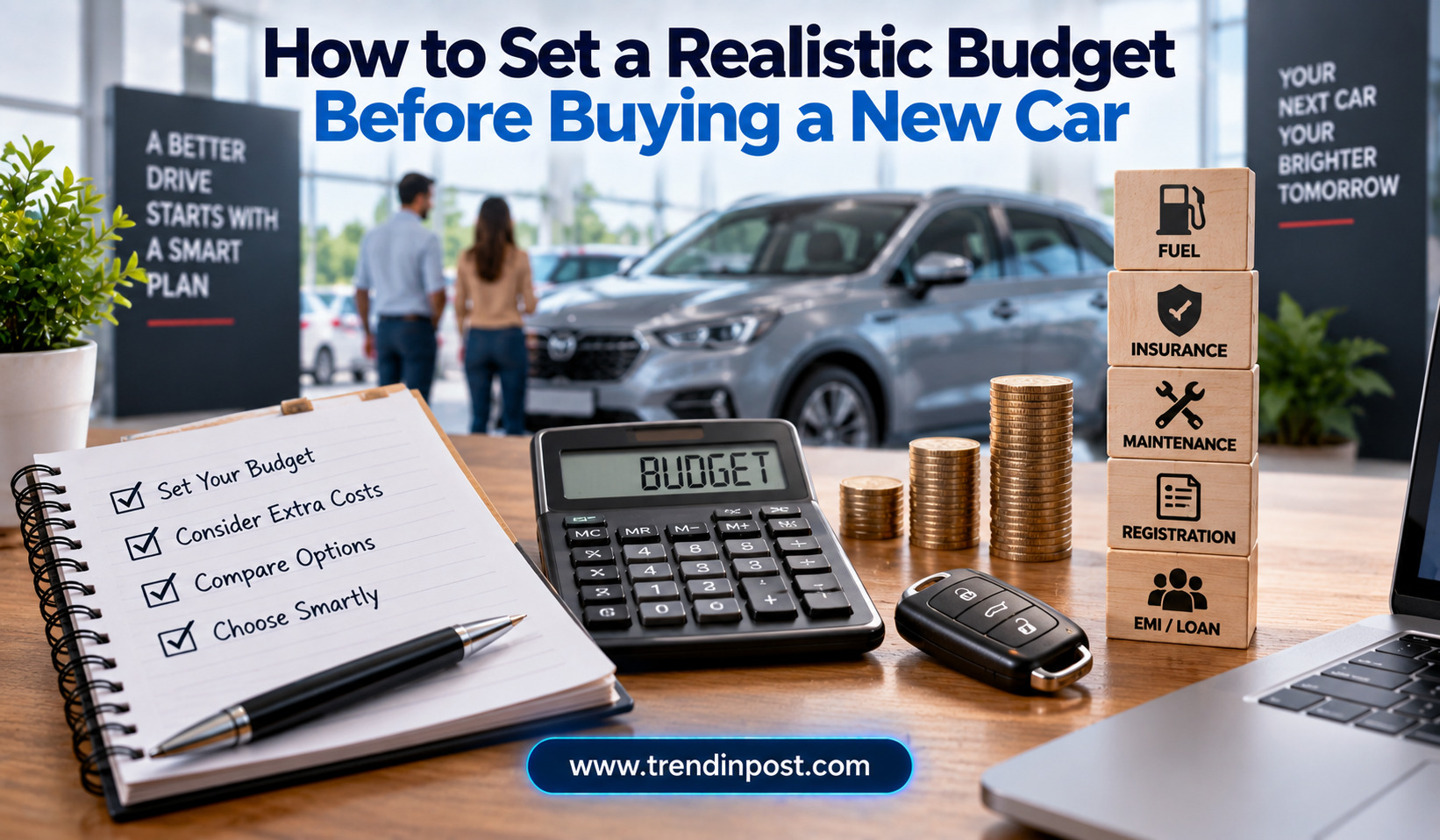
How to Set a Realistic Budget Before Buying a New Car
Buying a new car is an important financial decision, and setting the right budget before visiting a dealership can make the process much easier. Many buyers start by looking at the showroom price or monthly EMI and then decide whether a particular model feels affordable. However, the actual cost of owning a car goes beyond its purchase price.
A realistic car budget should consider the down payment, loan interest, insurance, fuel or charging expenses, maintenance, parking and other ownership costs. A vehicle that appears affordable based only on its monthly EMI can become expensive once these additional expenses are added.
With new cars offering more technology, larger engines, premium interiors and advanced safety features, buyers have more choices than ever. At the same time, this wider selection can encourage people to stretch their finances for features they may not necessarily need. Creating a proper budget before choosing a model can help buyers avoid financial pressure later.
Start With Your Monthly Financial Situation
The first step in creating a car budget is understanding how much money is available after regular household expenses. Buyers should look at their monthly income and subtract essential commitments such as rent, food, utilities, education expenses, existing loans, insurance and savings.
The amount left after these commitments provides a clearer picture of what can reasonably be allocated toward a car. This is more useful than deciding on a vehicle first and trying to make the finances fit afterward.
A car loan is usually a long-term commitment, so buyers should consider whether the proposed EMI would remain comfortable if their monthly expenses increase. A budget that works only under ideal financial conditions may not be a safe budget.
Don’t Choose a Car Only by EMI
Monthly EMI is one of the most common numbers buyers use when comparing cars. While it is useful, it does not represent the complete cost of ownership.
Two vehicles could have similar EMIs but very different insurance premiums, fuel consumption and maintenance costs. A larger SUV, for example, could require more fuel than a smaller hatchback. Similarly, premium models can have higher servicing and replacement costs.
Before finalising a car, buyers should calculate the estimated monthly ownership cost in addition to the loan payment.
| Expense | What to consider |
| Down payment | Amount paid upfront |
| EMI | Monthly loan repayment |
| Insurance | Annual insurance premium |
| Fuel/charging | Based on expected monthly driving |
| Maintenance | Scheduled service and wear items |
| Parking | Home, office or paid parking costs |
| Registration | Government and related charges |
| Emergency reserve | Unexpected repairs or expenses |
Looking at these expenses together gives a more realistic picture of affordability.
Decide How Much You Can Put Down
The down payment can significantly influence the overall cost of a car loan. A larger upfront payment generally means a smaller amount needs to be borrowed, which can reduce the EMI and total interest paid over the loan period.
However, using every available rupee for the down payment may not be the best approach either. Buyers should avoid exhausting their savings simply to reduce the loan amount.
Maintaining an emergency reserve is important because unexpected household or personal expenses can occur at any time. The goal should be to find a balance between making a reasonable down payment and keeping sufficient savings available.
Include Insurance and Registration Costs
The advertised price of a car may not represent the final amount a buyer has to pay. Depending on the market and vehicle, taxes, registration, insurance and other charges can add considerably to the purchase cost.
This is why buyers should ask for a complete on-road price rather than comparing vehicles using only their headline or ex-showroom prices.
Insurance should also be considered as a recurring ownership expense. Premiums can vary depending on factors such as the vehicle, coverage and insurer. Buyers should check the actual insurance cost for the specific model before finalising their budget.
Estimate Your Fuel or Charging Cost
Fuel expenses can become one of the biggest recurring costs of car ownership. The amount spent each month depends on the distance driven, traffic conditions, fuel prices and the vehicle’s real-world efficiency.
Instead of relying entirely on the manufacturer’s claimed mileage, buyers should create a conservative estimate based on their expected usage.
For example, someone commuting long distances every day may spend considerably more on fuel than a person who uses a car mainly on weekends. The same principle applies to electric vehicles, where charging costs depend on driving distance, electricity rates and charging habits.
A simple monthly estimate can prevent fuel or charging costs from becoming an unexpected burden.
Think About the Loan Tenure Carefully
A longer loan tenure can make the monthly EMI appear more affordable because the repayment is spread over a greater period. However, extending the loan can increase the total interest paid.
A shorter tenure usually means higher monthly payments but can reduce the overall interest burden. The right choice depends on the buyer’s income, savings and other financial commitments.
Rather than selecting the longest tenure simply to make an expensive car fit the monthly budget, buyers should first decide what vehicle price is genuinely affordable.
Don’t Spend Your Entire Budget on the Car
One common mistake is allocating almost the entire available budget to the purchase price. This leaves little room for ownership expenses.
A smarter approach is to leave some financial space for insurance, maintenance, fuel, accessories and unexpected costs. The exact amount will vary between buyers, but the principle remains the same: the car should fit comfortably within the overall financial plan, not consume the entire plan.
This becomes especially important for first-time car buyers who may underestimate recurring expenses.
Consider How Long You Plan to Keep the Car
The expected ownership period can also influence the budget decision. Someone planning to keep a car for many years may place greater importance on reliability, maintenance costs, fuel efficiency and long-term practicality.
A buyer who changes cars more frequently may focus more on resale value, financing costs and depreciation.
Before buying, it is worth asking whether the chosen model will continue to meet your needs several years from now. Buying a vehicle that is too small today may lead to another purchase sooner than expected, while buying an unnecessarily large model can increase ownership costs.
Compare Total Cost, Not Just Features
Modern cars compete heavily on features. Buyers may be attracted by larger screens, premium audio systems, panoramic sunroofs, connected technology and additional convenience equipment.
Features can certainly improve the ownership experience, but they should not be allowed to push the purchase beyond a comfortable budget.
When comparing two vehicles, buyers should look at the complete financial picture. A slightly less expensive model with lower running costs may prove more economical over several years than a feature-rich vehicle with significantly higher ownership expenses.
Keep a Separate Maintenance Reserve
Even a new car requires periodic maintenance. Scheduled servicing may be predictable, but tyres, batteries, brakes and other wear-related components eventually need attention.
Keeping a small monthly amount aside for vehicle-related maintenance can make these expenses easier to handle when they occur.
This approach is particularly useful after the manufacturer’s initial warranty or service benefits expire. Buyers should check the service schedule and understand what routine maintenance is expected for the model they are considering.
Avoid Stretching the Budget for a Bigger Car
Moving from a small hatchback to a larger SUV can involve more than just a higher purchase price. Insurance, fuel, tyres and maintenance may also be more expensive.
A larger vehicle may make sense if the buyer regularly travels with family, needs additional luggage space or drives on roads where greater ground clearance is useful. But choosing a bigger model simply because it looks more premium may not provide enough value to justify the additional cost.
The best car budget is therefore based on actual requirements rather than social pressure or showroom appeal.
Make a Pre-Purchase Budget Checklist
Before booking a new car, buyers should have clear answers to a few financial questions:
- What is the maximum comfortable on-road price?
- How much can be paid as a down payment without exhausting savings?
- What EMI can be managed every month?
- How much will fuel, charging, insurance and maintenance add to monthly expenses?
Answering these questions before visiting the dealership can make negotiations easier and reduce the temptation to overspend.
Recheck the Budget Before Booking
Car prices, financing offers, insurance costs and personal financial circumstances can change. Before signing the final paperwork, buyers should recalculate the complete cost using the actual on-road price and proposed loan terms.
This is also the right time to review optional accessories and extended packages. Some additions may be useful, while others can be postponed or purchased separately.
Taking a little extra time at this stage can prevent buyers from discovering after delivery that the vehicle is more expensive than expected.
Final Thoughts
Setting a realistic budget before buying a new car is about more than finding a vehicle with an affordable EMI. Buyers should consider the complete ownership cost, including the down payment, loan interest, insurance, fuel or charging, maintenance, parking and unexpected expenses.
A sensible budget should leave enough room for regular savings and other financial responsibilities. Choosing a slightly less expensive vehicle can sometimes provide a more comfortable ownership experience than stretching finances for a higher-priced model.
The best car purchase is not necessarily the most expensive vehicle a buyer can qualify for. It is the vehicle that provides the required features, practicality and performance while remaining financially manageable throughout the ownership period.
FAQs
How much should I spend on a new car?
There is no single percentage that works for everyone. The budget should be based on income, existing financial commitments, savings and expected vehicle expenses. The important point is that the car payment should remain comfortable alongside other priorities.
Should I focus on EMI or the total car price?
Both matter, but the total cost is more important. A low EMI can result from a longer loan tenure, which may increase the total interest paid.
Is a larger down payment always better?
Not necessarily. A larger down payment can reduce the loan amount, but buyers should avoid using all their savings for the purchase. Keeping an emergency reserve is important.
What costs should I include besides the car price?
Consider insurance, registration-related charges, fuel or charging, maintenance, parking, loan interest and potential repair or replacement expenses.
Is it better to buy a cheaper car or a more expensive one with more features?
The better choice depends on your needs and finances. If the more expensive vehicle creates financial pressure, a less expensive model may offer better overall value and ownership comfort.
Related Post
How Digital Instrument Clusters Changed Car Interiors
Car interiors have changed significantly over the past decade, and one of the most noticeable…