What Car Features Are Worth Paying Extra For?
>> Automobile>> What Car Features Are Worth Paying Extra For?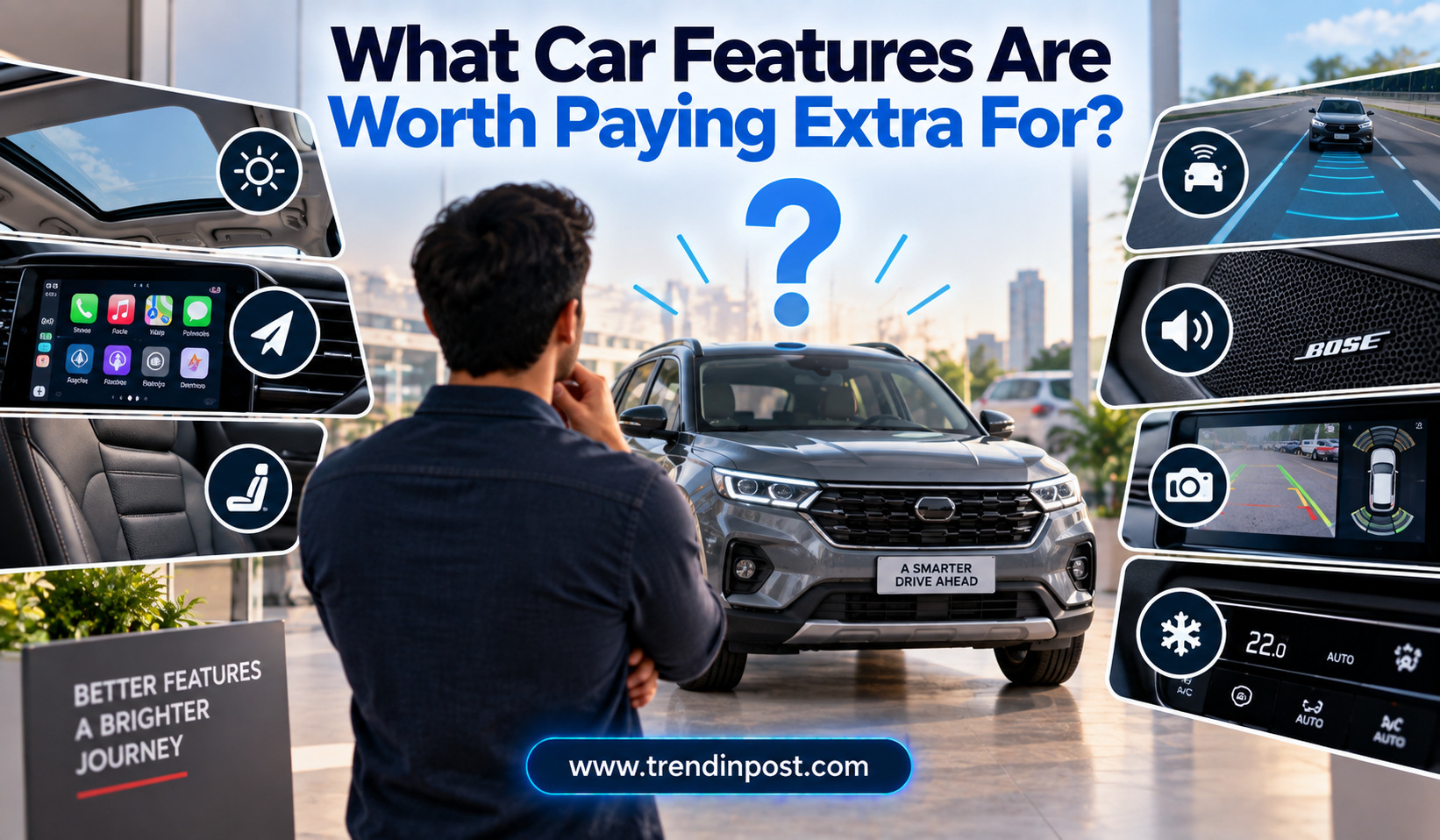
What Car Features Are Worth Paying Extra For?
Buying a new car often involves choosing between multiple variants, and the price difference between them can sometimes be significant. The higher variant may offer a longer list of equipment, but not every additional feature is necessarily worth paying more for. For buyers trying to get the best value from their money, the challenge is identifying which features can genuinely improve safety, comfort and everyday usability.
Modern cars have become increasingly technology-focused. Features such as larger infotainment screens, panoramic sunroofs, connected-car systems, advanced driver assistance and premium interiors are now widely promoted by manufacturers. Some can make daily driving easier, while others may have limited practical value depending on how the car is used.
The right approach is to evaluate each feature based on its usefulness over several years rather than choosing a variant simply because it has the most equipment. A feature that is used every day can justify a higher purchase price more easily than one that is rarely needed.
Safety Features Should Come First
When deciding whether to spend extra on a car, safety equipment should generally receive the highest priority. Unlike cosmetic upgrades, safety features can have a direct role in helping drivers avoid or reduce the severity of certain incidents.
Equipment such as electronic stability control, anti-lock braking systems, airbags, traction control, rear parking sensors and cameras can contribute to safer driving and easier vehicle control. The exact safety package varies between models and variants, so buyers should examine the specifications carefully.
Advanced driver-assistance systems are also becoming more common. Depending on the vehicle, these can include features such as forward collision warning, autonomous emergency braking, lane departure warning and adaptive cruise control.
However, buyers should not assume that a vehicle is safer simply because it has a longer list of electronic safety features. Overall vehicle safety, structural performance and independent safety assessments should also be considered.
A Rear Parking Camera Can Be Worth the Upgrade
A rear parking camera is one of the convenience features that can provide genuine everyday value. Parking lots, apartment basements and crowded urban streets can make reversing difficult, particularly when visibility behind the vehicle is restricted.
Parking sensors can provide audible warnings, while a camera gives the driver a visual reference. Having both systems can make manoeuvring easier and reduce uncertainty in tight spaces.
For buyers choosing between two variants, a parking camera is often a more useful upgrade than a purely cosmetic feature. This is especially true for larger SUVs and vehicles with limited rear visibility.
Automatic Climate Control Adds Everyday Comfort
Automatic climate control can be worth paying extra for drivers who spend significant time in traffic or regularly travel in hot weather.
Instead of constantly adjusting the air-conditioning controls, the driver can select a preferred temperature and allow the system to regulate the cabin. This can make long journeys more comfortable and reduce the need for frequent manual adjustments.
The feature may not be essential for every buyer, particularly those who use their car for short trips. However, for frequent commuters, the convenience can justify the additional cost.
A Good Infotainment System Can Be Valuable
Infotainment has become a central part of the modern driving experience. Smartphone connectivity, navigation, music streaming and hands-free calling are features many drivers use regularly.
A higher variant with a better-designed infotainment system can therefore provide meaningful value. Buyers should focus less on screen size alone and more on functionality, responsiveness, smartphone compatibility and ease of use.
Wireless smartphone connectivity and wireless charging can also be convenient, particularly for drivers who spend several hours in their cars. However, these features should be treated as secondary priorities after essential safety equipment.
Adaptive Cruise Control Depends on Your Driving
Adaptive cruise control can be a useful upgrade for people who frequently travel on highways. Unlike conventional cruise control, the system can adjust the vehicle’s speed according to traffic ahead, depending on how the particular system operates.
For long-distance drivers, this can reduce some of the effort associated with maintaining speed. It can be particularly useful on relatively predictable highways.
For someone whose driving is almost entirely limited to congested city traffic, however, paying a significant premium for adaptive cruise control may offer less value.
Advanced Driver Assistance Requires Careful Evaluation
ADAS features are increasingly being offered in mainstream cars. Depending on the model, these systems may provide functions designed to assist with lane positioning, collision warnings, emergency braking and highway driving.
These technologies can be valuable, but buyers should understand their limitations. Driver assistance does not turn a vehicle into a fully autonomous car. Drivers remain responsible for monitoring the road and controlling the vehicle.
The quality and behaviour of ADAS can also vary between vehicles. Buyers should ideally test the system and understand how it operates before paying a premium for it.
LED Headlights Can Be a Practical Upgrade
LED headlights are often promoted as a styling feature, but good lighting can also provide a practical advantage during night driving.
Compared with basic lighting systems, modern LED setups can provide strong illumination and can contribute to a more modern vehicle design. However, the actual performance depends on the specific headlamp system rather than simply whether it uses LED technology.
For buyers who frequently drive at night or on poorly illuminated roads, a good lighting system may be worth prioritising over cosmetic upgrades.
Tyre and Wheel Upgrades Need More Thought
Larger alloy wheels can make a vehicle look more premium, but bigger wheels are not automatically a better choice.
Depending on the tyre setup, larger wheels can increase replacement costs and may result in a firmer ride. Low-profile tyres can also be more vulnerable to damage from potholes and rough road surfaces.
For most buyers, a balanced tyre and wheel combination is more important than choosing the largest available size. The manufacturer’s recommended setup should be considered when comparing variants.
Sunroofs Are More About Preference Than Necessity
Sunroofs have become extremely popular in the Indian car market, particularly among buyers choosing SUVs. They can make the cabin feel more open and provide an attractive feature for passengers.
However, a sunroof generally does not improve the fundamental driving experience in the same way that safety or parking technology can.
If the price difference between variants is substantial and the sunroof is the main reason for upgrading, buyers should consider whether they will actually use it often enough to justify the additional expense.
Connected-Car Features Can Be Useful
Connected-car technology can provide functions through a smartphone application, depending on the manufacturer and vehicle. These may include vehicle-status information, service reminders, location-related functions and remote features.
The usefulness of connected services depends heavily on individual driving habits. Buyers should also check whether particular functions require subscriptions or have limited service periods.
If the system provides features that a buyer expects to use regularly, it can add value. Otherwise, it may be better treated as a nice-to-have rather than a deciding factor.
Features Worth Considering Before Spending More
| Feature | Value for most buyers | Best suited for |
| Essential safety equipment | Very high | Every buyer |
| Rear camera and sensors | High | City and family users |
| Automatic climate control | High | Frequent commuters |
| Smartphone connectivity | High | Regular daily drivers |
| LED headlights | Medium to high | Frequent night drivers |
| Adaptive cruise control | Medium to high | Highway users |
| ADAS | Medium to high | Buyers who understand its limitations |
| Wireless charging | Medium | Frequent smartphone users |
| Sunroof | Personal preference | Buyers who value the experience |
| Larger alloy wheels | Low to medium | Buyers prioritising appearance |
Don’t Pay More Just for a Bigger Screen
A larger touchscreen can look impressive in a showroom, but screen size alone should not determine the choice of variant.
A smaller system with reliable smartphone connectivity and simple controls may be more useful than a large display with complicated menus.
The same principle applies to digital instrument clusters and ambient lighting. These features can enhance the cabin, but buyers should decide whether they provide enough everyday value to justify the higher price.
Consider the Total Cost of Ownership
The cost of a feature does not always end with the additional amount paid at the dealership. Some equipment can affect long-term expenses.
Larger wheels may mean more expensive tyres, while premium electronic systems can potentially be more costly to repair outside warranty. Buyers should therefore think about ownership costs as well as the initial upgrade price.
Before choosing a higher variant, compare the complete package and identify which features genuinely matter.
Make a Personal Priority List
Every buyer has different requirements. A person who drives primarily in a city may prioritise parking cameras, automatic climate control and good visibility. Someone who frequently travels between cities may place greater importance on highway assistance, comfortable seats and strong lighting.
Before visiting a dealership, buyers should identify their most important features and separate them from features that are simply attractive.
A useful priority order for many buyers could be:
- Safety and vehicle protection
- Everyday comfort and convenience
- Driving assistance and visibility
- Entertainment and appearance
This approach can make variant selection considerably easier.
The Most Expensive Variant Is Not Always the Best Choice
Manufacturers often position their top variant as the most feature-rich version, but that does not automatically make it the best value.
Sometimes a mid-level variant includes the most important equipment while avoiding expensive features that the buyer may rarely use. The money saved can instead be used for insurance, maintenance, fuel or other ownership expenses.
Buyers should therefore compare variants feature by feature rather than assuming that the highest trim offers the smartest purchase.
Final Thoughts
Paying extra for a car feature makes sense when that feature provides meaningful value throughout the ownership period. Safety equipment, parking assistance, useful climate-control functions, smartphone connectivity and certain driver-assistance technologies can be worthwhile upgrades depending on the buyer’s needs.
On the other hand, features such as larger wheels, sunroofs, decorative upgrades and oversized screens may be more about personal preference than practical necessity.
The best strategy is to decide what you need before choosing a variant. Compare the additional price with the actual benefit and consider long-term ownership costs. A well-equipped mid-range variant can often provide a better balance than the most expensive version.
Ultimately, the right feature is not necessarily the most advanced one. It is the feature that makes your everyday driving safer, easier or more comfortable without pushing the total cost beyond a sensible budget.
FAQs
Which car features are most worth paying extra for?
Safety equipment should generally come first, followed by useful features such as parking cameras, automatic climate control, smartphone connectivity and suitable driver-assistance technology.
Is ADAS worth paying extra for?
It can be valuable, particularly for drivers who frequently use highways. However, buyers should understand how the system works and its limitations before choosing it.
Is a sunroof worth upgrading to a higher variant?
That depends on personal preference. A sunroof can improve the cabin experience, but it is generally less essential than safety and everyday convenience features.
Should I choose larger wheels when buying a higher variant?
Not necessarily. Larger wheels can improve appearance but may increase tyre costs and affect ride comfort depending on the setup.
Is automatic climate control better than manual AC?
Automatic climate control offers greater convenience by maintaining a selected cabin temperature. Whether it is worth the additional cost depends on how frequently the car is driven.
Related Post
Car Dimensions Buyers Should Check Before Parking at Home
Buying a new car is usually about more than engine performance, mileage, features, and design.…