What Is a Chronograph and Why Does It Matter?
>> LifeStyle>> What Is a Chronograph and Why Does It Matter?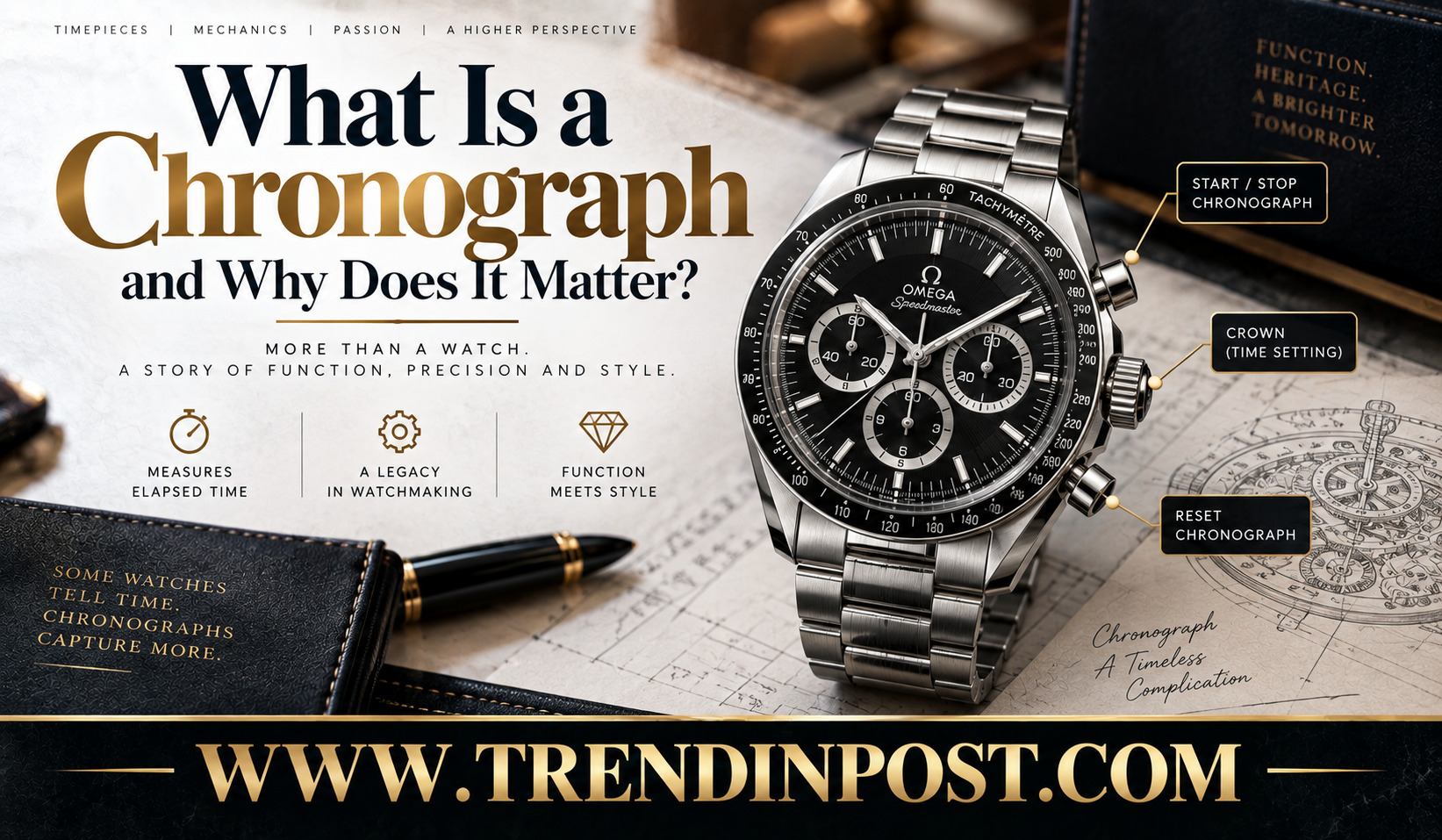
What Is a Chronograph and Why Does It Matter?
Introduction
You glance at your watch mid workout and realize it cannot time a single second of what matters. That gap is exactly why the chronograph watch exists. A chronograph adds a built in stopwatch to a normal watch face, letting you measure elapsed time without pulling out a phone or a separate timer.
This matters more than it sounds. Pilots have used chronographs to track fuel burn. Doctors have used them to check a pulse. Race drivers, cooks, and runners still use them today. This article breaks down what a chronograph actually is, how it works, where it came from, and how to pick one that fits your life.
What Is a Chronograph, Exactly?
A chronograph is a watch with an added stopwatch function. It has the normal hour and minute hands, but it also has extra buttons, called pushers, that start, stop, and reset a separate timing mechanism.
Do not confuse a chronograph with a chronometer. A chronometer refers to accuracy certification, while a chronograph refers to the timing feature itself. A watch can be both, or neither, or just one.
Most chronographs share a few visual traits:
- Two extra buttons (pushers) above and below the crown
- One or more small sub dials, called registers, that track seconds, minutes, or hours
- A central chronograph hand that sweeps around the main dial when the stopwatch runs
How a Chronograph Actually Works
At its core, a chronograph runs two systems inside one case: the regular timekeeping gear train, and a separate chronograph mechanism that only engages when you press start.
Here is the basic sequence:
- Press the top pusher to start the chronograph hand.
- Press the same pusher again to stop timing.
- Press the bottom pusher to reset the hand back to zero.
What the Sub Dials Actually Track
Most three register chronographs split time into small dials, so a single sweep hand does not have to represent everything at once.
| Sub Dial | Common Position | What It Tracks |
| Running seconds | 9 o’clock | Regular seconds, always moving |
| Chronograph minutes | 3 o’clock | Minutes elapsed since start |
| Chronograph hours | 6 o’clock | Hours elapsed since start |
A watch can measure elapsed time down to a fraction of a second on higher end models, which is why chronographs remain popular in motorsport timing.
A Short History of the Chronograph
The first chronograph is generally credited to Louis Moinet, who built a timing device in 1816 for tracking astronomical observations. It was not made for the wrist, but it introduced the idea of a separate start and stop mechanism.
By the early 1900s, chronographs moved into pockets and then onto wrists, largely driven by military and aviation needs. Pilots needed a reliable way to time fuel stops and navigation legs without carrying separate instruments.
The 1960s brought a major shift with the race to build the first automatic chronograph movement. Several watchmakers, working somewhat independently, released automatic chronographs within months of each other in 1969. That period still shapes how many modern chronographs are built.
Types of Chronograph Movements
Not every chronograph works the same way inside. The movement type affects accuracy, price, and how the watch feels to use.
| Movement Type | Power Source | Typical Accuracy | Price Range | Best For |
| Manual | Hand wound spring | Good, needs daily winding | Entry to mid | Traditionalists who enjoy the ritual |
| Automatic | Wrist motion | Good to very good | Mid to high | Daily wear, mechanical enthusiasts |
| Quartz | Battery | Excellent, minimal drift | Budget to mid | Sports use, reliability first |
Quartz chronographs tend to hold time more precisely and cost less, since a battery driven circuit is simpler to manufacture than a mechanical gear train. Mechanical chronographs, on the other hand, often carry more value among collectors because of the craftsmanship involved.
Why a Chronograph Still Matters Today
Phones can time almost anything now, so it is fair to ask why a chronograph watch still has a place on someone’s wrist. A few honest reasons stand out.
- Speed of access: A wrist mounted timer starts in one press, no unlocking a screen involved.
- Durability in rough conditions: Racing, diving, and outdoor work often make a phone impractical.
- Cultural and design value: Many chronographs are worn for their look and history, not just their function.
- Backup timing: Pilots and medical staff still value a mechanical backup that does not depend on a charged battery.
I will be honest, most people buying a chronograph today are not timing rocket fuel burn. They are drawn to the layered dial and the mechanical detail, and that is a perfectly good reason on its own.
Key Takeaways
- Core function: A chronograph adds a stopwatch to a standard watch, controlled by two pushers.
- Not the same as a chronometer: Chronometer refers to certified accuracy, not the stopwatch feature.
- Movement choice matters: Quartz offers precision and lower cost, mechanical offers craftsmanship and heritage.
- Real world use still exists: Aviation, motorsport, and medical settings continue to rely on chronograph timing.
- Modern appeal is often aesthetic: Many buyers choose a chronograph for its layered dial design as much as its function.
FAQs
Is a chronograph the same as a stopwatch? A chronograph is essentially a stopwatch built into a wristwatch, using pushers instead of a separate device.
Do chronographs need a battery? Only quartz chronographs need a battery, while manual and automatic chronographs run on a wound or motion powered spring.
Can a chronograph also tell regular time? Yes, the chronograph function sits alongside the normal hour and minute hands, so both work at once.
Why do some chronographs cost so much more than others? Price differences usually come down to movement complexity, brand heritage, and the materials used in the case and dial.
Is a chronograph good for everyday wear? Many chronographs are built for daily wear, though larger cases and busy dials may feel less comfortable for smaller wrists.
Conclusion
A chronograph watch takes a familiar object, the wristwatch, and adds a genuinely useful timing tool on top of it. Whether someone wants it for its aviation roots, its motorsport history, or simply its layered dial design, the chronograph has earned its long standing place on the wrist. For anyone deciding between movement types or price points, the right chronograph comes down to how it will actually be used, not just how it looks in a photo.
Related Post

Earbuds vs Headphones for Long Flights: Which One Wins?
Introduction A ten-hour flight can turn any audio gear into either your best friend or…