
Rolex vs Patek Philippe: Understanding the Difference
>> LifeStyle>> Rolex vs Patek Philippe: Understanding the Difference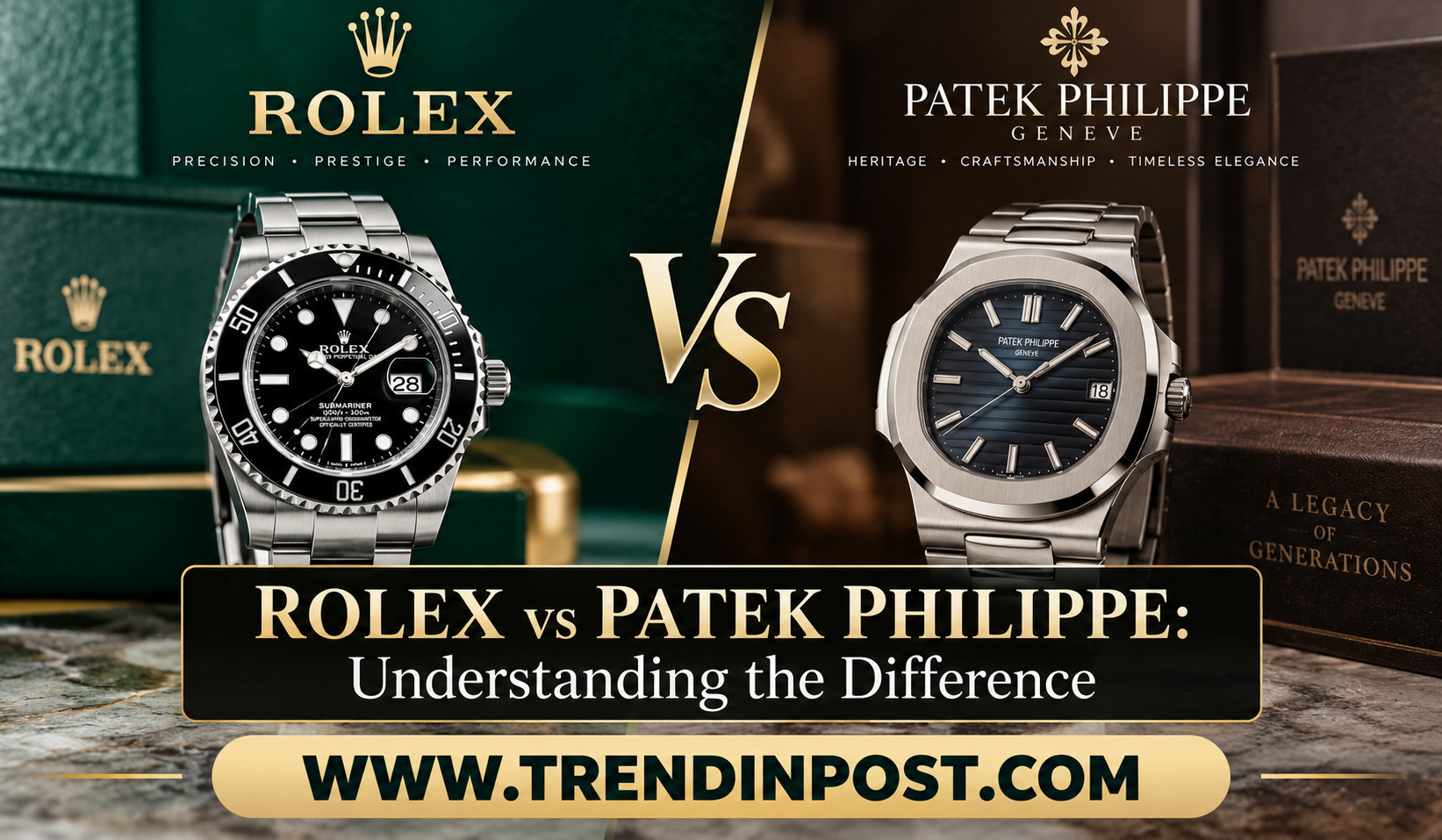
Rolex vs Patek Philippe: Understanding the Difference
Introduction
One brand makes a million watches a year, the other makes sixty thousand, and that gap explains almost everything. Rolex and Patek Philippe sit at the top of the Swiss watch world, yet they built their reputations in different ways. This guide breaks down Rolex vs Patek Philippe across history, movements, pricing, and resale, so you can see where each brand actually stands.
Two Different Histories
Rolex was founded in 1905 and grew around the idea of the tool watch, built to survive rough conditions like diving and mountaineering.
Patek Philippe traces back to 1839 in Geneva. The Stern family bought the company in 1932 during the Great Depression and still holds a majority stake today, making Patek one of the last family owned independent Swiss manufacturers.
That difference in roots still shows. Rolex leans toward rugged, functional design, while Patek Philippe leans toward classic dress watches and complications built for collectors.
Production Scale and Availability
The gap in production numbers is enormous. Rolex produces close to a million watches each year, while Patek Philippe makes roughly 60,000.
This scale difference changes how each brand feels to shop for.
- Rolex operates through waitlists at authorized dealers for popular steel sports models.
- A strong gray market for Rolex means buyers can usually find a specific model at a premium.
- Patek Philippe’s smaller output makes certain references extremely hard to find at retail.
- Patek’s secondary market moves more slowly, since fewer collectors hold each reference.
Rolex trades convenience through volume, while Patek Philippe trades exclusivity through scarcity.
Movements and Craftsmanship
Both brands build serious mechanical movements, but they approach finishing differently.
Rolex movements are built in house and certified as Superlative Chronometers, aiming for consistent daily accuracy and long term durability under regular wear. Patek Philippe places heavier emphasis on hand finishing and complications, and the brand’s watches often carry the Patek Philippe Seal, its own internal quality standard for movement decoration and performance.
| Factor | Rolex | Patek Philippe |
| Annual production | About 1,000,000 | About 60,000 |
| Founded | 1905 | 1839 |
| Movement focus | Durability and accuracy | Hand finishing and complications |
| Typical starting price | $6,000 to $9,000 | $27,000 and up |
| Ownership style | Family company | Family owned since 1932 |
Price Ranges and Entry Points
Rolex offers a lower entry point than Patek Philippe across most of its catalog. A steel Oyster Perpetual or Datejust starts in the range of a few thousand dollars at retail, though gray market premiums can push popular sports models well above list price.
Patek Philippe’s simplest time only pieces, like a basic Calatrava, start much higher. Complications and precious metal cases push Patek prices into six figures quickly.
Buyers on a first luxury watch budget will find Rolex easier to enter, while Patek Philippe suits buyers ready to spend more for a smaller, more specialized collection.
Resale Value and Long Term Ownership
Both brands hold value better than most other watchmakers, though they do it differently.
Rolex offers strong liquidity, meaning it is easy to resell quickly at a fair price because demand stays broad and constant. Patek Philippe often achieves a higher average resale premium on specific references, but the market for those pieces is thinner and can take longer to find the right buyer.
Recent market data shows nearly three quarters of current Rolex models sell for more than their retail price used, while roughly half of Patek Philippe models beat their original retail price. Certain Patek references, like the Nautilus and Aquanaut lines, have shown particularly strong value retention.
Which Brand Fits Which Buyer
Neither brand is simply better than the other, since they serve different goals.
Someone who wants a durable daily watch with strong resale and broad recognition usually leans toward Rolex. Someone who wants a slower, more traditional route into high horology, with an eye on complications and hand finishing, usually leans toward Patek Philippe.
Many serious collectors end up owning both, using Rolex for daily wear and Patek Philippe for formal or special occasions.
Key Takeaways
- Scale: Rolex makes far more watches per year than Patek Philippe, which shapes availability for both brands.
- History: Patek Philippe’s roots go back further, to 1839, and it remains family controlled.
- Movement style: Rolex focuses on durability and accuracy, while Patek Philippe focuses on finishing and complications.
- Entry price: Rolex is generally more accessible for a first purchase.
- Resale: Rolex offers easier resale, while Patek Philippe often reaches higher premiums on specific references.
FAQs
Is Rolex or Patek Philippe more expensive?
Patek Philippe generally starts at a higher price point than Rolex across most of its catalog.
Which brand is easier to resell?
Rolex is generally easier and faster to resell due to broader demand and higher production volume.
Does Patek Philippe make sport watches like Rolex?
Yes, models like the Nautilus and Aquanaut compete directly with Rolex’s sport watch lines.
Are Rolex movements as finely finished as Patek Philippe movements?
Patek Philippe generally places more emphasis on hand finishing, while Rolex focuses more on accuracy and durability.
Can a first time luxury watch buyer start with Patek Philippe?
Yes, though the higher starting prices mean most first time buyers start with Rolex instead.
Conclusion
Rolex vs Patek Philippe comes down to two different philosophies built over more than a century each. Rolex offers scale, durability, and easier access, while Patek Philippe offers scarcity, tradition, and deeper hand finishing. Both brands hold value well, so the right choice depends on whether you want a dependable daily watch or a long term piece built around craftsmanship and heritage.
Related Post

Common Mistakes New Watch Collectors Should Avoid
Introduction New collectors lose more money to mistakes than to bad luck. Common mistakes new…