Tag Heuer vs Longines: Comparing Swiss Luxury Watches
>> LifeStyle>> Tag Heuer vs Longines: Comparing Swiss Luxury Watches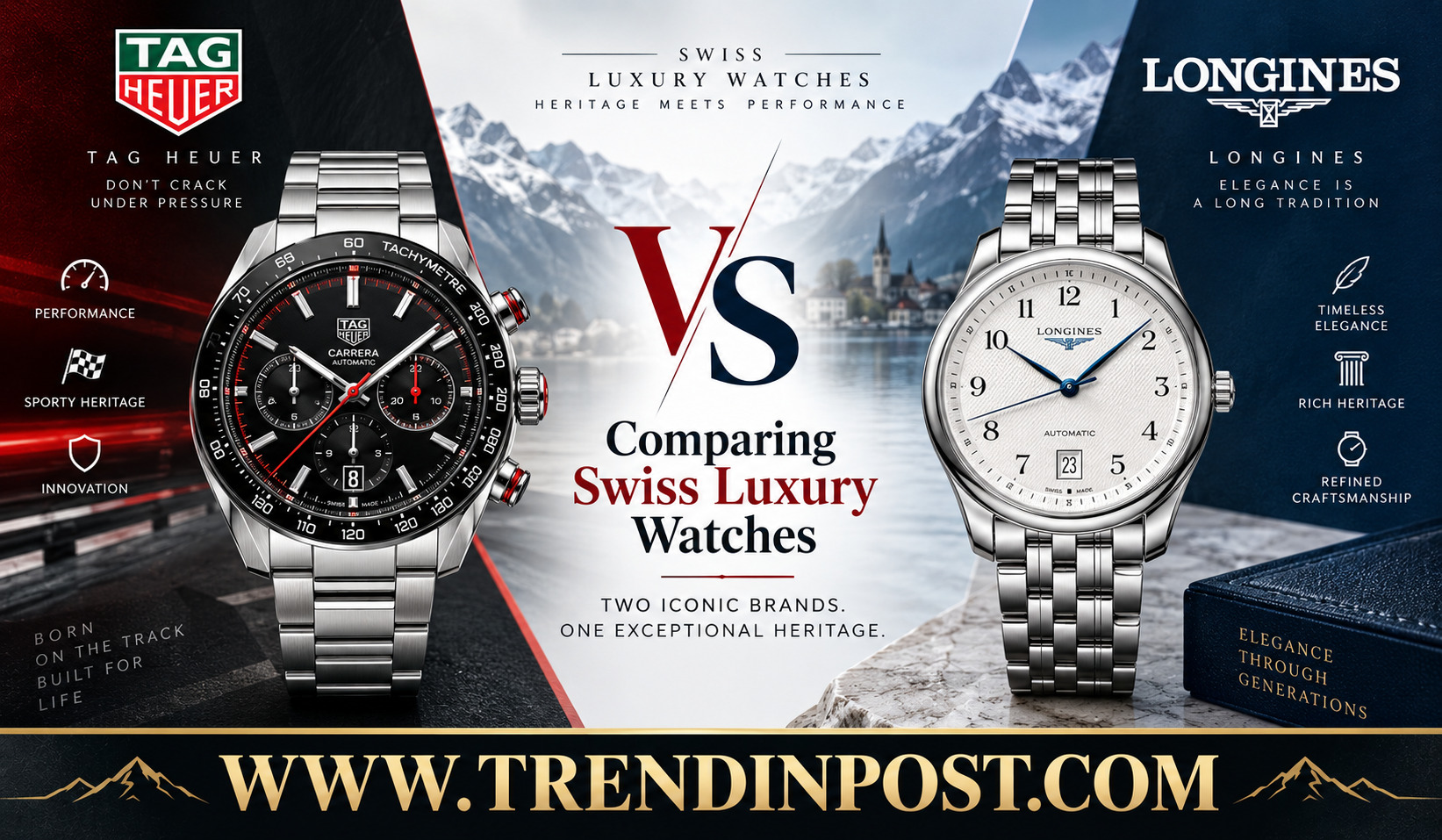
Tag Heuer vs Longines: Comparing Swiss Luxury Watches
Introduction
Two Swiss brands, two very different roads, and both start under $1,500. Tag Heuer and Longines sit in the accessible end of Swiss luxury watchmaking, just below names like Rolex and Omega. This guide compares Tag Heuer vs Longines across design, movements, price, and resale, so you can see which brand better matches what you actually want to wear.
Two Different Swiss Stories
Longines has a long history stretching back to the 1800s, once holding a strong position in the middle of the Swiss watch market. The quartz crisis hit the brand hard in the 1970s, forcing cutbacks before Longines rebuilt its reputation around classic and sport models.
Tag Heuer built its name more around motorsport and precision timing tools, with strong ties to racing that still show up in collections like the Carrera and Formula 1.
Both brands sit under the Swatch Group umbrella today in a broader sense of Swiss watchmaking, though Longines leans toward classic design while Tag Heuer leans toward sport and racing heritage.
Design Focus and Product Range
Tag Heuer carries a higher share of sport focused models in its catalog compared to Longines. Chronographs and racing inspired dials show up often across the Carrera and Formula 1 lines.
Longines also makes sport watches, like the HydroConquest dive watch, but the bulk of its catalog leans toward classic dress and heritage pieces with a more refined build style.
- Tag Heuer favors bold dials and motorsport styling across much of its range.
- Longines favors clean dials and classic proportions, even on its sport models.
- Both brands offer chronographs, though Tag Heuer’s racing connection gives its versions more visual attitude.
- Longines’ heritage pieces often reference designs from the brand’s own archive going back decades.
Movements and Craftsmanship
Both brands use a mix of in house and outsourced movements, common practice at this price tier.
Tag Heuer’s in house Calibre Heuer 02 chronograph movement appears across several Carrera references, while some entry models still use quartz movements for lower cost and simpler maintenance. Longines relies heavily on movements built with ETA, a fellow Swatch Group company, often finished with details like silicon balance springs on newer calibers.
| Factor | Tag Heuer | Longines |
| Entry price | About $1,000 | About $725 |
| High end price | Up to $26,000+ | Up to $16,000+ |
| Movement source | Mix of in house and outsourced | Mostly ETA based, some in house finishing |
| Design focus | Sport and motorsport | Classic with some sport models |
| Water resistance (sport lines) | Around 200m on Formula 1 | Around 300m on HydroConquest |
Price Ranges Compared
Longines generally starts slightly lower than Tag Heuer at the entry level, with basic models around $725 compared to about $1,000 for Tag Heuer’s cheapest pieces.
At the high end, Tag Heuer’s most expensive references push past $26,000, while Longines tops out a bit lower, closer to $16,000. Both brands sit well below Rolex or Omega at their upper limits, keeping them accessible within the Swiss luxury tier.
Resale Value
Resale performance between the two brands stays fairly close, though Tag Heuer tends to edge slightly ahead in average resale value on certain models.
Neither brand matches Rolex or Omega for resale strength, since both operate in a more accessible price tier where demand is less concentrated on a handful of iconic references. Condition, original box and papers, and valid warranty cards affect resale value for both brands in similar ways.
Choosing the Right Brand for You
Someone who wants a sportier look with racing heritage and a bold dial usually leans toward Tag Heuer. Someone who wants a more refined, classic design with a slightly lower entry price usually leans toward Longines.
Buyers focused on water resistance for diving may prefer the Longines HydroConquest, while buyers focused on chronograph styling and motorsport ties may prefer the Tag Heuer Carrera or Formula 1.
Key Takeaways
- Heritage: Longines carries a longer overall history, while Tag Heuer built its name through motorsport.
- Design: Tag Heuer leans sportier, while Longines leans toward classic and refined styling.
- Movements: Tag Heuer offers its in house Calibre Heuer 02, while Longines relies more on ETA based calibers.
- Price: Longines starts slightly lower, while Tag Heuer’s top models run somewhat higher.
- Resale: Both brands perform similarly, with Tag Heuer slightly ahead on average.
FAQs
Which brand is cheaper to start with, Tag Heuer or Longines?
Longines generally offers a slightly lower entry price than Tag Heuer.
Does Tag Heuer make its own movements?
Yes, the in house Calibre Heuer 02 appears in several Tag Heuer chronograph models.
Is Longines better for diving watches?
The Longines HydroConquest offers stronger water resistance than Tag Heuer’s Formula 1 diving alternative.
Which brand has more sport focused models?
Tag Heuer carries a higher share of sport and motorsport styled watches in its catalog.
Do both brands use Swiss made movements?
Yes, both Tag Heuer and Longines build their watches with Swiss made movements across their lineups.
Conclusion
Tag Heuer vs Longines comes down to whether you want sport styling or classic refinement at an accessible Swiss price point. Tag Heuer leans into motorsport heritage and bold chronograph design, while Longines leans into a longer classic history and slightly lower starting prices. Either brand offers a solid step into Swiss watchmaking without reaching Rolex or Omega price levels.
Related Post

Common Mistakes New Watch Collectors Should Avoid
Introduction New collectors lose more money to mistakes than to bad luck. Common mistakes new…