
Petrol vs Diesel Cars: What Has Changed for Buyers?
>> Automobile>> Petrol vs Diesel Cars: What Has Changed for Buyers?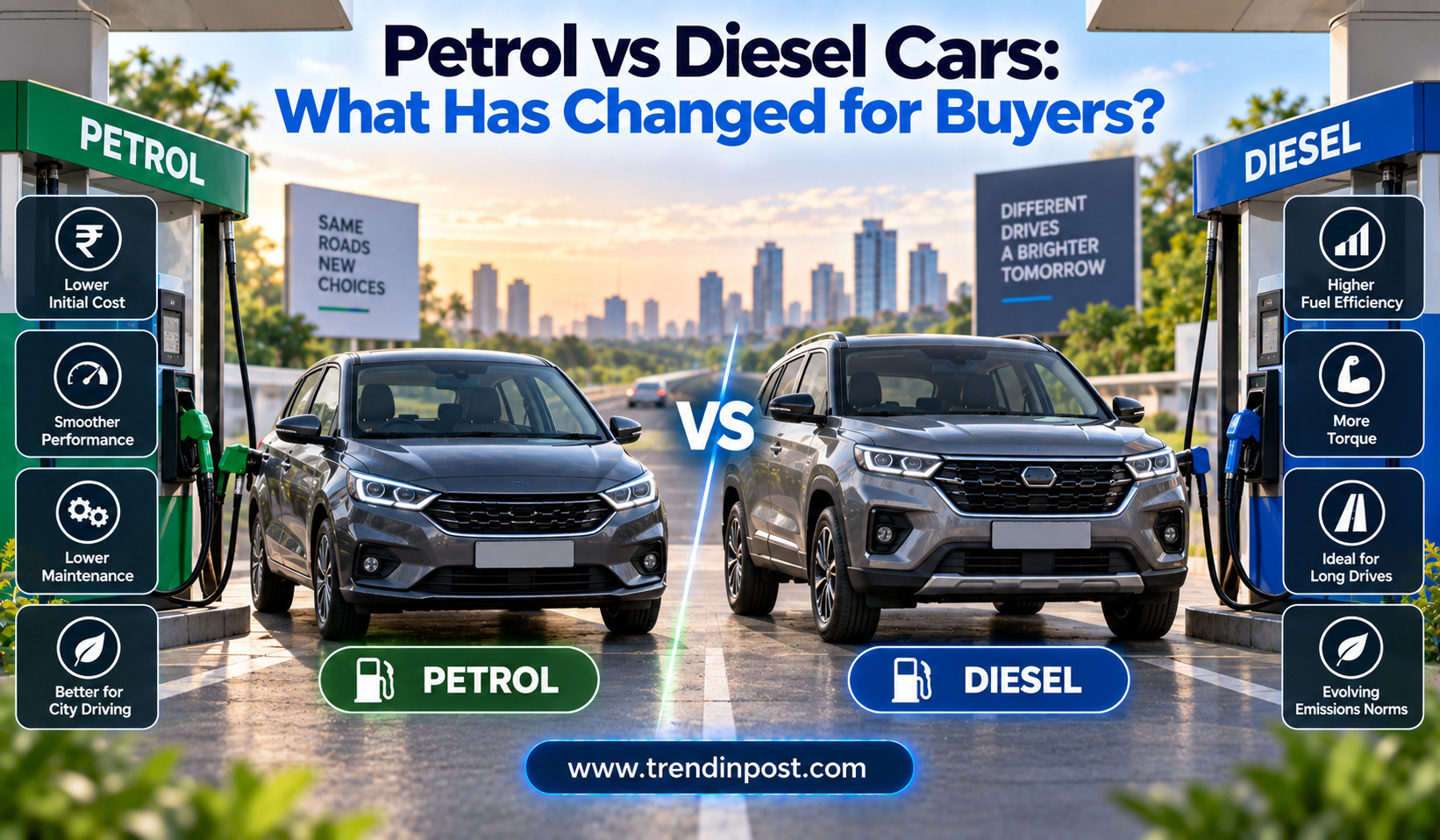
Petrol vs Diesel Cars: What Has Changed for Buyers?
The petrol-versus-diesel decision used to be one of the most common questions for Indian car buyers. Diesel cars were once the obvious choice for people who drove long distances, while petrol models were preferred for lower purchase prices, smoother city driving and easier ownership. Over the years, however, the Indian passenger-vehicle market has changed significantly.
Stricter emission standards, improvements in petrol engine technology, changing customer preferences and the rapid growth of SUVs have altered the role of diesel cars. Petrol engines have become more efficient and responsive, while modern diesel engines have become cleaner and more technologically advanced. At the same time, electric vehicles and strong-hybrid models have introduced new alternatives for buyers considering running costs.
As a result, choosing between petrol and diesel today requires a different approach. Instead of simply asking which fuel is cheaper, buyers need to consider driving distance, vehicle price, city usage, highway travel, maintenance and long-term ownership plans.
The Biggest Change: Diesel Is No Longer the Default Choice
There was a time when diesel cars had a strong presence across several passenger-vehicle segments. Their combination of strong low-end torque and good highway efficiency made them particularly attractive to buyers who travelled extensively.
The situation has changed. Petrol cars now dominate many parts of the passenger-vehicle market, particularly among compact cars and urban-focused models. Manufacturers have also invested heavily in turbocharged petrol engines, automatic transmissions and other technologies that have improved petrol cars’ performance and efficiency.
Diesel has not disappeared, though. It continues to have a strong following in larger SUVs and vehicles designed for frequent highway use. Buyers who regularly cover significant distances can still find a diesel powertrain appealing.
The difference today is that diesel is no longer automatically the better choice for high-mileage users. The complete ownership calculation matters more than it did in the past.
Petrol Engines Have Become More Capable
Modern petrol engines are very different from some of the naturally aspirated units that dominated the market years ago. Turbocharged petrol engines have become increasingly common, particularly in SUVs and premium hatchbacks.
Turbocharging allows relatively small engines to produce strong power and torque. This has helped petrol vehicles deliver performance that can compete with larger engines in everyday conditions. Automatic transmissions have also made petrol cars more comfortable in traffic.
For urban users, petrol engines have several practical advantages. They generally offer smoother operation, quick starting and a familiar ownership experience. Petrol cars can also make sense for people who drive relatively limited kilometres each year.
However, fuel economy can vary substantially depending on engine size, traffic and driving style. A powerful turbo-petrol SUV driven aggressively in heavy traffic may not deliver the same efficiency as a smaller petrol hatchback.
Modern Diesel Engines Are More Advanced
Diesel technology has also changed considerably. Modern diesel passenger vehicles use sophisticated emission-control systems to meet increasingly demanding regulations. These systems have helped reduce harmful emissions compared with older generations of diesel engines.
The result is a diesel car that is cleaner and more refined than the diesel vehicles many buyers remember from the past. However, the additional emission-control technology also means modern diesel engines can be mechanically more complex.
Diesel engines continue to offer strong torque, which can be particularly useful in larger SUVs and on highways. Their ability to deliver strong pulling power at relatively low engine speeds remains one of their biggest strengths.
For someone regularly travelling long distances with passengers and luggage, that combination can still make a diesel SUV attractive.
Fuel Economy Is Still Important, But Not the Only Factor
Diesel cars traditionally earned their reputation because of their fuel efficiency. In many cases, a diesel vehicle can travel farther on a litre of fuel than a comparable petrol vehicle.
But fuel economy alone does not determine ownership cost. Diesel versions often command a higher purchase price than equivalent petrol versions. Buyers therefore need to calculate whether the fuel savings will recover that additional upfront expense during the period they plan to own the car.
For low-mileage drivers, a petrol vehicle may be financially sensible even if its fuel efficiency is lower. For high-mileage drivers, diesel savings can become more meaningful.
A simple comparison of advertised mileage figures is therefore not enough. Real-world usage, annual kilometres and the difference in purchase price should all be considered.
City Driving Changes the Calculation
Urban driving is one area where petrol cars often have a practical advantage. Short trips, traffic congestion and frequent stop-and-go conditions are common in Indian cities.
Petrol engines are generally well suited to this type of usage. They can be comfortable for short journeys and do not require the same type of long-distance usage pattern that can be beneficial for some modern diesel vehicles equipped with emission-control systems.
This does not mean diesel cars cannot be driven in cities. Modern diesels are perfectly capable of urban use. The question is whether the buyer’s overall driving pattern justifies choosing one.
Someone who drives only a few kilometres to work each day may not receive enough fuel-cost savings from a diesel car to justify its higher purchase price and potentially higher maintenance complexity.
Highway Drivers May Still Prefer Diesel
The equation changes for buyers who spend significant time on highways. Diesel engines are known for strong torque and efficient cruising, which can make them suitable for long-distance driving.
A diesel SUV loaded with passengers and luggage can benefit from its strong mid-range performance. Overtaking and climbing gradients can also feel effortless in a well-tuned diesel vehicle.
High-mileage owners may also see greater fuel savings over several years. This is particularly relevant for people who regularly travel between cities for work or family commitments.
For these buyers, diesel remains a relevant choice despite the industry’s shift toward petrol, hybrid and electric powertrains.
Petrol vs Diesel: What Has Changed?
| Factor | Petrol Cars | Diesel Cars |
| Purchase price | Usually lower | Often higher |
| City driving | Very suitable | Suitable, depending on usage |
| Highway efficiency | Good, model dependent | Often a major strength |
| Low-end torque | Good in turbo engines | Generally stronger |
| Short-distance use | Better suited | Less ideal for predominantly short trips |
| Long-distance use | Capable | Particularly strong |
| Engine refinement | Generally quieter and smoother | Modern diesels are much more refined |
| Maintenance complexity | Generally simpler | Emission systems can add complexity |
| Best for | City and mixed usage | High-mileage and highway users |
Maintenance Has Become a Bigger Consideration
Maintenance is an important part of the modern petrol-versus-diesel discussion. Petrol cars generally have simpler requirements from the buyer’s perspective, although modern turbo-petrol engines and automatic transmissions can also involve sophisticated components.
Diesel vehicles have additional emission-control hardware. Depending on the vehicle, this can include components designed to manage particulate and nitrogen-oxide emissions. These systems are essential for meeting modern emission requirements but can increase the technical complexity of the powertrain.
This is one reason buyers should not compare only the service bill for the first few years. Long-term ownership should also be considered, particularly if the vehicle is expected to be kept for many years.
A buyer should check the manufacturer’s recommended service schedule, warranty coverage and typical maintenance costs before making a decision.
Resale Value Is Less Predictable Than Before
Diesel cars traditionally enjoyed strong demand in the used-car market, particularly among buyers looking for fuel-efficient vehicles. That advantage has become less straightforward.
Changing emission regulations, restrictions in some cities and the growing popularity of petrol, hybrid and electric vehicles have affected how buyers think about used diesel cars.
The resale value of an individual car will still depend on its brand, condition, age, kilometres, service history and market demand. A popular diesel SUV can retain strong demand, while a less desirable diesel model may face a smaller buyer pool.
Petrol cars can benefit from broader acceptance among urban buyers, but resale value also varies substantially between models.
What About SUVs?
The petrol-versus-diesel decision is particularly relevant in the SUV segment. Larger SUVs traditionally benefited from diesel engines because of their torque, highway efficiency and ability to handle heavier loads.
Today, however, petrol SUVs are much more competitive. Turbo-petrol engines can deliver strong performance while automatic gearboxes make them comfortable for daily driving.
Diesel still makes sense for buyers who use an SUV as a long-distance vehicle rather than simply as an urban family car. Someone regularly travelling hundreds of kilometres with passengers may appreciate the efficiency and torque of a diesel engine.
For predominantly city-based SUV buyers, a turbo-petrol can often provide a more straightforward ownership experience.
How Should Buyers Decide?
The best way to choose is to look at actual usage rather than relying on the old assumption that diesel is automatically better for mileage. Buyers should consider:
- Annual kilometres driven
- Percentage of city versus highway driving
- Expected ownership period
- Difference between petrol and diesel purchase prices
A buyer covering modest kilometres primarily in traffic may find petrol more convenient. Someone travelling extensively on highways may still benefit from diesel.
Another important consideration is the availability of alternative powertrains. In some segments, buyers can now compare petrol with strong hybrids or electric vehicles. This means the traditional petrol-versus-diesel debate is no longer happening in isolation.
Petrol, Diesel or Something Else?
The Indian automotive market is gradually moving toward a wider range of powertrain choices. Petrol remains the mainstream option for many buyers, diesel continues to serve customers with specific requirements, and hybrids and EVs are becoming increasingly relevant.
This change gives buyers more flexibility, but it also means the decision requires more research. A person replacing an older diesel car should not automatically purchase another diesel vehicle simply because the previous car worked well for them.
Similarly, buyers who drive long distances should not reject diesel purely because petrol cars are now more popular. Their own driving pattern remains the most important factor.
Final Thoughts
The petrol-versus-diesel debate has changed significantly. Diesel cars are no longer the automatic choice for anyone looking for better mileage, while petrol engines have become more capable, efficient and enjoyable to drive.
For urban users, petrol often offers a practical combination of lower initial cost, smooth operation and easy everyday usability. For high-mileage drivers and frequent highway travellers, diesel can still provide valuable advantages through strong torque and fuel efficiency.
The right choice ultimately depends on how the car will actually be used. Buyers should compare the purchase price, expected fuel consumption, annual driving distance, maintenance requirements and planned ownership period before deciding.
The biggest change is that today’s buyer has more options than ever. Petrol and diesel remain important, but hybrids and electric vehicles are also reshaping the conversation. Instead of choosing a fuel type based on old assumptions, buyers can now select the powertrain that best matches their real-world driving needs.
FAQs
Is petrol better than diesel for city driving?
Petrol is generally well suited to city driving, particularly for buyers who make short trips and cover moderate annual kilometres. Modern diesel cars can also be used in cities, but their advantages become more noticeable with longer and more frequent journeys.
Are diesel cars still worth buying?
Yes. Diesel cars can still make sense for buyers who regularly drive long distances, use highways frequently or want strong torque from an SUV. The decision should be based on actual usage rather than fuel preference alone.
Which is cheaper to maintain, petrol or diesel?
Petrol cars generally have a simpler maintenance structure, although costs vary by model. Modern diesel vehicles have additional emission-control technology, which can make the powertrain more complex.
Do diesel cars give better mileage than petrol cars?
Diesel engines often deliver better fuel efficiency than comparable petrol engines, but the actual difference varies by vehicle. Buyers should compare real-world efficiency rather than relying only on manufacturer-certified figures.
Is a turbo-petrol a good alternative to diesel?
For many buyers, yes. Turbo-petrol engines can offer strong torque and performance while retaining the smoothness and convenience associated with petrol engines. They can be especially attractive for buyers who primarily drive in cities.
Related Post

Volkswagen Cars With Driver-Focused Features to Explore
Volkswagen has built its reputation around cars that put a strong emphasis on driving dynamics,…