
How Climate Change Could Influence the Fruits We Eat
>> LifeStyle>> How Climate Change Could Influence the Fruits We Eat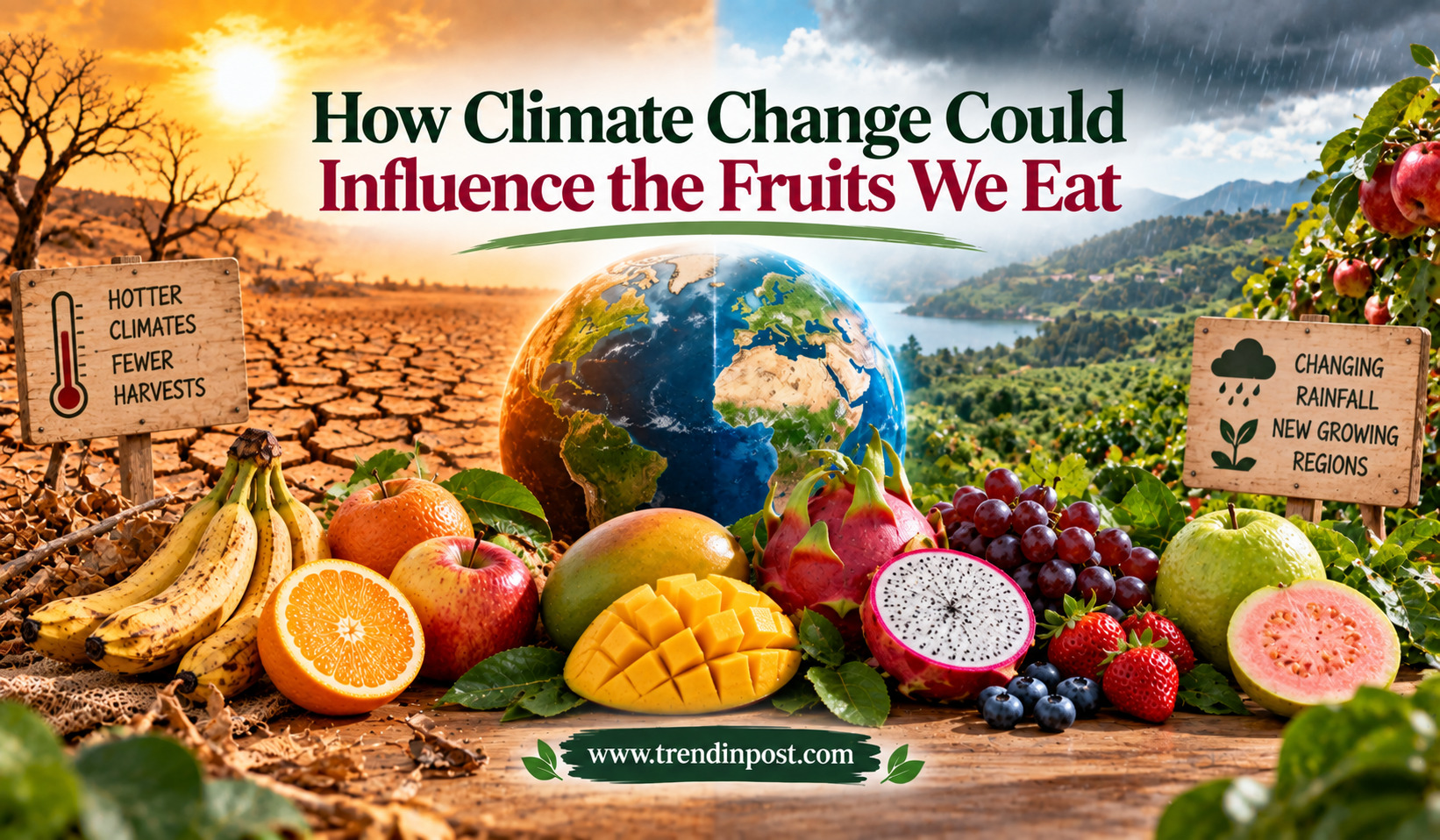
How Climate Change Could Influence the Fruits We Eat
Climate change is becoming an increasingly important issue for agriculture, and the effects could eventually be felt in something as familiar as the fruit on a supermarket shelf. Rising temperatures, changing rainfall patterns, shifting seasons and more frequent extreme weather events are creating new challenges for farmers and food supply chains.
Fruit crops can be particularly sensitive to environmental conditions. Many varieties require specific combinations of temperature, rainfall, sunlight and seasonal changes to grow successfully. When those conditions change, production can be affected in ways that influence availability, quality, prices and even the varieties consumers see in markets.
The impact will not be identical everywhere. Some regions could become more suitable for particular fruits, while others may experience declining production. For consumers, the long-term result could be a changing fruit basket, with some familiar varieties becoming harder to grow in certain areas and new varieties gaining attention.
Why Fruit Crops Depend So Closely on Climate
Fruit trees and plants often have specific environmental requirements. Temperature influences flowering, fruit development and ripening, while rainfall affects water availability and plant growth. In some crops, a particular period of cooler weather is also important for the plant’s seasonal cycle.
A change in these conditions can disrupt normal production. Warmer winters, for example, may affect flowering patterns in certain fruit trees. Unexpected heat during flowering can also create problems for pollination and fruit development.
These changes can occur gradually, making them difficult to notice from one season to another. Farmers may initially respond through changes in irrigation, planting schedules or crop management, but persistent climate shifts can require larger adaptations.
Rising Temperatures Could Change Growing Regions
One of the most significant climate-related factors is rising average temperature. Fruit crops that traditionally grow well in cooler environments may face increasing pressure as temperatures rise.
This does not mean that these fruits will suddenly disappear. Instead, farmers may find that traditional growing areas become less reliable. Production could move toward higher elevations or regions with more suitable temperatures.
At the same time, warmer conditions may create opportunities for crops that prefer heat. Certain tropical and subtropical fruits could potentially expand into areas where growing conditions were previously less suitable.
However, moving agricultural production is not simple. Soil quality, water availability, infrastructure, labour, market access and local farming knowledge all influence whether a new growing region can successfully support a crop.
Changing Rainfall Could Affect Fruit Production
Rainfall is another major factor. Some fruit crops need regular moisture during particular stages of development, while excessive rainfall can increase disease pressure or damage flowers and fruit.
Unpredictable rainfall can make farming decisions more difficult. A long dry period may increase irrigation requirements, while intense rainfall can lead to waterlogging, erosion and crop damage.
For farmers, this means that traditional expectations about seasonal rainfall may become less dependable. Water management could therefore become an increasingly important part of fruit production.
Efficient irrigation systems, improved water storage and better monitoring can help farmers respond to changing conditions, although access to these technologies varies considerably between farming regions.
Extreme Weather Could Create Supply Shocks
Climate change is also associated with greater concern about extreme weather events. Heatwaves, droughts, intense rainfall, storms and other weather disruptions can cause significant damage to agricultural production.
Fruit crops may be particularly vulnerable when extreme conditions occur during flowering or fruit development. A short period of severe weather can affect the harvest even when overall seasonal conditions appear reasonable.
These events can also affect the supply chain after harvesting. Flooding or storms may damage roads, storage facilities and transportation networks, making it harder for produce to reach markets.
For consumers, such disruptions can sometimes appear as temporary shortages or higher prices rather than as an obvious climate-related event.
Some Fruits Could Become More Difficult to Produce
Certain fruits may face greater challenges if the climate conditions they depend on become less predictable. Apples, cherries and some other temperate fruits, for example, require particular seasonal conditions for successful production.
The impact will depend on the variety and location. Farmers may respond by selecting different cultivars, changing planting locations or adopting new agricultural practices.
This could gradually influence what consumers find in local markets. A fruit that was once produced extensively in a particular region might become less common, while another variety better suited to the changing environment could gain importance.
Other Fruits Could Find New Opportunities
Climate change does not affect every crop in the same way. Some fruits may tolerate warmer conditions better than others.
Tropical and subtropical fruits could potentially become more suitable for certain areas as temperatures change. But this should not be interpreted as a simple benefit. Water availability, pests, soil conditions and extreme heat can still create serious challenges.
The expansion of a crop into a new region also requires investment and agricultural knowledge. A warmer climate alone does not guarantee successful commercial production.
Climate Change and the Fruits We Eat
| Climate Factor | Possible Effect on Fruit Production | Potential Consumer Impact |
| Higher temperatures | Heat stress and changes in flowering | Changes in availability |
| Irregular rainfall | Water shortages or excess moisture | Production fluctuations |
| Extreme heat | Damage during flowering or fruit development | Price and supply changes |
| Drought | Greater irrigation requirements | Higher production costs |
| Heavy rainfall | Flooding and crop disease risks | Temporary shortages |
| Changing seasons | Shifts in crop timing | Different seasonal availability |
Water Could Become a Bigger Issue
Water availability is likely to play a central role in the future of fruit production. Fruit trees can require substantial water, particularly in regions with naturally dry conditions.
As competition for water increases among agriculture, households and industries, farmers may need to produce more efficiently with available resources.
Drip irrigation and other targeted watering systems can reduce unnecessary water use by delivering moisture closer to plant roots. Soil monitoring and improved irrigation scheduling can also help farmers make more informed decisions.
However, technology alone cannot solve every water challenge. Long-term water management depends on local rainfall, groundwater availability, reservoirs, agricultural policies and community-level planning.
Pests and Plant Diseases Could Shift
A changing climate can also influence insects, fungi and other organisms that affect crops. Warmer temperatures may alter the geographic range or seasonal activity of some pests.
This could create additional pressure for farmers growing fruit crops. A pest that was previously limited by cooler conditions may become more active in a new region.
Farmers may therefore need to strengthen monitoring and adopt integrated approaches to crop protection. Developing resistant varieties and improving agricultural research could become increasingly important.
What Farmers Could Do to Adapt
Farmers are already exploring different approaches to make agricultural systems more resilient. The most suitable strategy depends on the crop, local climate and available resources.
Some adaptation approaches include:
- Selecting fruit varieties that are better suited to warmer or changing conditions.
- Improving irrigation efficiency and water-storage systems.
- Adjusting planting and harvesting schedules.
- Using better monitoring to identify pests, diseases and weather risks earlier.
These measures can reduce some risks, but adaptation has limits. If environmental conditions change beyond a crop’s tolerance, farmers may eventually need to consider different varieties or alternative crops.
Technology Could Help Build a More Resilient Fruit Supply
Agricultural technology may become increasingly important as farmers deal with greater uncertainty. Weather forecasting, soil sensors, satellite monitoring and digital farm-management tools can provide information that supports day-to-day decisions.
For example, better weather information can help farmers plan irrigation or prepare for extreme conditions. Digital monitoring can also help identify changes in crop health before visible damage becomes widespread.
Post-harvest technology is equally important. Improved cold storage, transportation and packaging can help reduce food losses and maintain fruit quality as supply chains face greater climate-related pressure.
Consumers Could See More Seasonal and Regional Changes
The effects of climate change may eventually become noticeable through changes in fruit availability. Some fruits could have shorter or less predictable seasons, while others may become available in new regions.
Prices could also fluctuate when extreme weather affects harvest volumes. A poor crop can reduce supply while demand remains relatively stable, creating pressure on market prices.
Consumers may respond by becoming more flexible about the varieties they purchase. Instead of relying heavily on one particular fruit throughout the year, shoppers may increasingly explore seasonal and locally available alternatives.
The Role of Farmers and Food Companies
Adaptation will not depend entirely on farmers. Food companies, retailers, governments and research institutions also have roles to play.
Companies can work with growers to develop more resilient supply chains, while researchers can focus on climate-tolerant crop varieties and improved agricultural practices. Retailers can also help consumers understand seasonal availability and introduce alternative varieties.
For developing agricultural regions, investment in irrigation, storage, transportation and farmer education could be especially important. Without adequate infrastructure, climate-related production problems can become more difficult to manage.
Four Changes Consumers May Notice Over Time
As climate conditions continue to influence agriculture, the fruit market could gradually experience several changes:
- Greater seasonal variation in the availability of certain fruits.
- Increased interest in climate-resilient fruit varieties.
- More attention to locally produced and seasonal fruit.
- Greater use of technology throughout farming and supply chains.
These changes are likely to develop differently across countries and regions rather than following one universal pattern.
Could Climate Change Change Our Favourite Fruits?
It is unlikely that climate change will simply eliminate a fixed list of fruits from global diets. Agriculture is adaptable, and farmers, scientists and businesses can respond through new varieties, technologies and production methods.
However, the fruit market may become more dynamic. The varieties available in a particular region could change, production could move geographically, and consumers could encounter new alternatives.
The bigger concern is not necessarily whether a particular fruit disappears but whether production becomes more expensive, less predictable or more resource-intensive.
Conclusion
Climate change could influence the fruits we eat in several interconnected ways. Temperature, rainfall, water availability, extreme weather, pests and changing seasons can all affect how fruit crops are grown and supplied.
For consumers, these changes may eventually appear through shifting prices, seasonal availability and a greater selection of fruits from different growing regions. For farmers, the challenge will be adapting production while managing water, costs and environmental risks.
The future fruit market is therefore likely to depend on both agricultural adaptation and consumer flexibility. Better technology, resilient crop varieties, efficient water use and stronger supply chains can help reduce some of the pressure.
The fruits available on our tables may look familiar for years to come, but the way they are grown, transported and brought to consumers could change significantly as agriculture responds to a changing climate.
FAQs
1. How can climate change affect fruit production?
Changes in temperature, rainfall, water availability and extreme weather can influence flowering, fruit development, crop yields and harvesting seasons.
2. Will climate change make some fruits disappear?
It is unlikely that all production of particular fruits will simply disappear. However, some varieties could become more difficult or expensive to grow in certain regions.
3. Can warmer temperatures help some fruits?
Some tropical and subtropical fruits may find suitable conditions in areas that become warmer, but water availability, pests and extreme heat can still create challenges.
4. Why is water important for the fruit industry?
Many fruit crops require reliable water during important stages of growth. Drought and competition for water can therefore increase production challenges and costs.
5. Could climate change increase fruit prices?
Extreme weather and lower harvests can reduce supply, which may contribute to temporary price increases. The effect varies by crop, region and market conditions.
Related Post

Plant Décor Ideas for Indian Style Homes
Plants can add warmth, freshness, and natural beauty to Indian homes. From a traditional tulsi…