Are Luxury Watches a Good Investment in 2026?
>> LifeStyle>> Are Luxury Watches a Good Investment in 2026?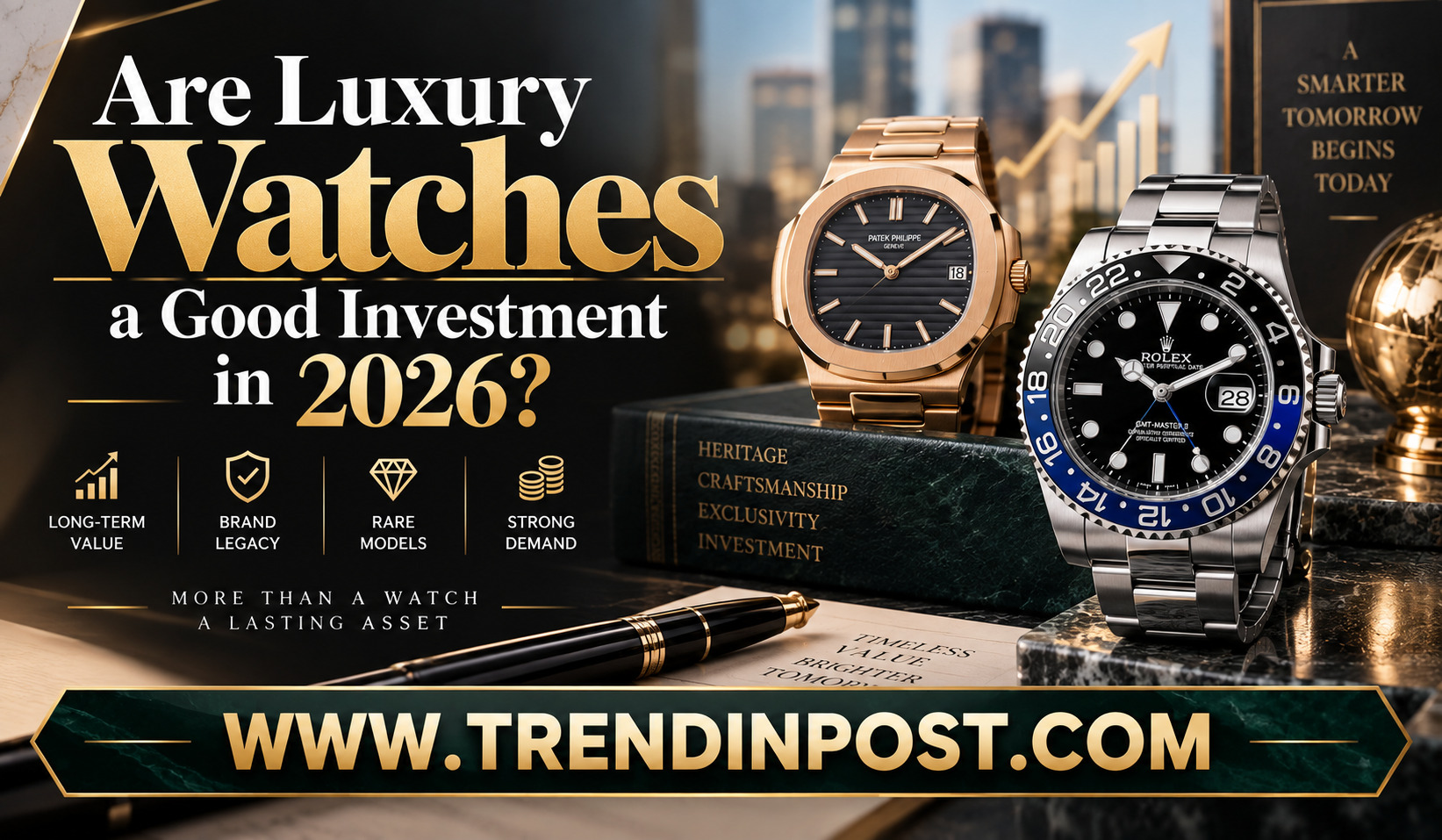
Are Luxury Watches a Good Investment in 2026?
Introduction
Secondary market watch prices have fallen for eleven straight quarters, yet some models keep climbing anyway. That contradiction sits at the center of any honest conversation about luxury watches as an investment in 2026. The easy hype from a few years ago has faded, replaced by a market that rewards patience and real research over quick flips. Here is what the data and the experts actually say right now.
The Market Correction Since 2022
Secondary market watch prices peaked around May 2022 and have been declining ever since. One recent analysis found resale prices dropped by roughly 5.7 percent in 2024 compared to the year before, driven partly by an oversupply of watches as earlier investors rushed to sell.
That flood of inventory pushed prices down further and made it harder for sellers to get strong returns. As 2026 begins, analysts describe the market as showing early signs of stabilizing after three years of correction, though prices in many segments remain soft.
Which Brands Still Hold Value
Not every luxury watch brand has struggled equally. Data from early 2026 shows the so-called Big Three, Rolex, Patek Philippe, and Audemars Piguet, together account for roughly 64 percent of total secondary market value.
Within that group, performance still varies. Around 56 percent of Rolex models and 63 percent of Audemars Piguet models were selling above their original retail price, while about 38 percent of Patek Philippe references matched that pattern. This shows that even within top brands, specific models matter far more than brand name alone.
Store of Value vs Get-Rich-Quick
Industry voices are increasingly clear that watches should not be treated like speculative stocks. One watch market expert described them as working best like portable wealth, a store of value that can appreciate over time rather than a fast path to profit.
This framing matters for expectations. Someone buying a watch hoping to double their money quickly is likely to be disappointed given current market conditions. Someone buying with a longer horizon and genuine appreciation for the piece has a much more realistic outlook.
Condition, Documentation, and Real Returns
Return on any specific watch depends heavily on factors beyond just brand and model. Condition and completeness of accompanying documentation can make the difference between a healthy profit and an outright loss when it comes time to sell.
| Factor | Impact on Investment Outcome |
| Brand and model demand | Sets the baseline for resale interest |
| Condition | Directly affects achievable resale price |
| Original box and papers | Missing documentation can significantly reduce value |
| Service history | Complete records reassure buyers and support pricing |
| Reference rarity | Discontinued or limited models often perform better |
Buyers focused purely on investment potential should treat these details as seriously as the brand name itself.
Secondary Market vs Buying at Retail
Retail prices at authorized dealers and secondary market prices can diverge sharply, especially for high-demand references. Long waitlists at retail, sometimes stretching for years on certain models, push many buyers toward the secondary market instead.
This gap creates both opportunity and risk. Buyers able to secure a watch at retail price sometimes see immediate paper gains if that reference is in high demand. Buyers forced to pay secondary market premiums face a much steeper climb before seeing any real appreciation.
Who Should Treat Watches as Investments
Watches tend to work best as a portfolio addition for people who already have genuine interest in the category, rather than as a first-choice investment vehicle. Enjoying the watch itself provides value even in years when resale prices stay flat or decline.
Buyers purely chasing returns with no personal interest in watches face real risk, given how much recent price corrections have affected the broader secondary market. A more balanced approach treats potential appreciation as a possible bonus rather than the entire reason for the purchase.
Key Takeaways
- The market has cooled since 2022: Secondary prices have declined for multiple consecutive quarters.
- Brand matters, but so does the model: The Big Three dominate resale value, though performance still varies by reference.
- Watches are a store of value, not a quick flip: Experts frame them closer to portable wealth than speculative assets.
- Condition and paperwork drive real returns: Documentation and service history can swing resale value significantly.
- Retail and secondary prices can diverge sharply: Waitlists push many buyers toward paying a premium.
- Genuine interest matters: Watches work best as an investment for buyers who also value owning them.
FAQs
Have luxury watch prices recovered from their 2022 peak?
Not fully, since secondary market prices have continued declining through multiple consecutive quarters since then.
Which brands currently hold value best on the secondary market?
Rolex, Patek Philippe, and Audemars Piguet together account for the largest share of secondary market value.
Is it risky to buy a luxury watch purely as an investment?
Yes, since recent market corrections show that resale value is far from guaranteed even for major brands.
Does having the original box and papers really affect resale value?
Yes, missing documentation can significantly reduce what a buyer is willing to pay.
Should a first-time buyer expect quick profits from a luxury watch?
No, experts generally describe watches as a long-term store of value rather than a fast investment.
Conclusion
Whether luxury watches are a good investment in 2026 depends entirely on which watch, which condition, and which expectations a buyer brings to the table. The market has clearly cooled since its 2022 peak, and quick profits are far less realistic than they once seemed. For buyers who choose carefully, prioritize condition and documentation, and treat their purchase as a long-term store of value rather than a shortcut to wealth, luxury watches can still play a reasonable role in a broader collection or portfolio.
Related Post
Cartier vs Rolex: Which Brand Fits Your Style?
Introduction Rolex built a tool watch empire, while Cartier built the wristwatch itself back in…