Best Car Characteristics for First-Time Car Buyers
>> Automobile>> Best Car Characteristics for First-Time Car Buyers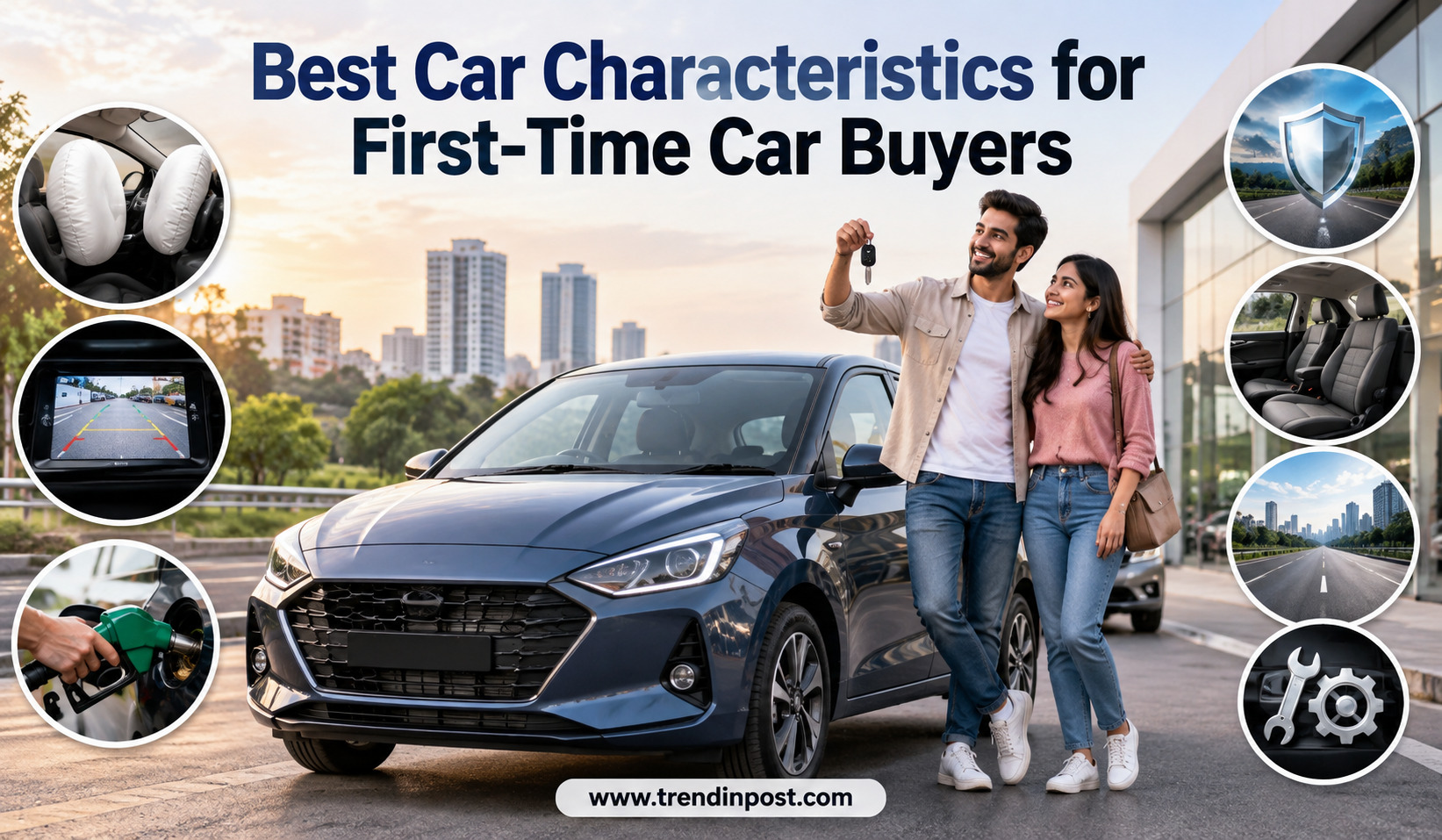
Best Car Characteristics for First-Time Car Buyers
Buying a first car is an important milestone, but choosing the right model can be confusing. New buyers are often attracted by styling, large screens, powerful engines or long feature lists. However, these are not always the characteristics that make a car easy and sensible to own for someone who is purchasing their first vehicle.
For a first-time buyer, the ideal car should provide a comfortable balance between safety, reliability, practicality, running costs and ease of driving. The right choice should fit the buyer’s daily routine rather than simply offering the most equipment or the biggest engine.
India’s passenger vehicle market now offers everything from compact hatchbacks and sedans to SUVs and electric cars. With so many choices available, understanding the characteristics that matter most can help first-time buyers make a more informed decision.
Easy-to-Drive Dimensions
One of the first characteristics new buyers should consider is the physical size of the car. A larger vehicle may offer more cabin space, but it can also be more difficult to manoeuvre in crowded streets and narrow parking areas.
Compact cars can be particularly convenient for drivers who are still developing confidence behind the wheel. Their smaller turning radius and easier visibility can make everyday city driving less stressful. However, buyers should not choose a car purely because it is small. The interior still needs to provide enough space for the driver’s normal requirements.
Parking sensors and a reversing camera can further improve confidence. These features are especially useful for new drivers who may still be learning how to judge the vehicle’s corners and rear dimensions.
Strong Safety Package
Safety should be one of the biggest priorities when purchasing a first car. New drivers may have less experience dealing with unexpected road situations, making a well-equipped safety package particularly valuable.
Modern cars can include both passive and active safety technologies. Airbags help protect occupants during a collision, while systems such as ABS and Electronic Stability Control can assist the driver during emergency braking or situations where the vehicle begins to lose stability.
First-time buyers should pay attention to the safety equipment available on the exact variant they are considering. A model may have an impressive safety specification at the top of its range while offering fewer features on an entry-level version.
Important safety characteristics to consider include:
- Multiple airbags
- ABS with Electronic Brakeforce Distribution
- Electronic Stability Control
- ISOFIX child-seat mounts
- Parking sensors and a rear-view camera
Crash-test ratings can also provide useful information, although buyers should understand the testing protocol and the specific variant or specification covered by the rating.
Good Fuel Efficiency
Running costs can have a major effect on the ownership experience. The purchase price is only one part of the overall cost of owning a car. Fuel expenses can become significant when the vehicle is used every day for commuting.
First-time buyers should consider their expected driving pattern before selecting an engine. Someone who primarily drives in heavy city traffic may have different requirements from a person who frequently travels on highways.
Fuel efficiency figures should also be treated as a reference rather than a guarantee of real-world consumption. Driving style, traffic, road conditions, air-conditioning use and passenger load can all influence actual mileage.
A car with reasonable efficiency and predictable running costs can be easier for a new owner to manage over several years.
Reliable and Easy-to-Maintain Mechanical Components
Reliability is another important characteristic for first-time buyers. New owners may prefer a car that does not require complicated maintenance and has a straightforward service schedule.
A vehicle’s reliability depends on many factors, including the engine, transmission, electrical systems and quality of maintenance. Buyers should therefore investigate the manufacturer’s service network, scheduled maintenance requirements and availability of spare parts before purchasing.
The cost of routine servicing is also worth considering. A car that is inexpensive to purchase but expensive to maintain may not necessarily provide better long-term value.
Comfortable Driving Position
A comfortable driving position can make a significant difference, particularly for someone who spends considerable time behind the wheel. The driver should be able to adjust the seat and steering wheel so that the pedals, controls and instrument display are easy to use.
Visibility is equally important. A clear view toward the front and reasonable awareness of the vehicle’s sides and rear can make driving easier for beginners.
During a test drive, buyers should spend enough time adjusting the seat, mirrors and steering wheel rather than simply driving around the dealership. Small ergonomic problems that are not noticeable during a short drive can become irritating after months of ownership.
Predictable Performance
First-time buyers do not necessarily need a high-performance car. In fact, predictable acceleration and braking can be more useful than having a large amount of power.
An engine should provide enough performance for normal city driving and highway situations without making the vehicle difficult to control. Smooth power delivery can help new drivers become comfortable with acceleration and overtaking.
Transmission choice also matters. Automatic transmissions can make urban driving easier by eliminating the need for frequent clutch operation and manual gear changes. Manual cars, meanwhile, can still appeal to buyers who want greater involvement and potentially lower purchase costs.
The best option depends on where and how the car will be driven.
Useful Technology Instead of Feature Overload
Modern cars can come with large infotainment screens, connected-car services, digital instrument clusters and numerous convenience features. While technology can improve the ownership experience, first-time buyers should distinguish between genuinely useful equipment and features that mainly add visual appeal.
Smartphone connectivity, a reversing camera, steering-mounted controls and automatic climate control can provide meaningful everyday benefits. Wireless charging and connected services may also be useful depending on the owner’s habits.
However, a long list of features should not compensate for shortcomings in safety, comfort or reliability. Buyers should first establish their essential requirements and then compare additional equipment.
Practical Cabin Space
A first car should match the buyer’s expected passenger requirements. Someone who usually travels alone or with one passenger may not need a large SUV. A buyer who regularly carries family members may benefit from a roomier hatchback, sedan, SUV or MPV.
Rear-seat space should be checked carefully. Legroom, headroom and seat width can vary significantly even among cars with similar exterior dimensions.
Storage is another small but important consideration. Door pockets, cupholders, centre-console storage and luggage space can make everyday use more convenient.
Boot Capacity for Everyday Needs
Boot space is often overlooked when buyers focus on the cabin. However, luggage capacity becomes important when carrying shopping bags, office equipment, travel luggage or other belongings.
A first-time buyer should think about how the boot will be used during normal life rather than relying solely on the published capacity figure. The shape of the boot opening and the flexibility of the rear seats can be just as important as the quoted number.
For occasional travellers, a modest boot may be sufficient. Families or buyers who frequently take road trips may prefer greater cargo flexibility.
Reasonable Ownership Costs
The most suitable first car is usually one that fits comfortably within the buyer’s overall budget. The calculation should include more than the monthly loan payment.
Insurance, fuel, servicing, tyres, parking and other ownership expenses can add considerably to the total cost. Buyers should therefore consider the expected yearly cost rather than focusing entirely on the showroom price.
A slightly more affordable model with lower running expenses may ultimately make more sense than a feature-rich car that stretches the budget.
Compact Cars vs SUVs for First-Time Buyers
There is no single body style that works for every new car owner. Compact hatchbacks can be easy to drive and park, while sedans can provide a comfortable balance between cabin and boot space. SUVs offer a higher seating position and often more ground clearance, but larger SUVs can require more confidence when manoeuvring in tight areas.
| Characteristic | Hatchback | Sedan | Compact SUV |
| City manoeuvrability | Excellent | Good | Good |
| Parking convenience | Excellent | Good | Good |
| Cabin space | Moderate | Good | Good |
| Boot practicality | Good | Excellent | Good |
| Ground clearance | Moderate | Moderate | Usually higher |
| First-time driving ease | High | High | Depends on size |
The final decision should be based on the buyer’s regular routes, passenger requirements and parking conditions.
Features That Can Help New Drivers
Some technologies can make the transition to car ownership easier. Parking sensors and cameras help with low-speed manoeuvring, while hill-hold assistance can make starting on an incline less stressful.
Electronic Stability Control is particularly valuable because it can help the driver maintain control in certain situations involving loss of traction or vehicle stability. Modern driver-assistance technologies can offer additional support, but they should not encourage drivers to become less attentive.
For beginners, technology should act as an additional layer of assistance rather than a substitute for developing good driving habits.
Test Drive Before Making the Final Decision
A test drive remains one of the most valuable steps before buying a first car. Photos, online reviews and specification sheets cannot fully explain how a vehicle feels from the driver’s seat.
The buyer should test the steering, brakes, clutch or automatic transmission, visibility and suspension. If possible, the vehicle should be driven on both smooth and uneven roads.
New buyers should also check whether they can comfortably enter and exit the vehicle, reach important controls and judge the car’s dimensions while parking.
A useful pre-purchase check includes:
- Driving position and visibility
- Brake and steering response
- Rear-seat comfort
- Parking ease
- Boot usability
- Service and maintenance costs
Final Thoughts
The best first car is not necessarily the cheapest model or the one with the longest feature list. It is the vehicle that makes everyday driving manageable while offering an appropriate level of safety, comfort, reliability and practicality.
First-time buyers should focus on characteristics that will remain useful after the excitement of purchasing a new car has disappeared. Easy manoeuvrability, predictable performance, good visibility, efficient running and strong safety equipment can have a much greater impact on ownership than cosmetic features.
With careful research and a proper test drive, new buyers can choose a vehicle that fits both their current needs and their expected lifestyle. Taking a practical approach at the beginning can also make the first ownership experience more enjoyable and financially manageable.
FAQs
1. What is the most important characteristic of a first car?
Safety should be one of the highest priorities, followed by ease of driving, reliability, comfort and manageable running costs.
2. Is a small car better for first-time buyers?
A compact car can be easier to manoeuvre and park, particularly in busy cities. However, the right size depends on the buyer’s passenger and luggage requirements.
3. Should first-time buyers choose an automatic or manual car?
An automatic can be convenient in heavy traffic, while a manual may appeal to buyers who prefer more control or want a lower purchase price. Both can work well depending on driving needs.
4. How important is fuel efficiency when buying a first car?
Fuel efficiency can significantly affect long-term ownership expenses, especially for buyers who commute regularly.
5. Are advanced features necessary in a first car?
Not necessarily. Useful features such as parking sensors, a rear camera, smartphone connectivity and automatic climate control can improve convenience, but safety and reliability should come first.
Related Post
Car Dimensions Buyers Should Check Before Parking at Home
Buying a new car is usually about more than engine performance, mileage, features, and design.…