Affordable Cars With Features in More Expensive Models
>> Automobile>> Affordable Cars With Features in More Expensive Models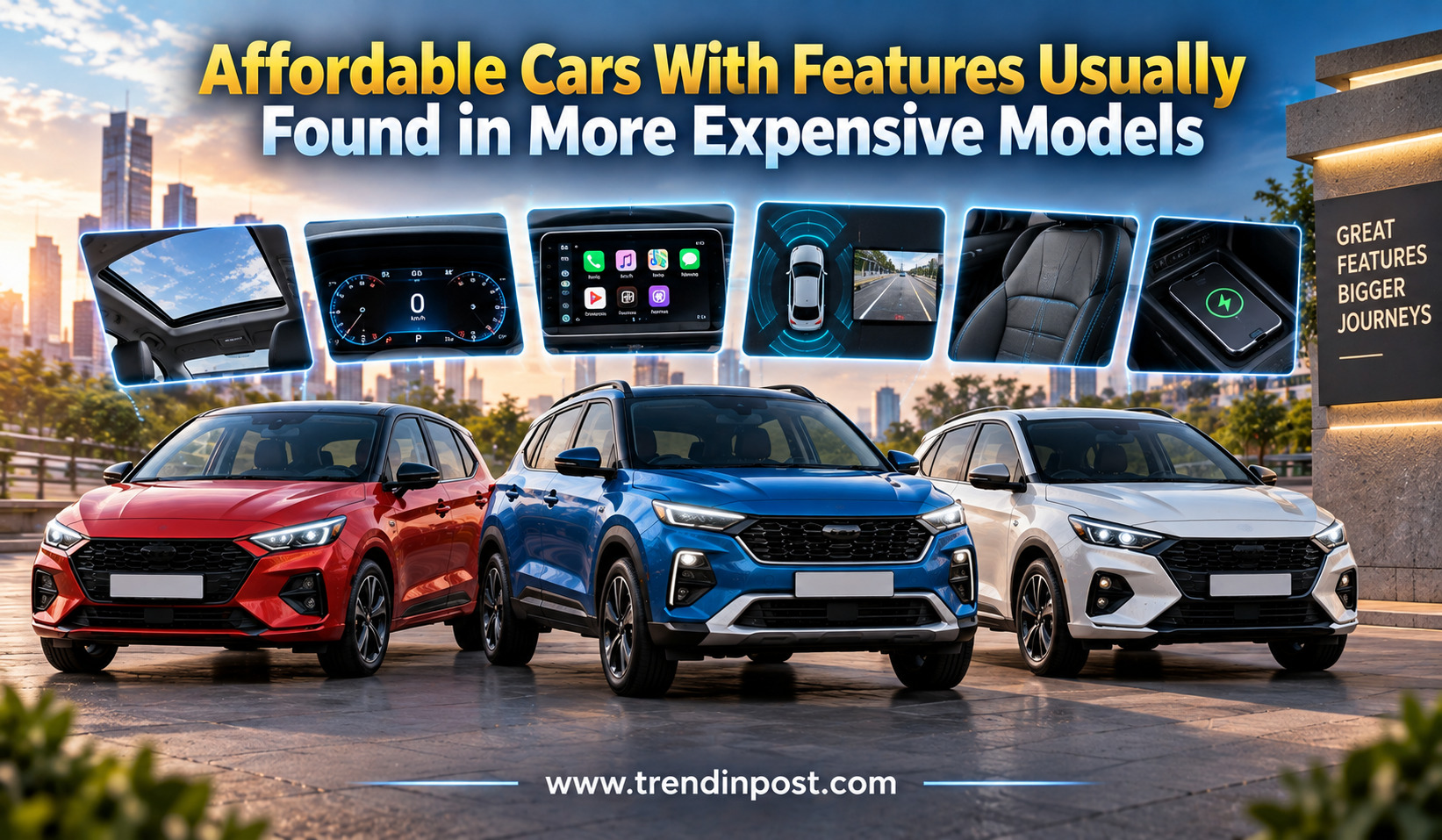
Affordable Cars With Features in More Expensive Models
The Indian car market has changed significantly in recent years, with buyers increasingly expecting more than basic transportation from an affordable vehicle. Features that were once associated mainly with premium cars are gradually appearing in hatchbacks, compact SUVs and other mainstream models. From larger infotainment screens and connected technology to advanced safety equipment and premium convenience features, carmakers are bringing more equipment to lower price segments.
This shift has made the value equation more interesting for new-car buyers. Instead of paying a premium simply to access a particular feature, customers can now find relatively affordable models offering equipment that was previously reserved for more expensive vehicles.
The trend is also being driven by increasing competition between manufacturers. Buyers have more choices, and brands are using features, technology and safety equipment to differentiate their products. As a result, the definition of an “affordable car” is changing from a basic vehicle to one that can provide a more complete ownership experience.
Why Affordable Cars Are Getting More Features
Automakers have recognised that customers are becoming more informed before making a purchase. Buyers compare specifications, safety equipment, technology and convenience features online before entering a showroom. This has increased pressure on manufacturers to provide competitive equipment even in lower-priced models.
At the same time, technologies that were once expensive to manufacture have become more accessible. Touchscreen infotainment systems, digital displays, rear cameras, automatic climate control and connected-car functions are now available across a wider range of vehicles.
However, feature availability can vary considerably between variants. A model may offer an advanced feature, but it may be restricted to a higher trim level. Buyers therefore need to check the exact variant rather than assuming that every version of a car receives the same equipment.
Touchscreen Infotainment Is No Longer a Premium Feature
Large touchscreen displays have become common across many price segments. Entry-level and mid-range cars increasingly offer screens that provide access to music, navigation, phone connectivity and vehicle information.
Smartphone integration has also become an important expectation. Android Auto and Apple CarPlay, where available, can make an affordable car feel considerably more modern by allowing drivers to access compatible applications and contacts through the vehicle’s infotainment system.
Some models also provide connected-car features through a smartphone application. Depending on the vehicle, these systems can provide information such as vehicle status, location-related services, remote functions and maintenance reminders.
The result is that buyers do not necessarily need to move into a premium segment to get a modern digital experience.
Rear Cameras and Parking Technology Add Everyday Convenience
Parking cameras were once strongly associated with higher-end vehicles, but rear-view cameras and parking sensors are now available in many mainstream models.
These systems can be particularly useful in cities, where parking spaces are often tight and visibility around the vehicle can be limited. A rear camera can provide a clearer view of obstacles behind the vehicle, while parking sensors can warn the driver when the car approaches an object.
Some affordable cars go further by offering a 360-degree camera system on selected variants. This technology uses multiple cameras to provide a broader view around the vehicle.
These features do not replace careful driving, but they can make everyday manoeuvring easier and reduce some of the stress associated with tight parking spaces.
Automatic Climate Control Moves Down the Price Ladder
Automatic climate control is another feature that has gradually moved beyond luxury vehicles. Unlike a basic manual air-conditioning system, automatic climate control allows the driver to select a target temperature while the system adjusts cooling automatically.
For buyers who spend considerable time in traffic, this can be a useful comfort feature. It also contributes to the perception that affordable cars are becoming better equipped for everyday driving.
The availability of automatic climate control differs by model and variant, so buyers should check the equipment list before making a decision.
Premium Lighting Features Are Becoming More Common
LED lighting has become increasingly widespread in mainstream vehicles. LED headlights, daytime running lights and LED tail lamps can give affordable cars a more premium appearance while also offering practical benefits.
Higher variants of some mainstream models can also feature projector-style lighting, sequential indicators or other lighting technologies.
While lighting design can influence a vehicle’s visual appeal, buyers should focus primarily on actual illumination performance and safety rather than appearance alone.
Digital Instrument Displays Improve the Cabin Experience
Traditional analogue instrument clusters are increasingly being complemented or replaced by digital displays. Digital instrument panels can present information such as speed, fuel consumption, trip data and navigation-related information in a more flexible format.
A fully digital cluster is still more common on higher variants, but its presence in mainstream cars demonstrates how technology is moving into more affordable segments.
The benefit is not simply visual. A well-designed display can make important information easier to understand and allow drivers to customise what appears in front of them.
Safety Features Are Becoming a Major Buying Factor
One of the most important changes in the affordable-car segment is the growing focus on safety equipment. Buyers are increasingly interested in airbags, electronic stability control, ABS, parking sensors, cameras and other safety technologies.
Some mainstream vehicles also offer advanced driver-assistance features in higher variants. Depending on the model, these can include technologies such as lane departure warnings, autonomous emergency braking or adaptive cruise control.
However, buyers should distinguish between safety features that are standard across the range and those available only on expensive variants. The overall safety rating and structural performance of a vehicle should also be considered rather than judging safety purely by the number of features.
Features That Can Make an Affordable Car Feel Premium
Several features are increasingly available in mainstream cars and can noticeably improve the ownership experience:
- Wireless smartphone connectivity and charging
- Automatic climate control
- Rear or 360-degree parking cameras
- Push-button start and keyless entry
These features do not necessarily make an affordable car equivalent to a luxury vehicle. However, they can provide convenience that was previously harder to find at lower price points.
Sunroofs and Premium Interiors Attract Buyers
Sunroofs have become a major marketing feature in the Indian car market. They were once primarily associated with premium vehicles, but compact SUVs and other mainstream models now offer them on selected variants.
A sunroof can make the cabin feel brighter and more open, although it is generally a lifestyle or comfort feature rather than an essential requirement.
Interior materials have also improved. Higher variants of affordable vehicles can offer leatherette upholstery, soft-touch elements, ambient lighting and upgraded seat designs. These additions can make the cabin feel more sophisticated without moving into a luxury-car budget.
Connected-Car Technology Is Expanding
Connected-car technology is another area where mainstream vehicles are becoming more advanced. Depending on the manufacturer and model, owners may be able to access vehicle information through a mobile application.
Features can include remote vehicle status, service information, geofencing-related functions, emergency assistance and other connected services.
The usefulness of these systems depends on the individual owner. Buyers should check which connected functions are included, whether subscriptions are required and how long the service remains active.
Comparing Feature Availability
The following table provides a general picture of how traditionally premium features have become more accessible. Exact availability varies by manufacturer, model and variant.
| Feature | Traditionally associated with | Increasingly available in |
| Touchscreen infotainment | Premium/mid-range cars | Hatchbacks, compact SUVs, sedans |
| Rear parking camera | Premium cars | Mainstream hatchbacks and SUVs |
| Automatic climate control | Higher segments | Mid and higher variants of affordable cars |
| Digital instrument display | Premium models | Selected mainstream variants |
| Connected-car technology | Premium vehicles | Many mainstream models |
| Sunroof | Luxury/premium cars | Compact SUVs and mainstream cars |
| Wireless charging | Premium models | Selected mainstream variants |
| 360-degree camera | Luxury and premium SUVs | Selected mainstream SUVs |
Buyers Should Focus on the Variant, Not Just the Model
A common mistake is assuming that because a particular car offers a feature, it will be available across the entire range.
Manufacturers frequently reserve premium equipment for higher variants. This means a buyer may have to spend considerably more than the entry-level price to access the desired features.
For example, a model may be advertised with a large touchscreen, sunroof or advanced safety technology, but the entry-level version may have a much simpler specification.
Before booking, buyers should compare the exact variants and calculate the on-road price of the version containing the features they actually want.
More Features Do Not Always Mean Better Value
A long equipment list can make a car attractive, but buyers should avoid choosing a vehicle based purely on the number of features.
Safety equipment, reliability, fuel efficiency, comfort, after-sales support and maintenance costs can be more important over several years of ownership.
Some features may also be rarely used. A buyer who mainly drives short urban trips, for example, may benefit more from good visibility, efficient air conditioning and easy parking than from a long list of connected functions.
The best value comes from choosing equipment that genuinely improves the owner’s daily experience.
The Affordable-Car Market Is Becoming More Competitive
The increasing availability of premium-style features reflects broader competition within India’s passenger-vehicle market. Manufacturers are trying to offer stronger value propositions while responding to changing customer expectations.
This trend is particularly visible in compact SUVs, where technology and convenience equipment have become major selling points. Hatchbacks and sedans are also benefiting as manufacturers upgrade their cabins and safety packages.
For consumers, the development means there are more choices than before. Buyers can now compare not only price and size but also technology, safety and comfort equipment within a similar budget.
Final Thoughts
Affordable cars are no longer limited to basic equipment. Features once associated mainly with premium vehicles are increasingly reaching mainstream hatchbacks, sedans and SUVs.
Touchscreens, parking cameras, automatic climate control, connected technology, digital displays, LED lighting and selected advanced safety systems can now be found in various affordable models. However, availability often depends on the specific variant.
For buyers, the key is to look beyond the headline price and compare the actual equipment, on-road cost and long-term ownership expenses. A well-equipped affordable car can deliver many of the conveniences associated with more expensive models without requiring a premium-car budget.
Ultimately, the smartest purchase is not the car with the longest feature list. It is the model that combines useful technology, safety, practicality and reasonable ownership costs in a package that fits the buyer’s needs.
FAQs
Are premium features now available in affordable cars?
Yes. Many mainstream cars now offer features such as touchscreen infotainment, parking cameras, automatic climate control, connected technology and digital displays.
Are these features available in every variant?
Usually not. Manufacturers often reserve more advanced or premium features for mid-range or top variants.
Does a feature-rich car offer better value?
Not automatically. Buyers should also consider safety, reliability, running costs, maintenance, comfort and resale value.
Are 360-degree cameras available in affordable cars?
Some mainstream models offer 360-degree camera systems, generally on higher variants. Availability varies by model.
Should safety features be prioritised over comfort features?
For most buyers, essential safety equipment should take priority over cosmetic or convenience features. A feature-rich cabin cannot compensate for inadequate safety.
Related Post
Why Electronic Stability Control Matters for Everyday Driving
Modern cars are equipped with more safety technology than ever before, but some features work…