River Indie vs TVS iQube: Storage, Range and Everyday Practicality
>> Automobile>> River Indie vs TVS iQube: Storage, Range and Everyday Practicality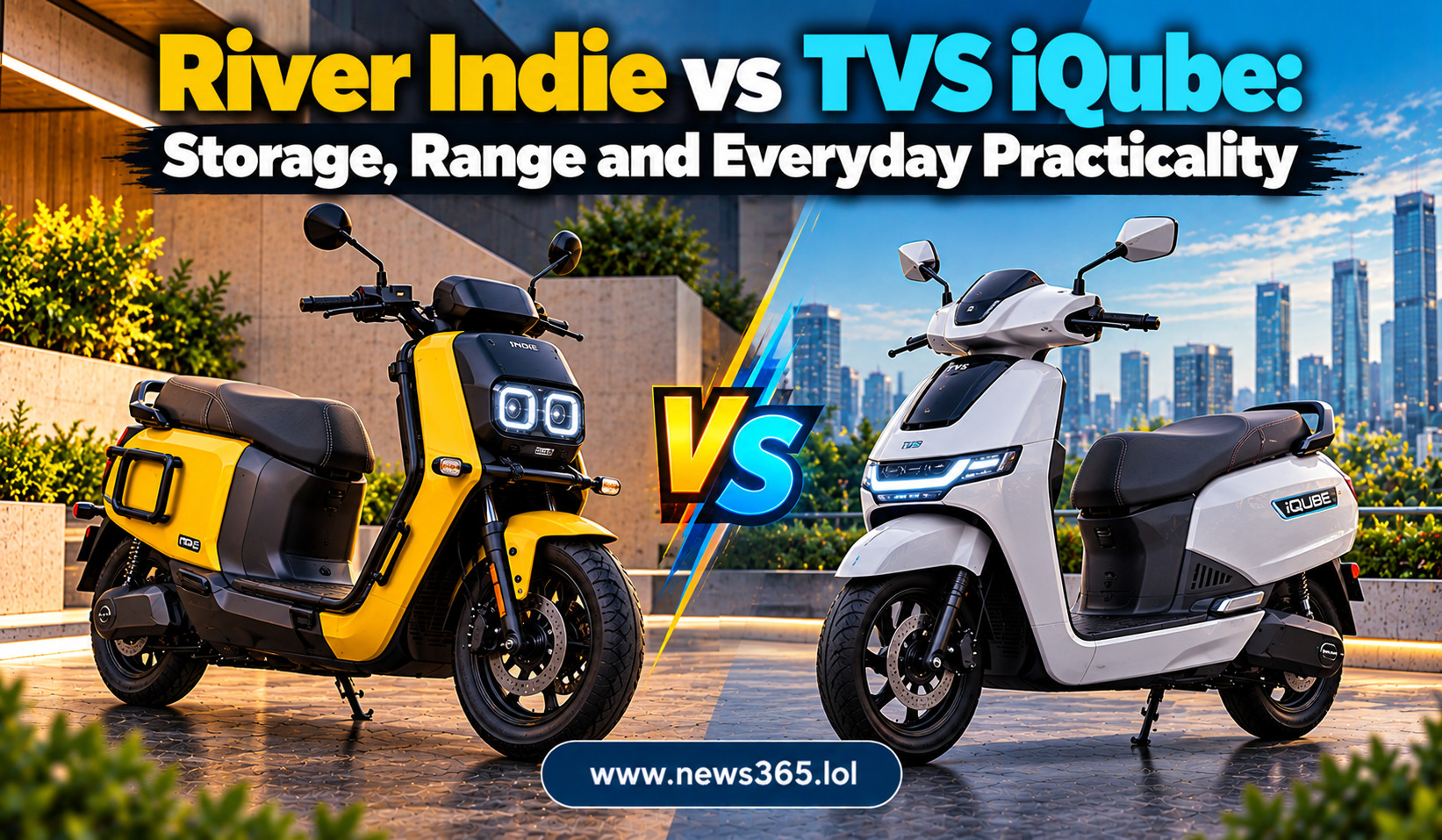
River Indie vs TVS iQube: Storage, Range and Everyday Practicality
Electric scooters are becoming a popular choice for Indian commuters who want convenient transportation with lower everyday running costs. However, choosing the right model involves more than comparing battery capacity or claimed range. Storage space, seating comfort, charging convenience and handling also make a difference, especially when the scooter is used for shopping, office travel and family errands.
The River Indie and TVS iQube are two interesting options in this category. The River Indie focuses heavily on utility, offering generous storage, a powerful motor and a distinctive design. The TVS iQube takes a more conventional family-scooter approach, combining multiple battery options, connected technology and practical everyday features.
Let’s compare the River Indie vs TVS iQube to understand which electric scooter offers better storage, range and overall practicality.
River Indie vs TVS iQube: Price in India
The River Indie is available in a single main configuration with a 4kWh battery. Its price is approximately ₹1.43 lakh to ₹1.52 lakh ex-showroom, depending on the latest pricing and location. The final on-road cost will vary with insurance, registration and other applicable charges.
The TVS iQube offers a wider selection of battery configurations, making it easier for buyers to choose according to their budget. Its lineup includes 2.3kWh, 3.1kWh and 3.5kWh versions, along with the iQube S 4.7kWh and iQube ST 5.3kWh.
TVS lists effective ex-showroom prices starting at approximately ₹95,124 for the 2.3kWh version. Higher-capacity models cost more, with the iQube ST positioned at the premium end of the lineup. These effective prices include applicable incentives and can vary depending on state benefits and eligibility.
The iQube is the more accessible option for buyers with a limited budget. The River Indie costs more than the entry-level iQube, but its larger battery, higher performance and storage-focused design offer a different value proposition.
Battery Capacity and Claimed Range
Range is an important consideration for people who use electric scooters every day. A higher claimed range can reduce charging frequency, particularly for commuters who travel longer distances.
The River Indie comes with a 4kWh lithium-ion battery and offers a claimed IDC range of 160km. It has three riding modes: Eco, Ride and Rush. According to the manufacturer’s specifications, the estimated range varies from approximately 110km in Eco mode to 90km in Ride mode and 70km in Rush mode.
The TVS iQube offers more battery choices. Its 2.3kWh variant has a claimed IDC range of 114km, while the 3.1kWh version offers 123km. The 3.5kWh configuration delivers 145km, the iQube S 4.7kWh offers 175km and the top-end iQube ST 5.3kWh claims up to 212km.
This means the River Indie offers a useful balance between battery capacity and range, but the top-end TVS iQube ST has the advantage in maximum claimed distance.
It is important to remember that IDC figures are laboratory-based estimates rather than guaranteed real-world results. Traffic, riding speed, passenger weight, road conditions, temperature and riding mode can all affect the distance covered on one charge.
For regular city commuting, both scooters offer suitable options. Buyers who travel longer distances should compare the River Indie with the larger-battery iQube variants rather than only the entry-level model.
Storage Space: Where River Indie Stands Out
Storage is one of the biggest reasons the River Indie attracts attention. Unlike many electric scooters that offer limited under-seat capacity, the Indie is designed around everyday utility.
It provides approximately 43 litres of under-seat storage and an additional 12-litre front glovebox. This gives it a combined storage capacity of up to 55 litres. The space can be useful for carrying shopping bags, backpacks, helmets and other daily essentials.
The scooter also includes practical touches such as a bag hanger, accessory mounting points and provisions for pannier stays. These features make it suitable for riders who regularly carry belongings.
The TVS iQube offers approximately 32 litres of under-seat storage. It also provides a convenient footboard and a dedicated USB charging facility. Its storage compartment is useful for everyday commuting, groceries and personal belongings.
However, when comparing the published storage figures, the River Indie has a clear advantage. Its larger under-seat compartment and separate front glovebox make it especially attractive to people who prioritise carrying capacity.
For households that frequently use an electric scooter for shopping and errands, this difference can make a noticeable impact on everyday convenience.
Motor Performance and City Riding
The River Indie uses a mid-drive permanent magnet synchronous motor with a peak power output of 6.7kW and maximum torque of 26Nm. It has a claimed top speed of 90km/h and can accelerate from 0 to 40km/h in approximately 3.7 seconds in Rush mode.
The TVS iQube uses a hub-mounted electric motor with a peak output of up to 4.4kW in its higher-performance configurations. Its top speed depends on the selected variant. The entry-level 2.3kWh model is rated at 68km/h, while several higher-capacity versions can reach up to 82km/h.
The River Indie is more performance-oriented, offering stronger peak power and a higher top speed. Its mid-drive motor and chain-drive arrangement also distinguish it from the conventional hub-motor setup used by the iQube.
The TVS iQube, on the other hand, focuses on smooth and convenient urban riding. Its performance is sufficient for everyday travel, including office commutes and short trips around the city.
Riders who want quicker acceleration and stronger performance may prefer the Indie. Those who prioritise relaxed city commuting may find the iQube more than adequate.
Comfort, Design and Everyday Usability
The River Indie has a distinctive, utility-focused design with a wide stance, large 14-inch wheels and a relatively spacious riding arrangement. It uses a steel tubular dual-cradle frame, telescopic front suspension and twin rear shock absorbers.
Its seat height is approximately 787mm, and its kerb weight is around 135kg. The larger dimensions and weight contribute to its substantial road presence, but shorter riders should check whether they are comfortable handling it at low speeds and while parking.
The TVS iQube has a more conventional family-scooter design. It offers an upright riding position, a wide seat and a spacious footboard. Its battery placement helps keep much of the weight low, supporting manageable handling in city traffic.
The iQube’s kerb weight varies by battery variant, with the lighter versions being easier to manoeuvre than the larger-battery models.
Both scooters can accommodate everyday commuting requirements, but their designs appeal to different preferences. The Indie is better suited to people who want a larger, utility-oriented scooter, while the iQube offers a familiar and practical family-scooter experience.
Charging Time and Convenience
The River Indie supports two charger configurations. Its 750W charger takes approximately five hours for charging, while the 480W option takes around eight hours. The scooter also supports fast charging, subject to compatible charging equipment and infrastructure.
The TVS iQube comes with a portable charger that can be connected to a compatible domestic power socket. Charging time depends on the battery configuration. The 2.3kWh version takes approximately two hours and 25 minutes for a 10–80% charge, while the 5.3kWh iQube ST takes around four hours for the same charging range.
The iQube offers clearly specified charging times across its battery lineup, while the River Indie provides different charger options. Buyers should confirm which charger is included with the vehicle and check the availability of compatible charging facilities before making a decision.
For people who charge their scooters overnight, either model can be convenient. However, households with limited charging time should compare the exact charging specifications of their selected variants.
Technology and Practical Features
The River Indie includes a six-inch colour display, three riding modes, forward and reverse parking assistance, adaptive regenerative braking and a combined braking system. It also offers LED lighting, a boot light and a Type-C USB charging port.
Its feature package focuses on utility and riding convenience rather than an extensive connected ecosystem.
The TVS iQube offers SmartXonnect technology, with features such as call and SMS alerts, navigation assistance, trip information, remote battery status and vehicle-related notifications. Higher variants receive additional equipment, including larger displays, Q-Park Assist and hill-hold functionality.
TVS also highlights its connected ecosystem and access to more than 2,000 charging locations across India. Its established dealership and service network is another consideration for buyers.
The iQube has an advantage in connected features and the breadth of its variant lineup. The River Indie stands out for its physical utility, particularly its storage capacity and practical mounting options.
Which Electric Scooter Is Better for Everyday Use?
The River Indie is worth considering if storage and carrying capacity are your biggest priorities. Its 43-litre under-seat compartment, 12-litre glovebox, 4kWh battery and 90km/h claimed top speed make it a distinctive option for people who want a spacious and powerful electric scooter.
The TVS iQube is a more flexible choice for buyers who want different battery capacities and price points. Its family-friendly design, connected features and wider dealership presence make it attractive for regular urban commuting.
If you frequently carry groceries, bags or other belongings, the River Indie has a significant practical advantage. If you want a more affordable entry point, multiple range options and a conventional family-scooter experience, the TVS iQube deserves consideration.
Final Verdict
The River Indie and TVS iQube are designed for different types of electric scooter buyers. The River Indie stands out for storage, motor performance and its utility-focused design. The TVS iQube offers greater flexibility through its battery options, connected features and accessible starting price.
For buyers who want maximum storage and stronger performance, the River Indie is a compelling choice. For households looking for a practical everyday scooter with several battery and budget options, the TVS iQube is a sensible alternative.
Before purchasing, compare the latest on-road prices, test the seat comfort, check storage space with your usual belongings and confirm service availability in your city. These practical checks can help you choose the scooter that best fits your everyday travel requirements.
Related Post

Mahindra SUVs: Why the Brand Has a Strong SUV Identity
Mahindra has developed one of the strongest SUV identities in the Indian automotive market. While…