

The Rise of Ready-to-Eat Fruit Products
>> LifeStyle>> The Rise of Ready-to-Eat Fruit Products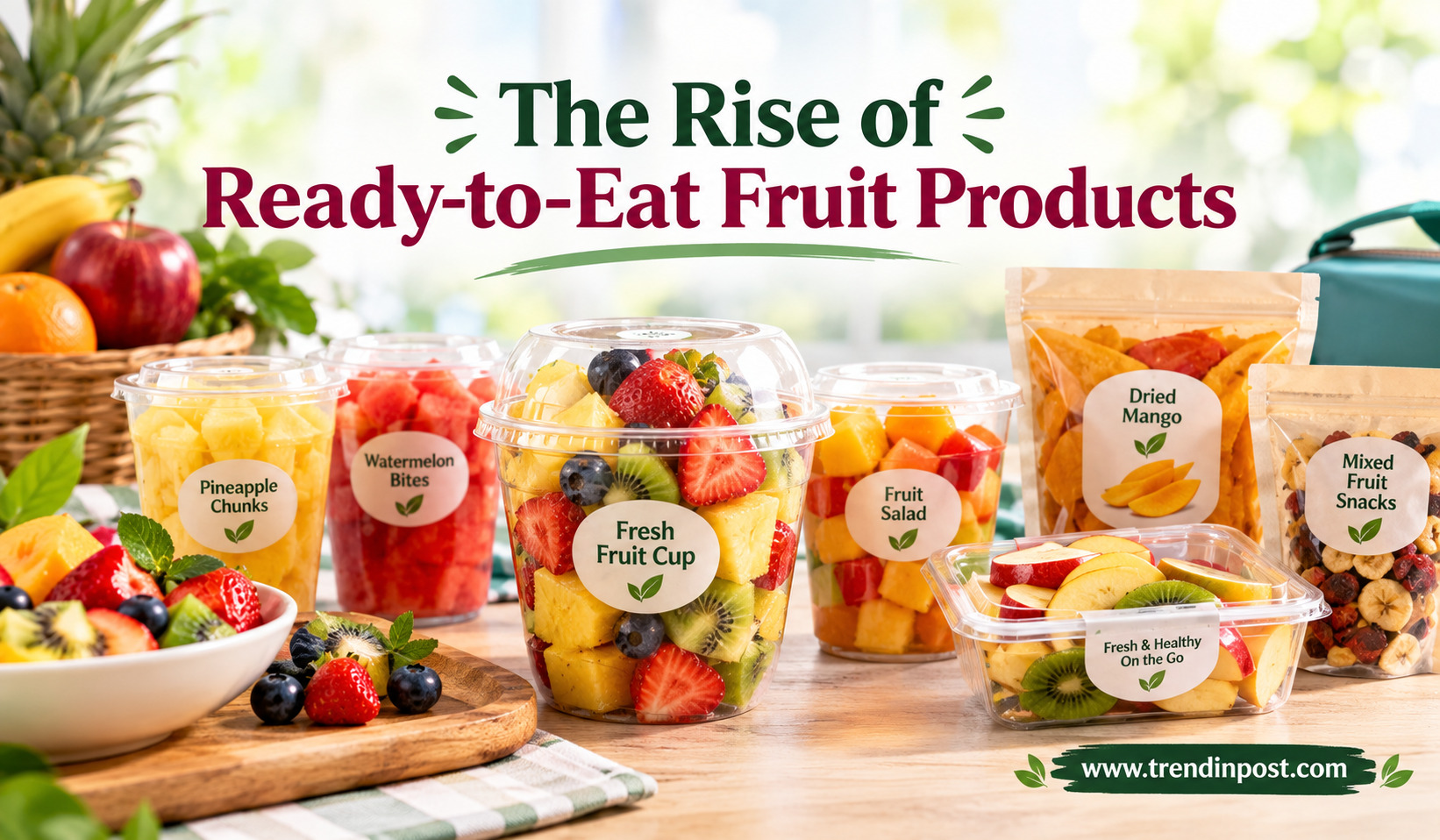
The Rise of Ready-to-Eat Fruit Products
Fresh fruit has always been associated with healthy eating, but the way consumers purchase and eat it is changing. In supermarkets, convenience stores and online grocery platforms, ready-to-eat fruit products are becoming increasingly visible. Pre-cut fruit cups, chilled fruit bowls, peeled fruit packs, smoothie mixes and other convenient formats are attracting shoppers who want fresh produce without spending much time preparing it.
The growth of this category reflects a broader shift in food habits. Modern consumers often balance work, travel, household responsibilities and other commitments, leaving less time for washing, peeling and cutting ingredients. Ready-to-eat fruit offers a simple solution by moving some of the preparation work from the kitchen to the food manufacturer or retailer.
The trend is not simply about convenience. Changing attitudes toward health, the expansion of organised retail, improvements in packaging and the growth of online grocery shopping are also contributing to the rise of prepared fruit products.
Convenience Is Changing How People Eat Fruit
One of the clearest reasons behind the popularity of ready-to-eat fruit is convenience. Buying a whole pineapple, watermelon or papaya requires preparation before it can be consumed. Consumers need to wash, cut, peel and store the fruit, while also dealing with leftover portions.
A ready-to-eat pack removes much of this effort. A consumer can open a container and eat the fruit immediately or take it to work, college, the gym or while travelling. For people with busy schedules, that small reduction in preparation can make fruit a more practical snack.
Convenience is particularly relevant to urban consumers. Smaller households and increasingly busy routines have changed how people think about food preparation. Instead of purchasing large quantities of produce, some shoppers prefer smaller portions that can be consumed quickly.
Health and Convenience Are Coming Together
Ready-to-eat fruit products occupy an interesting position in the food market because they combine convenience with the image of fresh, minimally processed food.
Consumers looking for alternatives to heavily processed snacks may see cut fruit as an easy option. A fruit cup can be more convenient than carrying whole fruit, while a chilled fruit bowl can provide an alternative to biscuits, confectionery or other packaged snacks.
However, the nutritional profile of a ready-to-eat product depends on what is actually inside the package. Whole or freshly cut fruit without added sugar is different from a fruit dessert containing syrups, sweeteners or other ingredients.
This distinction is becoming increasingly important as consumers become more interested in food labels. Shoppers are not only looking at the front of the package but are also paying attention to ingredients, serving sizes and storage information.
Supermarkets Are Expanding the Category
Retailers have played an important role in making ready-to-eat fruit more visible. Supermarkets can dedicate refrigerated sections to prepared produce, while convenience stores can position small fruit portions near beverages and other quick snacks.
Online grocery platforms have added another layer of accessibility. Consumers can now order fruit bowls, cut fruit and smoothie ingredients alongside their regular grocery purchases. This makes prepared produce easier to incorporate into weekly shopping routines.
Retailers also have an incentive to experiment with formats. A single category can include products designed for breakfast, snacking, office consumption, children’s lunchboxes and post-workout eating.
Common Ready-to-Eat Fruit Formats
- Pre-cut fruit cups and bowls
- Peeled and portioned fruits
- Mixed-fruit snack packs
- Smoothie and frozen-fruit mixes
The variety of formats shows how the industry is adapting fruit to different consumption occasions rather than treating it only as traditional fresh produce.
Packaging Has Become a Key Part of the Product
Packaging is one of the biggest differences between whole fruit and ready-to-eat fruit. Once fruit is cut, its exposed surface can be more vulnerable to quality deterioration, moisture loss and handling issues. This makes appropriate packaging and refrigeration particularly important.
Transparent containers are popular because they allow shoppers to see the product before buying it. Resealable formats can also make it easier to consume a portion and store the remainder, although consumers still need to follow the product’s storage instructions.
Packaging design is also becoming part of the consumer experience. Compact containers are easier to carry, while stackable formats can help retailers manage refrigerated displays.
At the same time, packaging waste remains an issue. Ready-to-eat products can require containers, films, labels and other materials that would not necessarily be needed when buying whole fruit. This creates pressure on manufacturers to explore packaging solutions that balance food protection with waste reduction.
Food Safety Remains Critical
The preparation of cut fruit requires careful handling because cutting can transfer contamination from surfaces, equipment or workers to the edible portion. Temperature control and hygienic processing therefore become particularly important.
Commercial producers typically have to manage multiple stages, from selecting and washing produce to cutting, packing, chilling and distribution. Maintaining suitable conditions throughout this chain can influence both product quality and safety.
Consumers also have a role after purchase. Ready-to-eat does not mean that a product can be stored indefinitely. Refrigeration instructions, use-by dates and package guidance should be followed.
The growth of the category is therefore closely connected to investment in food-processing facilities, cold-chain logistics and quality-control systems.
Technology Is Supporting Fresh-Cut Fruit
Behind the convenience of a fruit cup is a complex supply chain. Producers need to coordinate sourcing, processing, packaging, refrigeration and delivery while keeping the product attractive to consumers.
Advances in food packaging and cold-chain management are helping businesses extend the usable life of prepared produce without relying solely on heavy processing. Better inventory systems can also help retailers manage products with relatively short shelf lives.
Data and forecasting technology may become increasingly important as the market expands. Retailers need to estimate demand carefully because overstocking can result in unsold products and food waste.
This creates a different business challenge from selling whole fruit. A supermarket can often keep some whole fruits for longer periods, while a prepared fruit cup has a more limited selling window.
Ready-to-Eat Fruit and Food Waste
Food waste is one of the most important issues surrounding this trend. At first glance, ready-to-eat fruit can appear wasteful because of its additional packaging. But portioning can also have an opposite effect: consumers may buy only the quantity they expect to eat.
For example, a person living alone may avoid buying an entire watermelon because of its size. A smaller prepared portion may make the purchase more practical and reduce the chance of unused fruit remaining at home.
The overall environmental impact depends on several factors, including packaging materials, transportation, refrigeration, processing losses and whether consumers actually eat the product.
| Factor | Whole Fruit | Ready-to-Eat Fruit |
| Preparation | Usually required at home | Mostly completed |
| Packaging | Often limited | Usually more extensive |
| Convenience | Varies by fruit | Generally high |
| Storage | Depends on fruit | Usually requires careful refrigeration |
| Portion control | Consumer decides | Often pre-portioned |
| Food waste | Can occur from leftovers | Can be reduced through smaller portions |
The comparison shows why the sustainability question is more complicated than simply judging packaging alone.
Changing Consumer Expectations
Consumers are increasingly expecting food to fit around their routines. This expectation has already influenced categories such as ready-to-eat meals, pre-washed vegetables and prepared salads. Fruit is following a similar path.
Younger consumers, office workers, students and people living in urban areas may value products that require little preparation. Families can also find smaller fruit portions useful for lunchboxes and quick snacks.
At the same time, not every shopper is willing to pay a premium for preparation. Whole fruit generally remains more economical, particularly when purchased in season. This means ready-to-eat fruit is likely to compete not only on health and convenience but also on price.
The category may therefore develop into two distinct segments: consumers willing to pay extra for preparation and those who continue to purchase whole fruit for better value.
What Retailers Could Focus on Next
As the category grows, retailers may experiment with more specialised products. Seasonal combinations could provide variety, while breakfast-oriented packs could combine fruits commonly used with yoghurt or oats.
Another area of development could be locally sourced prepared fruit. Using produce from nearby farms when it is in season could help businesses reduce sourcing distances while giving consumers access to familiar regional varieties in convenient formats.
There may also be greater attention to packaging transparency. Consumers increasingly want to know where their food comes from, how it should be stored and how long it can remain fresh.
The future of ready-to-eat fruit will therefore depend on more than simply cutting fruit into smaller pieces. Producers will need to balance freshness, safety, affordability, convenience, packaging and sustainability.
The Road Ahead for Ready-to-Eat Fruit
Ready-to-eat fruit products are becoming part of a broader transformation in the fresh-food market. The trend demonstrates that convenience does not necessarily have to mean highly processed food. Consumers are increasingly looking for products that save preparation time while still fitting their interest in fresh ingredients.
However, the category also faces challenges. Short shelf lives, refrigeration requirements, packaging waste and higher prices can limit its appeal. Businesses will need to address these issues as they compete for space in the growing convenience-food market.
For consumers, the decision is relatively straightforward: ready-to-eat fruit offers time savings and portion convenience, while whole fruit can provide greater flexibility and often lower cost. Both formats can have a place in everyday eating habits.
As shopping patterns continue to evolve, the humble fruit cup may become more than a convenience-store snack. It represents a wider change in how fresh food is prepared, packaged and delivered to consumers.
Conclusion
The rise of ready-to-eat fruit products reflects a simple change in consumer behaviour: people want healthy and convenient food that fits into increasingly busy routines. Better retail networks, online grocery shopping, packaging technology and improved cold-chain systems are helping prepared fruit reach more consumers.
The category is not likely to eliminate traditional whole fruit. Instead, it is creating another way for people to consume fresh produce. The challenge for the industry will be maintaining quality and food safety while controlling prices, reducing waste and finding more responsible packaging solutions.
As convenience continues to influence food choices, ready-to-eat fruit could become an increasingly familiar part of modern grocery shopping.
Frequently Asked Questions
What are ready-to-eat fruit products?
Ready-to-eat fruit products are fresh or chilled fruit products that have already been washed, cut, peeled, portioned or combined so consumers can eat them with little or no preparation.
Why are ready-to-eat fruits becoming popular?
Convenience is a major factor. Consumers with busy schedules can eat prepared fruit without spending time cutting or peeling it. Supermarket availability and online grocery delivery are also helping the category reach more shoppers.
Are ready-to-eat fruits healthy?
They can be a convenient way to include fruit in a diet, particularly when products contain fresh fruit without unnecessary added sugars or other ingredients. Consumers should check labels when buying packaged fruit products.
Are ready-to-eat fruits more expensive?
They are often more expensive than buying the equivalent whole fruit because the price includes preparation, packaging, refrigeration, labour and distribution costs.
Do ready-to-eat fruits create more packaging waste?
Prepared fruit generally requires more packaging than loose whole fruit. However, smaller portions can potentially reduce household food waste. The overall environmental impact depends on packaging materials, supply chains and how much of the product is actually consumed.
Related Post

Birth Number Meaning According to Your Date of Birth
Numbers have always played an important role in the way people organize and understand everyday…