Car Dimensions Buyers Should Check Before Parking at Home
>> Automobile>> Car Dimensions Buyers Should Check Before Parking at Home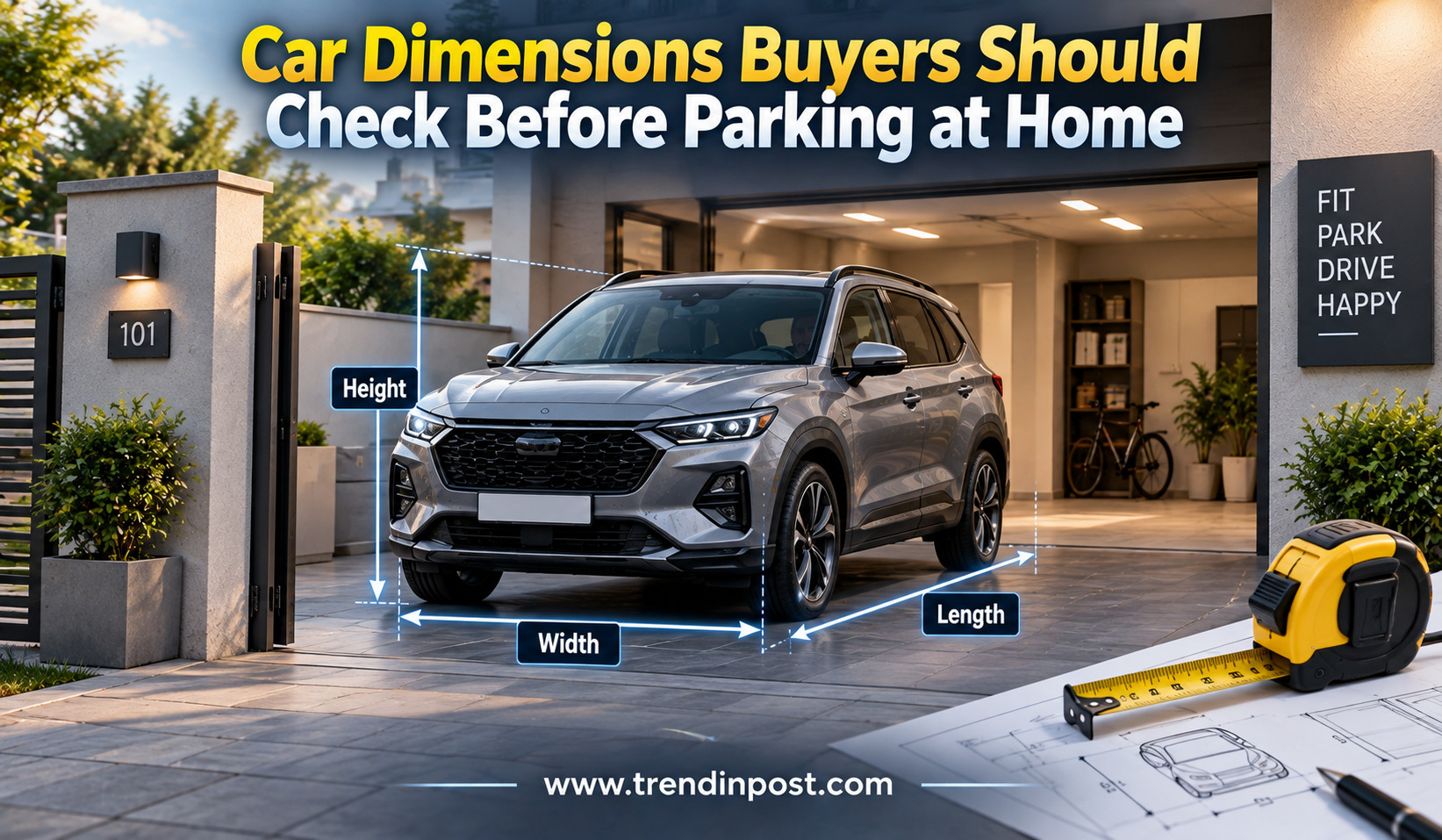
Car Dimensions Buyers Should Check Before Parking at Home
Buying a new car is usually about more than engine performance, mileage, features, and design. For many urban buyers, one practical question can become just as important after the purchase: Will the car actually fit comfortably at home? With larger SUVs, wider vehicles and longer models becoming increasingly popular, checking a car’s dimensions before booking a vehicle is becoming an important part of the buying process.
A car may look manageable on the road but feel surprisingly large inside a narrow residential parking space. Limited driveway width, tight apartment parking areas, pillars, walls and nearby vehicles can make everyday parking difficult if the dimensions are not considered carefully. Even a difference of a few centimetres in width or length can affect how easily the driver can enter, exit and manoeuvre the vehicle.
For this reason, buyers should look beyond a vehicle’s appearance and understand its actual measurements. Length, width, height, wheelbase, turning radius and ground clearance can all influence how practical a car will be when it is parked at home.
Why Car Dimensions Matter for Home Parking
The overall size of a vehicle directly affects how easily it can be parked in an available space. Length is usually the first measurement buyers consider, but width can be even more important in a narrow garage or apartment parking slot.
A longer car may require additional space in front or behind, particularly if the parking area has a wall or gate. A wider car, meanwhile, can make it difficult for passengers to open doors when another vehicle is parked close by.
Modern SUVs have increased in popularity because of their spacious cabins and road presence. However, their larger dimensions can create challenges in older residential buildings where parking spaces were designed for smaller hatchbacks and sedans.
Before purchasing a vehicle, buyers should therefore measure the parking space rather than relying only on the size of their existing car.
Car Length: Check the Front and Rear Space
Vehicle length is measured from the front-most point to the rear-most point of the car. It becomes especially important when the parking space has a fixed wall, gate or another obstruction.
For example, a compact hatchback can generally be easier to accommodate in a short parking bay than a large SUV or three-row vehicle. A few hundred millimetres of additional length may not seem significant on paper, but it can make a difference when the available space is already tight.
Buyers should also consider how the vehicle will enter the parking space. A car may technically fit inside a garage but still be difficult to position if the approach road is narrow.
Width Is One of the Most Important Measurements
Width deserves particular attention because parking a wider vehicle can affect both the driver and passengers. The official width figure may not always represent the maximum space required during everyday use.
Side mirrors extend beyond the main body and can become important when entering a narrow gate. Once the car is parked, occupants also need sufficient space to open the doors.
A useful approach is to measure the parking area at its narrowest point. Buyers should check not only the width of the parking slot but also the entrance gate, driveway and turning area.
Some larger vehicles may fit into the parking bay but leave very little space on either side. This can make getting out of the vehicle uncomfortable and increases the possibility of door scratches or minor parking damage.
Height Matters in Garages and Covered Parking
Height is another dimension that is often overlooked. It becomes particularly important for buyers using covered parking, basements or mechanical parking systems.
A vehicle’s height should be compared with the lowest point of the parking entrance. This includes beams, pipes, ventilation equipment and other structures that may reduce the usable clearance.
SUVs and vehicles equipped with roof rails can have greater overall height than buyers expect. If a roof box or other roof-mounted accessory is likely to be used in the future, additional clearance should also be considered.
Before purchasing a taller vehicle, buyers should measure the complete route from the entrance to the parking position instead of checking only the height of the parking bay.
Wheelbase Can Affect Parking Manoeuvrability
Wheelbase refers to the distance between the front and rear axles. It is not the same as overall vehicle length, but it can influence cabin space, stability and manoeuvrability.
A longer wheelbase can provide a more spacious interior, which is attractive for families. However, depending on the vehicle’s steering geometry and turning circle, a larger vehicle may require more room to manoeuvre in a tight parking area.
This is why buyers should not judge parking practicality only by looking at the length figure. A test drive should ideally include entering and exiting a parking area similar to the one at home.
Turning Radius Should Not Be Ignored
A car’s turning radius or turning circle can make a major difference in confined spaces. This measurement indicates how tightly the vehicle can turn.
A vehicle with a smaller turning circle can generally make tight manoeuvres more easily. This can be useful in apartment basements, narrow lanes and compact residential driveways.
However, turning ability also depends on the layout of the parking area. Columns, walls and sharp corners can create challenges even when a vehicle has reasonable manoeuvrability.
Buyers should therefore consider the complete parking route, especially if the car needs to make a sharp turn before reaching its designated space.
Ground Clearance Has a Different Role
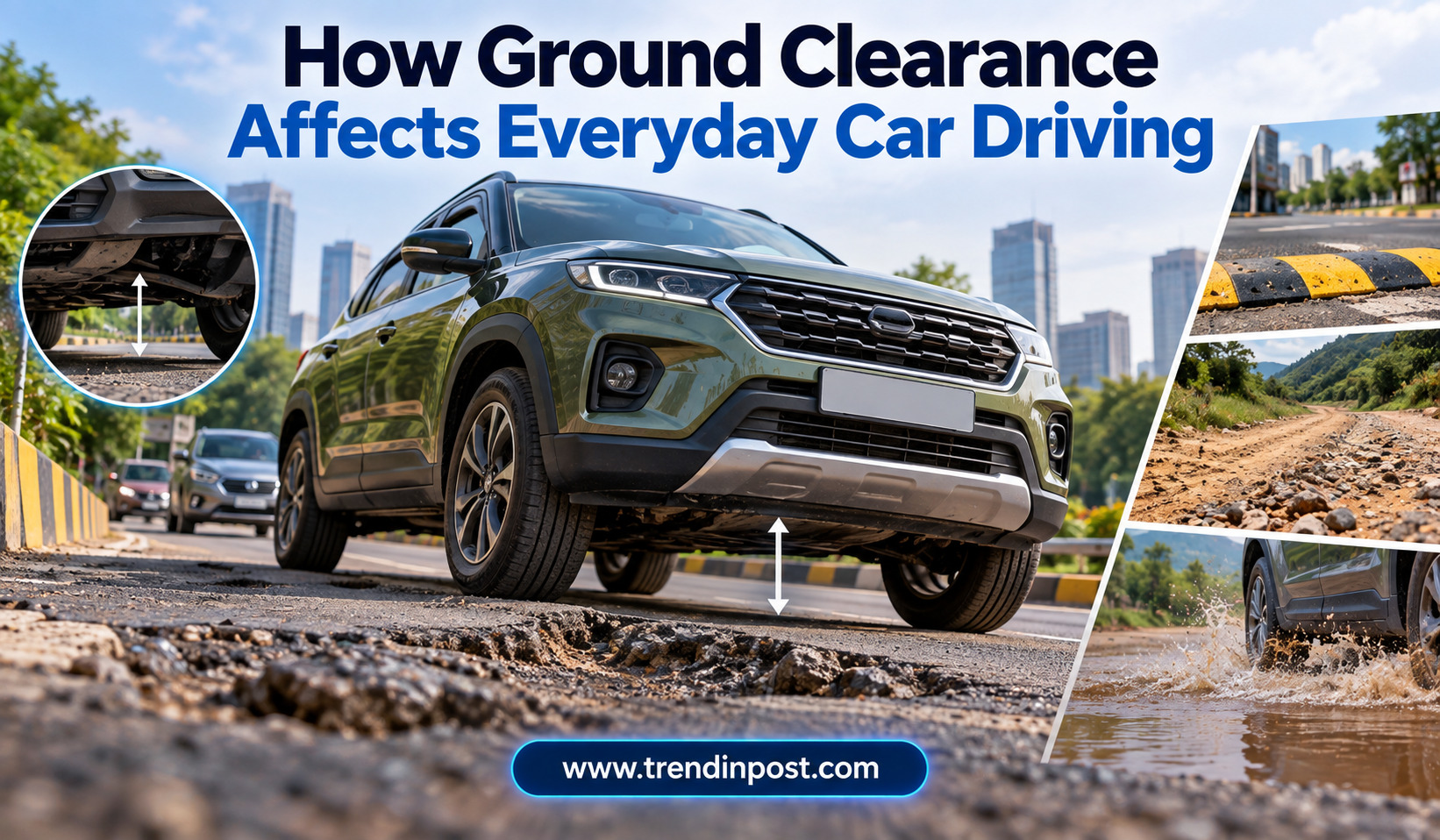
Ground clearance does not determine whether a car fits between two walls, but it matters when accessing uneven driveways, ramps and basement entrances.
A vehicle with low ground clearance may scrape its underside when crossing a steep ramp or raised section. Higher-clearance SUVs generally have an advantage on uneven surfaces, although their larger height and width may create other parking considerations.
The ideal vehicle therefore depends on the actual conditions around the home. A buyer living in a building with a steep basement ramp may need to consider approach and departure angles as well as basic dimensions.
Compare Your Parking Space With the Car
Before booking a vehicle, buyers can make a simple comparison between the parking area and the manufacturer’s dimensions.
| Measurement | Why it matters for parking |
| Length | Determines front and rear clearance |
| Width | Affects side clearance and door opening |
| Height | Important for garages, basements and covered parking |
| Wheelbase | Can influence manoeuvrability and cabin space |
| Turning circle | Helps determine ease of tight turns |
| Ground clearance | Useful for ramps and uneven entrances |
The measurements should not be compared with zero clearance. A vehicle that exactly matches the parking area’s dimensions would leave practically no room for error.
Measure More Than Just the Parking Slot
One of the most common mistakes is measuring only the final parking bay. The complete route should be considered.
Buyers should check the following areas before purchasing a larger vehicle:
- Entrance gate width and height
- Driveway width and turning space
- Parking bay length and width
- Pillars, walls and other fixed obstacles
The entrance can sometimes be more restrictive than the actual parking space. A large SUV might comfortably fit once inside but struggle to pass through a narrow gate or make a turn into the parking area.
Consider Door-Opening Space
A car fitting inside the parking slot does not automatically mean it is practical for everyday use. Passengers need enough space to open doors and get out.
This becomes especially important for families with children, elderly passengers or people who need additional room to enter and exit the vehicle.
If a parking space is narrow, buyers should consider how much space remains after the vehicle is parked. A slightly smaller car can sometimes offer a much more convenient ownership experience than a larger vehicle that leaves almost no side clearance.
Parking Sensors and Cameras Can Help
Modern vehicles increasingly offer rear parking sensors, cameras and surround-view systems. These technologies can make parking easier by improving visibility around the vehicle.
However, electronic assistance should not be treated as a replacement for adequate physical space. Sensors can warn drivers about obstacles, but they cannot create additional room around the vehicle.
For buyers considering a large SUV for a tight residential parking area, parking technology should be viewed as an additional convenience rather than the main solution.
Check the Dimensions During the Test Drive
The best way to understand whether a car will work at home is to test its real-world manoeuvrability.
If possible, buyers should take the vehicle through a narrow entrance, make the type of turns required at home and reverse into a parking space. This can reveal practical difficulties that specifications alone cannot show.
It is also useful to check visibility from the driver’s seat. A vehicle with good cameras and sensors may feel easier to position than another car of similar dimensions, while large blind spots can make tight parking more stressful.
Larger Cars Are Not Always the Better Choice
The growing popularity of SUVs has changed what buyers expect from family vehicles. More space, higher seating positions and additional features are attractive, but bigger dimensions can also bring practical compromises.
For buyers who regularly park in a compact residential area, a compact SUV, hatchback or smaller sedan may offer a better balance between interior space and manoeuvrability.
The right choice ultimately depends on how the vehicle will be used. A large car can be perfectly practical when adequate parking and road space are available, while a smaller model may be more convenient for a home with tight access.
Final Thoughts
Car dimensions should be part of the buying decision, especially for people living in apartments, compact houses or areas with narrow parking spaces. Checking only the vehicle’s length is not enough. Width, height, wheelbase, turning circle and ground clearance can all affect how easily the vehicle can be used around the home.
Before finalising a purchase, buyers should measure the entire parking route, compare those measurements with the vehicle’s specifications and take a proper test drive. Leaving some practical clearance is also important because everyday parking involves passengers, doors, mirrors and manoeuvring space.
A car that fits comfortably is likely to be easier to live with every day. By checking dimensions before buying rather than after delivery, buyers can avoid an expensive and frustrating parking problem.
FAQs
What car dimension is most important for home parking?
Width and length are generally the most important measurements, but height and turning circle can also become critical depending on the parking layout.
Should I measure my parking space before buying a car?
Yes. Measuring the parking bay, entrance gate, driveway and turning area can help determine whether a vehicle will be practical.
Does car width include side mirrors?
Published vehicle width specifications may be presented according to the manufacturer’s measurement method and may not represent the full width with mirrors. Buyers should check the manufacturer’s specifications for the exact model.
Why is turning a circle important?
Turning circle affects how easily a vehicle can manoeuvre in narrow driveways, basement parking areas and tight residential spaces.
Is a larger SUV difficult to park at home?
Not necessarily. A large SUV can be easy to park if there is sufficient space and the vehicle has useful parking aids. Problems usually arise when the available space is significantly tighter than the vehicle.
Related Post

Connected Car Features That Make Everyday Driving Easier
Connected technology is changing the way people interact with their cars. Modern vehicles are no…