Common Mistakes New Luxury Handbag Collectors Make
>> Fashion>> Common Mistakes New Luxury Handbag Collectors Make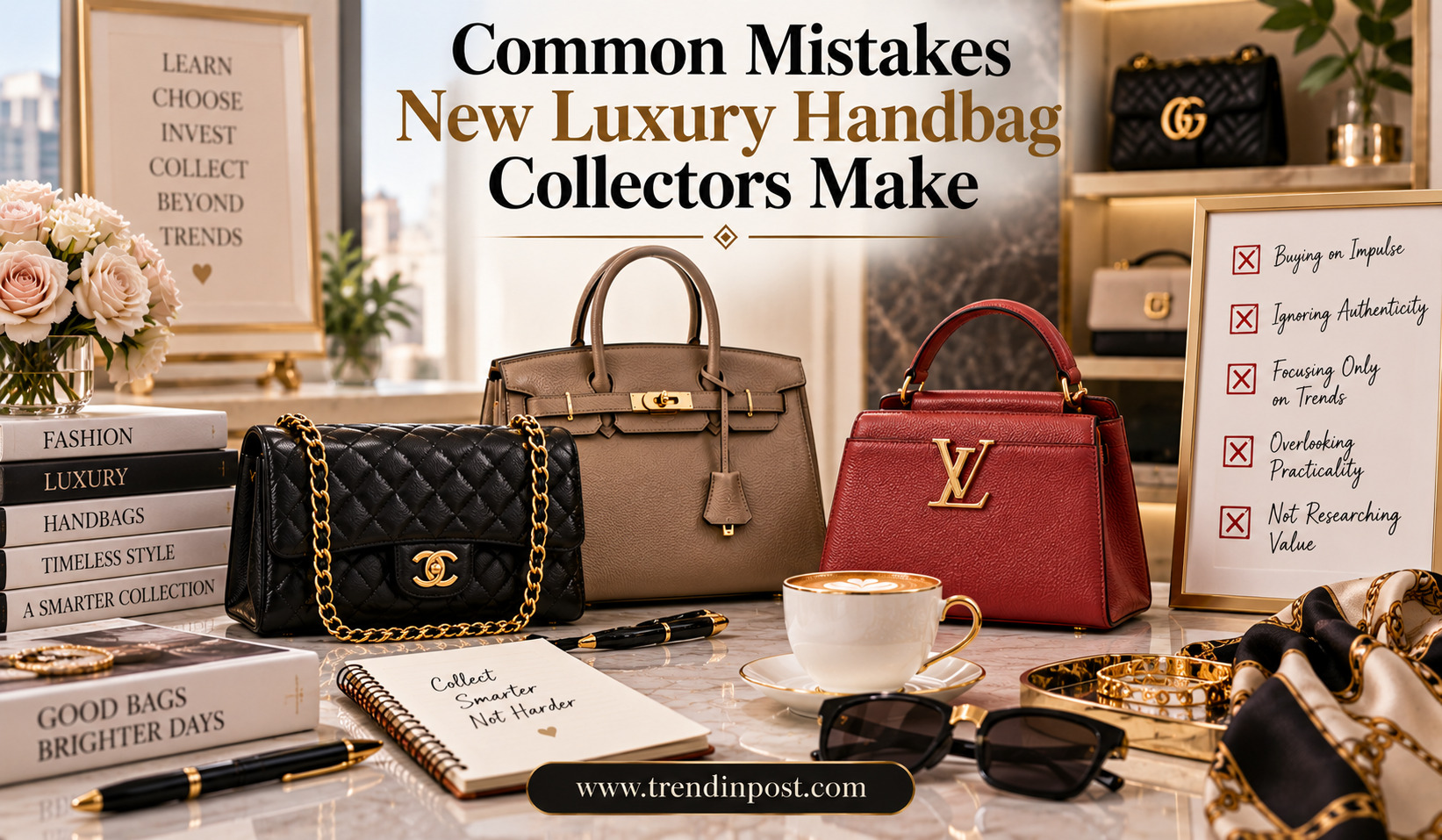
Common Mistakes New Luxury Handbag Collectors Make
Starting a luxury handbag collection can be an exciting experience. Designer handbags combine fashion, craftsmanship, materials, brand heritage, and personal style, making them appealing to both everyday shoppers and serious collectors. However, the excitement of owning a first luxury handbag can sometimes lead new collectors to make decisions they later regret.
The luxury handbag market offers thousands of designs, from timeless classics to seasonal releases and limited editions. Prices can also vary widely depending on the brand, model, material, condition, and availability. With so many choices, beginners may focus too heavily on trends, logos, or resale claims instead of considering whether a handbag is genuinely right for them.
Building a good collection takes time. Research, patience, and an understanding of personal preferences can help collectors avoid unnecessary purchases and expensive mistakes. Here are some of the most common mistakes new luxury handbag collectors make and how to approach the market more carefully.
Buying a Handbag Simply Because It Is Popular
One of the biggest mistakes beginners make is assuming that a popular handbag must automatically be the right choice. Social media can make certain designs appear unavoidable, with celebrities, influencers, and fashion creators showcasing the same models repeatedly.
Popularity can certainly indicate strong demand, but it does not guarantee that a particular handbag will suit your lifestyle. A small handbag may look attractive online but prove impractical if you normally carry several everyday essentials.
Before buying a highly visible design, consider how often you would actually use it. If the handbag does not match your wardrobe, preferred carrying style, or daily routine, its popularity may not matter.
A luxury handbag should ideally be something you enjoy independently of its current trend status.
Focusing Too Much on the Brand Name
Luxury collecting naturally involves famous fashion houses, but concentrating exclusively on logos can cause buyers to overlook important details.
Two handbags from the same brand can have completely different levels of practicality, craftsmanship, durability, and comfort. A recognizable name does not eliminate the need to examine the actual product.
Materials, stitching, hardware, lining, construction, dimensions, and weight all influence the ownership experience. A collector who studies these characteristics can make better decisions than someone who simply chooses the most recognizable logo.
Brand heritage matters, but it should be one part of the decision rather than the entire decision.
Ignoring the Total Cost of Ownership
The retail price is not always the complete cost of owning a luxury handbag. Maintenance, repairs, storage, authentication, insurance, and resale-related expenses can add to the long-term cost.
Some materials require considerably more care than others. Delicate leather, suede, light-colored materials, and certain exotic skins may need specialized handling.
New collectors sometimes spend their entire budget on the initial purchase and later discover that maintaining the handbag is more expensive than expected.
Before purchasing, think about both the initial price and the practical costs associated with keeping the handbag in good condition.
Buying Too Many Bags Too Quickly
Excitement can lead beginners to build a collection rapidly. After purchasing one handbag, it can be tempting to immediately search for another model, followed by another color and another limited edition.
This can create a collection filled with overlapping designs. Several handbags may have nearly identical sizes, colors, or functions while important categories remain missing.
A slower approach allows collectors to understand what they actually use. After carrying a handbag for several months, you may discover that you prefer crossbody designs over top-handle bags or neutral colors over bright shades.
A collection should evolve through experience rather than urgency.
Choosing Looks Over Practicality
Luxury handbags are fashion accessories, so appearance obviously matters. However, ignoring practical considerations can lead to disappointment.
A handbag may look beautiful but be uncomfortable to carry because of its weight or strap design. Another may have an attractive exterior but provide very little usable interior space.
Before buying, think about how the bag will be carried and what it needs to hold. Consider whether the handles are comfortable, whether the strap length works for you, and whether the opening allows easy access.
Some useful questions include:
- Can the handbag comfortably carry your everyday essentials?
- Is the size appropriate for the occasions when you plan to use it?
- Are the weight, handles, and strap comfortable for extended carrying?
- Does the design work with your existing wardrobe?
Practicality does not reduce the luxury of a handbag. In many cases, it makes the purchase more satisfying.
Assuming Every Luxury Handbag Is a Good Investment
The investment potential of luxury handbags receives considerable attention, particularly on social media and resale platforms. While some handbags can retain or increase their value, treating every designer bag as an investment is a mistake.
Resale performance depends on brand, model, condition, rarity, color, market demand, and broader fashion trends. A handbag that performs well in one period may not produce the same results later.
Buyers should be particularly cautious about claims promising guaranteed appreciation. Luxury handbags are consumer goods as well as collectibles, and their financial performance is not guaranteed.
It is generally healthier to buy a handbag because you appreciate its design and craftsmanship, with potential resale value treated as an additional consideration.
Overlooking Condition When Buying Pre-Owned
The pre-owned luxury market can be an excellent place to discover vintage, discontinued, and limited-edition handbags. However, beginners sometimes focus heavily on the advertised price and overlook the condition.
Photographs can hide stains, odors, corner wear, interior damage, stretched handles, or hardware problems. A handbag that appears inexpensive may require expensive restoration.
When considering a pre-owned piece, inspect the exterior and interior carefully. Look at the corners, handles, seams, lining, hardware, closures, and areas that experience frequent contact.
| Condition Area | What to Examine |
| Exterior | Scratches, stains, creases and discoloration |
| Corners | Rubbing, exposed material and damage |
| Handles | Cracks, stretching and staining |
| Hardware | Scratches, fading, corrosion or missing parts |
| Interior | Stains, odors, peeling or tears |
| Structure | Sagging, distortion or loss of shape |
For expensive purchases, professional authentication and condition assessment can provide additional confidence.
Trusting a Seller Without Research
A low price can be tempting, particularly when a handbag appears to be rare. However, buying from an unfamiliar seller without investigating their reputation can create unnecessary risk.
Counterfeit luxury handbags can be sophisticated, and fake documentation or packaging may also be used to make a listing appear legitimate.
New collectors should research the seller, understand their return policy, review detailed photographs, and look for credible information about authenticity. If the seller refuses reasonable questions or provides suspiciously limited information, caution is appropriate.
A genuine bargain should still make sense when compared with the normal market price for the same model and condition.
Treating Rarity as a Guarantee of Value
The word “rare” can have a powerful effect on buyers. However, rarity and desirability are not the same thing.
A handbag can be difficult to find simply because few people wanted it. In contrast, a highly desirable limited-production handbag can attract strong competition among collectors.
Experienced collectors therefore consider why an item is rare. They examine its production history, design significance, material, color, condition, and current demand.
Scarcity becomes particularly meaningful when it is combined with a strong reason for collectors to want the item.
Ignoring Material and Care Requirements
Different handbag materials behave differently. A new collector who chooses a handbag without understanding its care requirements may unintentionally damage it.
Smooth leather can show scratches more easily, while suede can be particularly sensitive to moisture. Light-colored handbags may require more careful handling, and exotic materials can have specialized maintenance requirements.
Owners should learn about the material before purchase and follow appropriate care instructions. Using an unsuitable cleaning product can cause permanent damage.
It is also important to understand how the handbag should be stored. Excessive sunlight, humidity, heat, and pressure can affect materials and structure over time.
Buying Colors That Do Not Fit Your Wardrobe
Color is another area where impulse purchases can create problems. A dramatic handbag may look impressive in a boutique or photograph but remain unused if it does not work with most of your clothing.
New collectors often benefit from establishing a few versatile shades before experimenting with more distinctive colors. Neutral handbags can provide a practical foundation, while statement colors can later add personality.
There is no universal color formula. The best choices depend on your wardrobe, lifestyle, and preferred style.
The important thing is to avoid purchasing a color simply because it is currently fashionable.
Forgetting About Hardware and Construction
Beginners often focus on leather and branding while overlooking hardware and construction. Yet these details can significantly affect both durability and appearance.
Zippers should operate smoothly, clasps should close securely, and hardware should be properly aligned. Stitching should appear consistent, while handles and straps should feel securely attached.
These details become especially important when buying vintage or pre-owned handbags. Structural issues may be more expensive to repair than superficial cosmetic wear.
A luxury handbag should be evaluated as a complete product rather than simply as a piece of branded leather.
Not Keeping Receipts and Original Accessories
Documentation and accessories can become important as a collection grows. Receipts, authenticity information, boxes, dust bags, straps, locks, keys, and other original components may help establish provenance and completeness.
Not every buyer cares about having every original accessory, but collectors and future buyers may place additional importance on them.
Keeping purchase information organized can also make future insurance, maintenance, authentication, or resale easier.
Letting Social Media Define the Collection
Social media can be useful for discovering new brands and learning about handbag trends, but it can also create unrealistic expectations.
Seeing the same handbag repeatedly can make it feel essential even when it does not fit your personal style. Influencers may also present luxury purchases as effortless investments without discussing ownership costs, maintenance, or changing market demand.
A collection should reflect the collector rather than an algorithm.
Take inspiration from online fashion content, but make final purchasing decisions based on your own needs and preferences.
Failing to Create a Collection Strategy
A simple collection strategy can prevent unnecessary duplication. Instead of deciding what to buy next based solely on what is available, identify the gaps in your existing handbag wardrobe.
A useful starting strategy is to consider:
- One versatile everyday handbag
- One practical option for work or travel
- One compact design for evenings or special occasions
- One distinctive piece for color, material, or design variety
This is not a fixed formula. Some collectors may need more practical bags, while others may focus primarily on rare or vintage pieces.
The purpose is simply to give each purchase a clear role.
Final Thoughts
Building a luxury handbag collection should be an enjoyable and considered process rather than a race to own the most expensive or popular designs. New collectors can avoid many common mistakes by slowing down, researching each purchase, understanding materials, checking authenticity, and thinking about how every handbag fits into their lifestyle.
The strongest collections are rarely created through impulse. They develop gradually as the collector learns which silhouettes, colors, materials, and brands genuinely provide value and enjoyment.
Luxury handbags can combine fashion, craftsmanship, and personal expression, but their appeal becomes even greater when every piece has a reason for being part of the collection. By prioritizing quality, authenticity, practicality, and personal taste over short-term trends, new collectors can build a collection that remains useful and meaningful for years.
FAQs
What is the biggest mistake new handbag collectors make?
Buying too quickly is one of the most common mistakes. New collectors can become influenced by trends and end up with several similar handbags before understanding their actual preferences.
Are expensive handbags always better quality?
Not necessarily. Price can reflect brand reputation, rarity, design, materials, craftsmanship, and demand. Buyers should examine construction and materials rather than assuming a higher price automatically means better quality.
Should beginners buy pre-owned luxury handbags?
They can. Pre-owned shopping can provide access to discontinued and vintage designs, but authenticity, seller reputation, condition, and return policies should be carefully evaluated.
Is a rare handbag automatically valuable?
No. Rarity needs to be combined with desirability. Collector demand, brand, model, condition, material, and provenance can all influence value.
Should I buy a luxury handbag for investment purposes?
It is better to buy primarily because you appreciate the handbag. Some pieces may retain or increase in value, but resale performance is never guaranteed.
Related Post
Prada vs Gucci: Which Handbag Brand Should You Choose?
Choosing between Prada and Gucci can be difficult for luxury handbag shoppers. Both Italian fashion…