BMW vs Mercedes-Benz: How Their Car Philosophies Differ
>> Automobile>> BMW vs Mercedes-Benz: How Their Car Philosophies Differ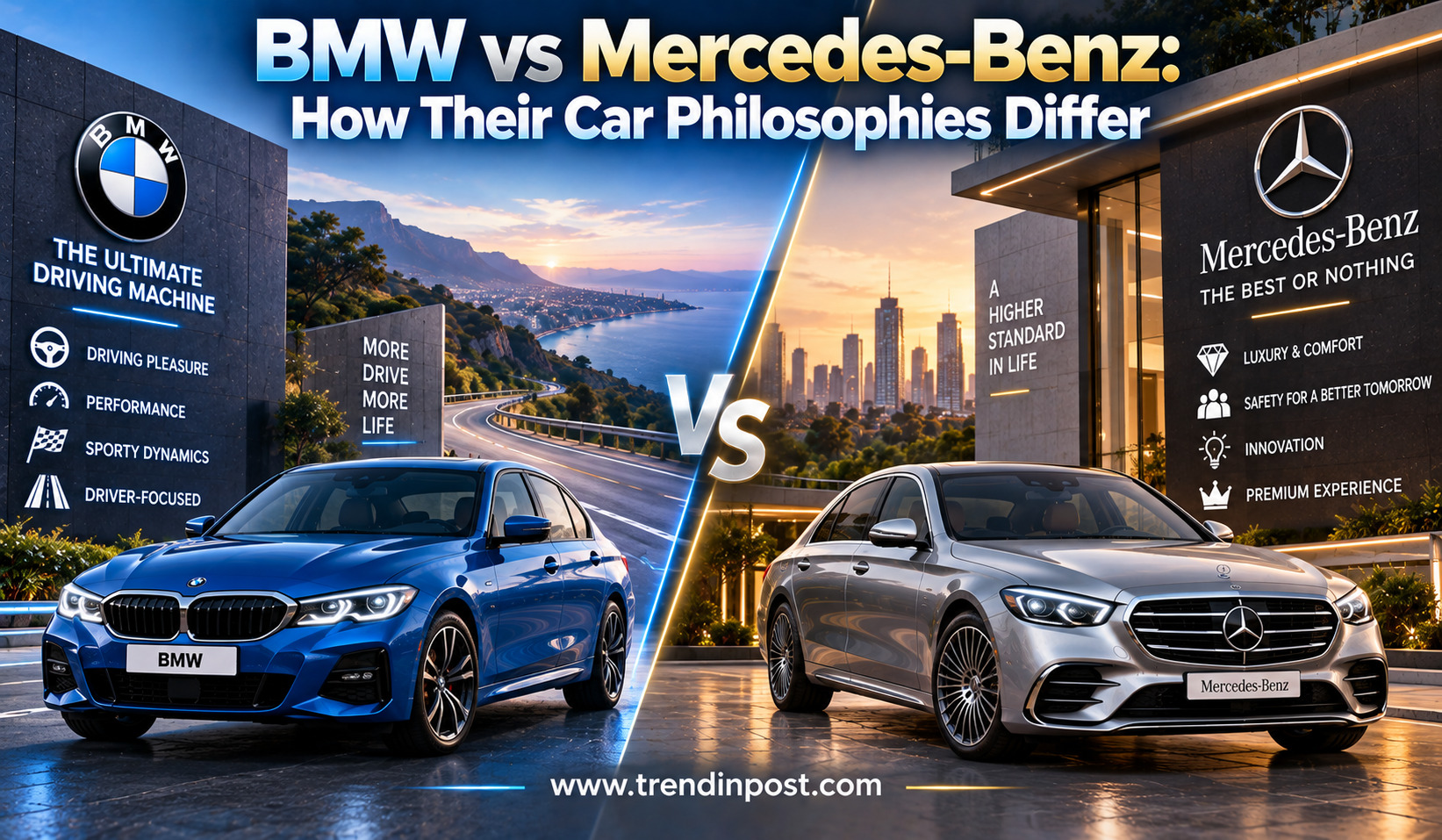
BMW vs Mercedes-Benz: How Their Car Philosophies Differ
BMW and Mercedes-Benz have spent decades competing in the premium car market, but the two German brands have traditionally approached luxury from different directions. Both companies offer powerful engines, advanced technology, premium interiors and sophisticated safety systems, yet the experience they try to create for drivers is not exactly the same.
BMW has historically placed a stronger emphasis on driving dynamics, driver involvement and a sportier character. Mercedes-Benz, meanwhile, has built much of its identity around comfort, refinement, technology and an unmistakable sense of luxury. These differences can be seen across their sedans, SUVs and electric vehicles.
The distinction becomes particularly interesting in India, where premium car buyers are increasingly looking for a combination of performance, comfort, technology and road presence. Models such as the BMW 7 Series, BMW i7 and BMW i5 LWB show BMW’s approach to modern luxury, while the Mercedes-Benz GLA and C-Class demonstrate how Mercedes-Benz brings its luxury philosophy to more accessible segments.
BMW’s Philosophy: Luxury With a Strong Driving Focus
BMW’s identity has traditionally been associated with the idea of making luxury cars enjoyable to drive. The brand’s interiors have become increasingly technology-focused, but driving dynamics remain an important part of its product philosophy.
The steering response, chassis balance, acceleration and overall road behaviour are usually given considerable attention in BMW products. Even when the vehicle is designed primarily for luxury and comfort, the company tends to retain a sporty character.
This philosophy becomes more noticeable in larger models. The BMW 7 Series, for example, is a flagship luxury sedan designed to compete at the highest level while still retaining the brand’s performance-oriented character.
BMW 7 Series and i7 Facelift: Flagship Luxury With Technology
The latest BMW 7 Series and i7 facelift have brought significant updates to BMW’s flagship sedan family. BMW India launched the updated range in September 2026, with the petrol-powered 740 M Sport and electric i7 variants forming the new line-up.
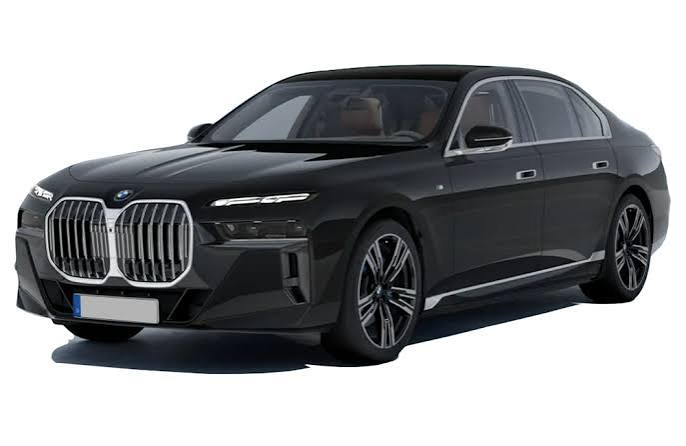
The new BMW 7 Series starts at ₹1.95 crore ex-showroom in India. The all-electric BMW i7 eDrive50 xDrive M Sport also starts at ₹1.95 crore, while the performance-focused i7 M70 xDrive is priced at approximately ₹2.65 crore.
The facelift focuses heavily on the cabin experience. The updated 7 Series gets a redesigned interior, advanced displays and high-end rear-seat equipment. BMW has also continued its focus on executive-style rear-seat comfort, making the car suitable for customers who may spend considerable time being driven rather than driving themselves.
The i7 takes the same flagship philosophy into the electric era. BMW India has also begun local production of the i7, making India the only country outside Germany to manufacture this electric flagship sedan.
BMW i5 LWB: Luxury Designed for Indian Buyers
The BMW i5 LWB represents another interesting part of BMW’s strategy in India. The long-wheelbase electric sedan has been developed with additional rear-seat space, an important consideration in the Indian premium-car market.
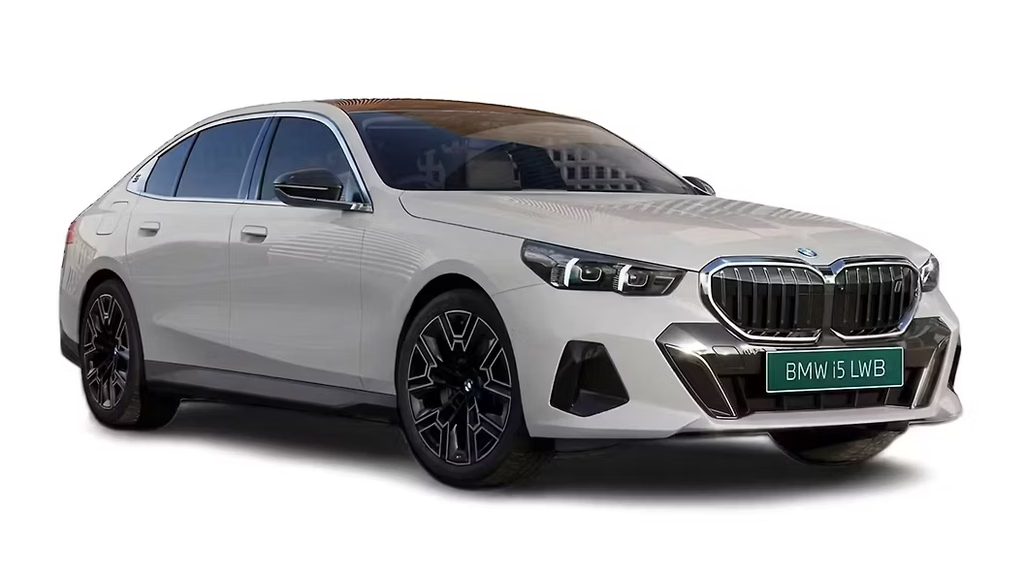
BMW India’s current website lists the BMW i5 Long Wheelbase from ₹79.60 lakh ex-showroom.
The i5 LWB combines electric power with the longer cabin format that many Indian luxury buyers appreciate. Instead of treating an electric car simply as an environmentally focused product, BMW positions it as a premium sedan where performance, technology and passenger comfort are equally important.
This reflects a wider shift in BMW’s approach. Electric vehicles are no longer separate from the company’s luxury and performance philosophy. Models such as the i5 and i7 attempt to deliver the same premium character through electric powertrains.
Mercedes-Benz: A Different Interpretation of Luxury
Mercedes-Benz has traditionally placed greater emphasis on comfort, elegance and luxury. While its cars can be very powerful and sporty, the brand’s core identity has often centred on creating a relaxed and premium driving environment.
The cabin is therefore a major part of the Mercedes-Benz experience. Materials, ambient lighting, screens, seat comfort and the overall atmosphere receive considerable attention.
This does not mean Mercedes-Benz cars lack performance. Instead, performance is often integrated into a broader luxury experience. The result is a vehicle that can be fast and technologically advanced while still prioritising comfort.
Mercedes-Benz GLA: Compact Luxury With SUV Appeal
The Mercedes-Benz GLA demonstrates how the brand has adapted its luxury philosophy for a smaller SUV format. The GLA combines the higher seating position and practicality of an SUV with Mercedes-Benz styling and cabin technology.
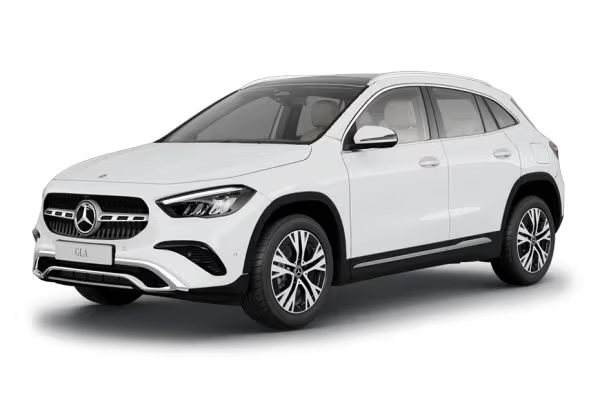
The GLA is currently priced from approximately ₹51.80 lakh ex-showroom in India, with higher variants reaching around ₹55 lakh depending on the configuration.
Its appeal is different from that of a large flagship Mercedes. Instead of focusing primarily on chauffeur-oriented rear-seat luxury, the GLA is aimed at customers who want a compact premium vehicle with an SUV character.
The model’s upright driving position, modern cabin and premium branding make it suitable for buyers moving into the luxury segment from mainstream SUVs.
Mercedes-Benz C-Class: The Balanced Luxury Sedan
The C-Class has traditionally been one of Mercedes-Benz’s most important entry points into its luxury sedan range. It combines premium design and technology with dimensions that remain manageable for urban driving.
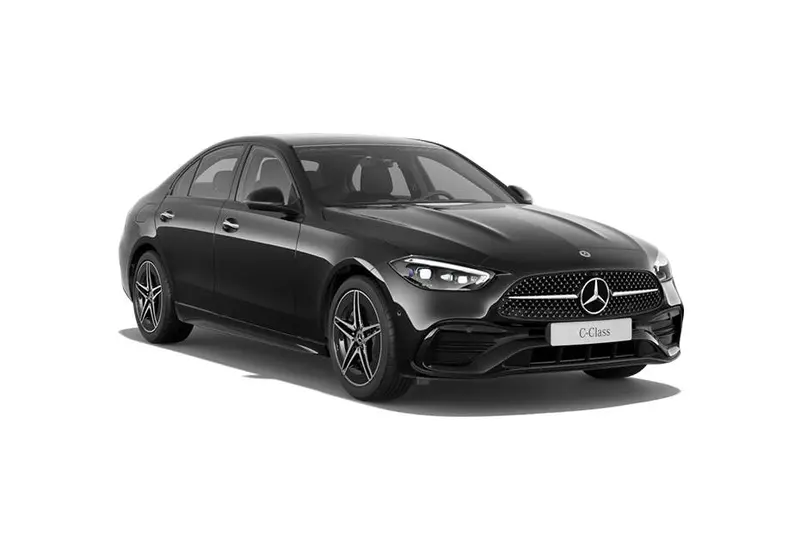
The Mercedes-Benz C-Class is currently priced from approximately ₹61.20 lakh ex-showroom according to current India-market listings, while other sources show the wider variant range around ₹59.90–65.60 lakh.
The C-Class reflects Mercedes-Benz’s philosophy particularly well because it places considerable importance on the cabin experience. The design, digital interface and premium ambience are central to its appeal.
For many buyers, the C-Class is less about maximum performance and more about having a sophisticated luxury sedan that feels special during both daily commutes and longer journeys.
BMW vs Mercedes-Benz: Different Priorities
The biggest difference between the two brands is not necessarily about which one has better technology or more powerful cars. Both manufacturers offer impressive engineering. The distinction is more about what they prioritise when combining these elements.
BMW tends to put more emphasis on the driver’s interaction with the vehicle. Mercedes-Benz generally puts greater emphasis on the overall luxury experience.
| Area | BMW | Mercedes-Benz |
| Driving character | Sporty and driver-focused | Smooth and comfort-oriented |
| Cabin philosophy | Technology with a performance feel | Luxury, ambience and technology |
| Design | Dynamic and athletic | Elegant and sophisticated |
| Large luxury sedans | Performance combined with comfort | Comfort and executive luxury |
| Electric strategy | Performance-focused EV luxury | Luxury-focused EV technology |
| SUV approach | Driving dynamics and versatility | Comfort, styling and premium ambience |
These are broad brand characteristics rather than rules for every individual model. Both companies offer sporty, comfortable and highly luxurious vehicles across their respective ranges.
Technology Has Become Central to Both Brands
Technology is one area where BMW and Mercedes-Benz are increasingly moving closer together. Modern luxury buyers expect large displays, smartphone connectivity, advanced driver assistance, digital instrument clusters and connected-car features.
BMW’s latest 7 Series facelift demonstrates this direction with its highly digital interior and advanced rear-seat entertainment. The i7 further expands the technology experience through its electric architecture and premium cabin features.
Mercedes-Benz has followed a similar path with its MBUX interface and highly digital interiors. The company’s current GLA and other models continue to integrate infotainment, navigation, voice controls and connected functions into the cabin experience.
The difference is increasingly becoming one of presentation rather than basic capability. BMW tends to give its technology a more driver-oriented character, while Mercedes-Benz often integrates it into a more luxury-focused environment.
How the Brands Approach Electric Luxury
Electric vehicles have introduced a new challenge for traditional luxury manufacturers. Both BMW and Mercedes-Benz have invested heavily in electric technology while trying to preserve their individual brand identities.
BMW’s i5 and i7 demonstrate an attempt to combine electric propulsion with the brand’s established performance character. The i7, in particular, shows that BMW sees electric power as compatible with flagship luxury rather than as a completely separate category.
Mercedes-Benz has taken a similar approach through its EQ-branded products and newer electric models. The company focuses heavily on smoothness, technology and luxury, which naturally fits its traditional brand positioning.
The main differences in their broad approach are:
- BMW focuses strongly on driving engagement and performance.
- Mercedes-Benz places greater emphasis on comfort and luxury ambience.
- Both brands increasingly use technology as a central part of the premium experience.
- Their electric models are designed to retain the character associated with each brand.
Which Philosophy Suits Indian Luxury Buyers?
The choice between BMW and Mercedes-Benz often depends on what the buyer expects from a luxury car. Someone who enjoys driving and wants sharper road behaviour may naturally be attracted to BMW.
A buyer who spends more time in the passenger seat or values cabin comfort, premium ambience and a relaxed driving experience may prefer Mercedes-Benz.
However, the differences are not absolute. A BMW 7 Series can offer extensive rear-seat luxury, while a Mercedes-Benz can deliver strong performance. Buyers therefore need to compare individual models rather than relying entirely on brand stereotypes.
BMW and Mercedes-Benz Price Comparison in India
| Model | Approx. Starting Ex-Showroom Price in India | Position |
| BMW i5 LWB | ₹79.60 lakh | Electric luxury sedan |
| BMW 7 Series facelift | ₹1.95 crore | Flagship luxury sedan |
| BMW i7 eDrive50 | ₹1.95 crore | Electric flagship sedan |
| BMW i7 M70 | ₹2.65 crore | High-performance electric flagship |
| Mercedes-Benz GLA | ₹51.80 lakh | Compact luxury SUV |
| Mercedes-Benz C-Class | ₹61.20 lakh | Luxury sedan |
*Prices are approximate ex-showroom figures and can vary by variant, equipment and manufacturer updates. BMW’s i5 price is from BMW India’s current website, while the latest 7 Series/i7 prices reflect the September 2026 India launch. Mercedes-Benz prices are based on current India-market listings. *
The Luxury Market Is Becoming More Competitive
The premium-car market in India is changing quickly. Buyers are no longer looking only at brand reputation. They are increasingly comparing technology, electric powertrains, cabin space, safety features and ownership packages.
This makes the BMW-versus-Mercedes-Benz competition particularly interesting. Both companies have strong brand recognition, but they must continue adapting their products to changing customer expectations.
The growing popularity of long-wheelbase models in India is another important factor. Cars such as the BMW i5 LWB show how manufacturers are adapting global products to local luxury-car preferences, particularly the importance of rear-seat space.
Final Thoughts
BMW and Mercedes-Benz remain two of the most recognisable names in luxury automobiles, but their philosophies continue to differ. BMW has traditionally built its identity around driving pleasure, performance and driver involvement, while Mercedes-Benz has placed greater emphasis on comfort, refinement and luxury ambience.
The latest products show that these differences are becoming more nuanced. The BMW 7 Series and i7 combine driving technology with exceptional rear-seat luxury, while the i5 LWB brings electric performance and additional cabin space to the premium sedan segment.
Mercedes-Benz takes a different route with models such as the GLA and C-Class, focusing heavily on premium design, comfort and a sophisticated technology experience.
Ultimately, there is no single winner between the two. The better choice depends on whether a buyer places greater value on driving engagement, passenger comfort, technology, design or the overall luxury atmosphere.
FAQs
1. What is the main difference between BMW and Mercedes-Benz?
BMW traditionally focuses more strongly on driving dynamics and driver engagement, while Mercedes-Benz generally places greater emphasis on comfort, refinement and luxury.
2. What is the BMW 7 Series facelift price in India?
The latest BMW 7 Series facelift starts at approximately ₹1.95 crore ex-showroom in India.
3. What is the BMW i7 price in India?
The new BMW i7 eDrive50 xDrive M Sport starts at approximately ₹1.95 crore, while the i7 M70 xDrive is priced around ₹2.65 crore ex-showroom.
4. What is the BMW i5 LWB price in India?
The BMW i5 Long Wheelbase currently starts at approximately ₹79.60 lakh ex-showroom according to BMW India’s website.
5. What is the Mercedes-Benz GLA price in India?
The Mercedes-Benz GLA starts at approximately ₹51.80 lakh ex-showroom, with higher variants costing more.
Related Post
Car Dimensions Buyers Should Check Before Parking at Home
Buying a new car is usually about more than engine performance, mileage, features, and design.…