Best Compact Planters for Apartment Balconies
>> LifeStyle>> Best Compact Planters for Apartment Balconies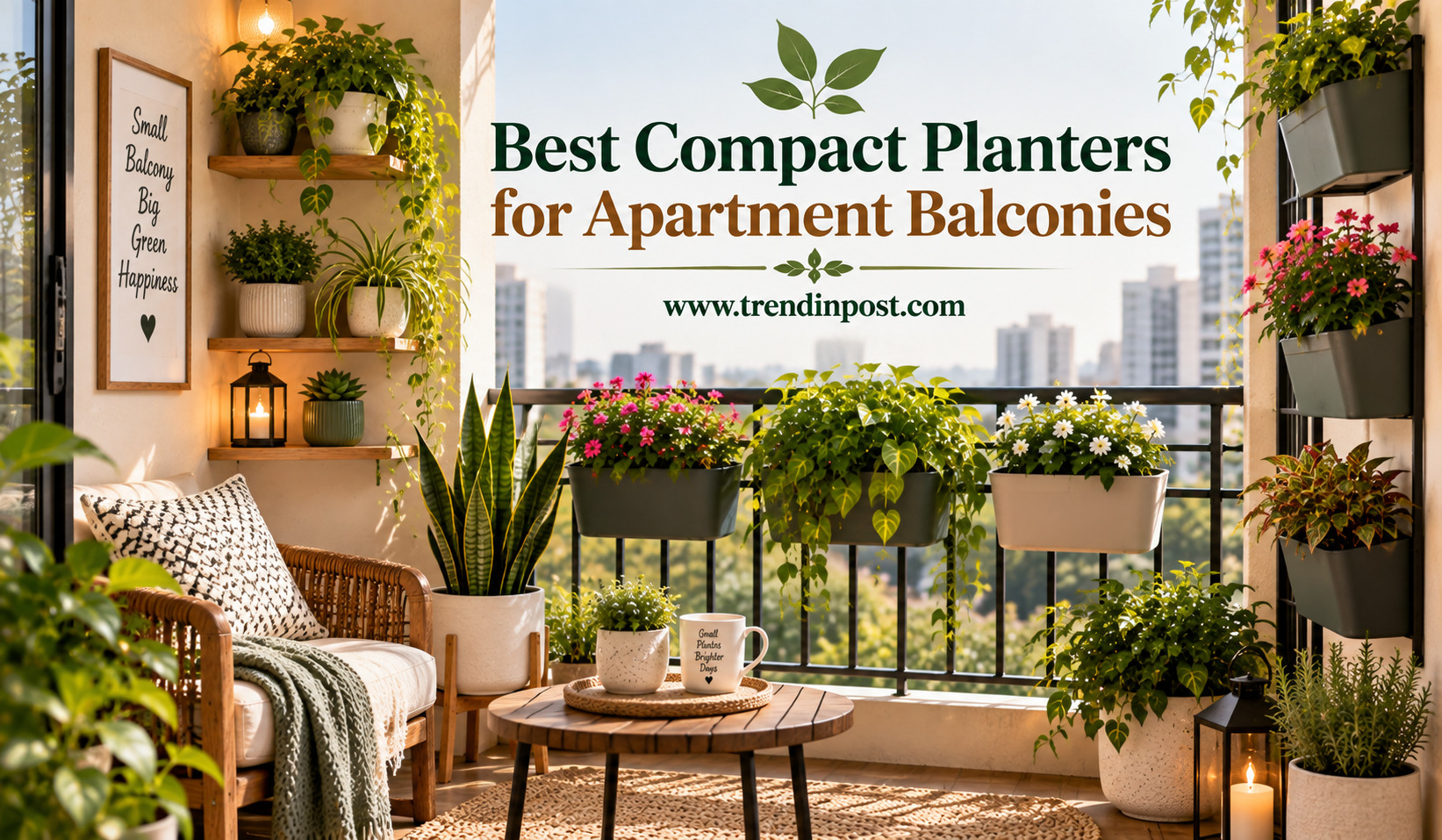
Best Compact Planters for Apartment Balconies
Apartment balconies can be small, but that does not mean they have to look plain or unused. With the right compact planters, even a narrow balcony can become a refreshing green corner without sacrificing walking space, seating, or style. The key is to choose containers that fit the available area, suit your plants, and make smart use of vertical and railing space.
Compact planters are especially useful for apartment living because they are easier to move, maintain, and rearrange than large garden containers. From slim railing planters to lightweight pots and vertical designs, there are plenty of ways to create a beautiful balcony garden while keeping the layout comfortable and uncluttered.
Why Compact Planters Work So Well on Apartment Balconies
The biggest advantage of compact planters is their ability to provide greenery without taking over valuable floor space. A large planter can quickly make a narrow balcony feel crowded, while several smaller containers allow you to distribute plants more thoughtfully.
They are also easier to reposition when sunlight changes throughout the year. If a plant needs more light or protection from strong weather, a compact pot can be moved without completely redesigning the balcony.
Another benefit is visual flexibility. Small planters can be grouped together, placed on shelves, hung from suitable supports, or arranged along a railing. This creates layers of greenery rather than a row of bulky pots across the floor.
What to Look for in a Compact Balcony Planter
Choosing a planter is not only about appearance. Drainage, weight, durability, size, and placement all matter when working with a limited outdoor area.
For apartment balconies, lightweight materials can make rearranging easier. Plastic, resin, fiberglass, fabric grow bags, and lightweight composite planters can provide attractive alternatives to heavy stone or oversized ceramic containers.
Drainage is particularly important. Excess water needs a clear way to escape so that plant roots do not remain constantly wet. Using a planter with drainage holes and a suitable tray can also help keep balcony surfaces cleaner.
A tiny herb does not need a deep, oversized container, while plants with larger root systems require enough room to grow comfortably.
Best Types of Compact Planters for Apartment Balconies
Different planter styles solve different space problems. Instead of choosing one type for the entire balcony, combine a few designs based on how you want to use the space.
Slim Railing Planters
Railing planters are among the most useful choices for very small balconies because they move planting space away from the floor. They work especially well for herbs, small flowers, trailing plants, and compact foliage.
Their slim shape keeps the balcony visually open while adding greenery around the perimeter. Before installing one, make sure the railing and mounting system are suitable for the planter and that local building or rental rules allow it.
Vertical Planters
A narrow vertical unit can hold several small plants while occupying only a small footprint.
They are excellent for creating a green feature wall or growing herbs in an organized arrangement. They can also add height to a balcony without requiring large floor containers.
Corner Planters
Balcony corners are often underused. A compact corner planter can turn these awkward spaces into attractive planting zones without interfering with the main walkway.
Choose narrow triangular, rounded, or tall designs that fit naturally into the corner. A corner planter can also act as a visual anchor for the rest of the balcony.
Slim Trough Planters
Long, narrow trough planters are useful when you want several plants together without using multiple round pots. They can sit against a wall or along an appropriate balcony edge and create a continuous strip of greenery.
Troughs work particularly well for herbs, small flowering plants, and plants with similar light and watering requirements.
Stackable Planters
Stackable designs are ideal when floor space is extremely limited. Several containers can be arranged vertically, allowing you to grow different plants within one compact area.
They are particularly useful for balconies where you want variety but cannot fit a large number of individual pots.
Compact Planter Styles at a Glance
| Planter Type | Best For | Main Advantage |
| Railing planter | Herbs and small flowers | Saves floor space |
| Vertical planter | Multiple small plants | Uses wall height |
| Corner planter | Foliage and flowers | Makes use of unused corners |
| Slim trough | Herbs and grouped plants | Creates a neat planting line |
| Stackable planter | Small collections | Maximizes vertical space |
| Lightweight pot | Flexible arrangements | Easy to move |
Choose Planters According to Your Balcony Size
A small balcony benefits from planning before purchasing containers. Measure the available floor area and identify the sections that must remain open for movement, doors, furniture, and access.
For a narrow balcony, prioritize railing, wall, and vertical planters. If you have slightly more floor space, add two or three compact pots at different heights rather than filling the entire area with containers.
The goal is to create a garden that feels intentional rather than crowded. Leaving some open space between planting zones can actually make a small balcony appear larger.
Match Compact Planters With the Right Plants
Small foliage plants can look attractive in simple ceramic or resin pots, while herbs often work well in troughs or compact containers.
For sunny balconies, consider plants such as succulents, portulaca, compact flowering varieties, or suitable herbs. In partly shaded spaces, foliage plants can provide plenty of greenery without requiring large containers.
Trailing plants are another smart choice. When placed in an elevated planter, their stems can grow downward and add a softer, layered appearance without occupying additional floor space.
Always consider the mature size of the plant rather than choosing only according to how small it looks when purchased.
Use Lightweight Planters for Easier Balcony Styling
Lightweight planters are especially convenient for apartment balconies. They can be moved when cleaning, rearranged when changing your décor, or relocated according to seasonal sunlight.
Heavy materials such as thick concrete or large stone containers can become difficult to move once filled with soil and water. They can also add considerable weight to a balcony. For larger containers, it is sensible to understand your building’s structural limitations and avoid concentrating excessive weight in one area.
Lightweight does not have to mean boring. Modern planters are available in finishes that resemble ceramic, stone, terracotta, and wood, allowing you to achieve the appearance you want without necessarily choosing the heaviest material.
Create a Stylish Compact Planter Arrangement
A balcony garden looks more polished when planters have some visual relationship with one another. You do not need every container to match, but repeating a material, shape, or color can make the arrangement feel coordinated.
For a modern balcony, consider simple geometric planters in neutral shades. For a natural look, terracotta-inspired finishes and earthy colors can complement wooden furniture. If your balcony already contains colorful cushions or accessories, neutral planters can prevent the space from becoming visually overwhelming.
Varying planter heights is another simple styling technique. Combine low pots with one taller planter or a vertical arrangement to create depth.
Smart Tips for Keeping a Small Balcony Uncluttered
A compact balcony can quickly become crowded if every available surface is used. Keep the arrangement selective and allow plants to become the main decorative feature.
- Keep the main walkway clear.
- Group plants according to their light and watering needs.
- Use vertical or railing space before adding more floor pots.
- Choose a limited palette of planter colors and finishes.
Instead of buying many small containers immediately, begin with a few well-placed planters. You can gradually add more greenery once you understand how much sunlight, wind, and maintenance your balcony requires.
Caring for Plants in Compact Balcony Planters
Plants in containers depend entirely on the growing environment you provide. Check the soil regularly rather than following a fixed watering schedule. Small containers can dry out more quickly than larger ones, particularly during hot weather.
Make sure drainage holes remain clear and that excess water can leave the container easily.
Balconies can also experience stronger wind and temperature changes than indoor spaces. Secure lightweight planters properly and move particularly delicate plants to a more sheltered position when necessary.
Regular pruning helps compact plants stay within their intended space. Remove damaged leaves, clear dead growth, and occasionally rotate pots so plants develop evenly.
Common Mistakes to Avoid
One of the most common mistakes is choosing a planter based only on its appearance. A beautiful container may still be unsuitable if it is too large, too heavy, or lacks proper drainage.
Another mistake is overcrowding. Filling every corner with plants may seem attractive initially, but as plants grow, the balcony can quickly become difficult to use.
Avoid placing containers where they block doors, drainage routes, or essential access points. Also consider how water runoff will affect the balcony surface and the area below.
Most importantly, do not ignore the mature size of your plants. A compact planter can still become a problem if the plant eventually grows far beyond the available space.
Frequently Asked Questions
1. What is the best planter for a very small apartment balcony?
Railing planters, vertical planters, and slim troughs are excellent choices because they provide planting space without using much floor area. A combination of these can create a green balcony while keeping the central area open.
2. Are lightweight planters better for apartment balconies?
Lightweight planters are often easier to move, clean, and rearrange. They can be particularly practical for apartment balconies, although the total weight of the container, soil, water, and plant should always be considered.
3. What size planter is best for balcony plants?
The ideal size depends on the plant’s root system and mature growth. Herbs and small flowers can generally use compact containers, while larger foliage plants need deeper or wider pots. Avoid choosing a container that is dramatically larger than the plant requires.
4. Can I use railing planters on an apartment balcony?
Railing planters can be a useful space-saving solution, but they should only be used when the railing and planter attachment system are appropriate. Check building, safety, and rental requirements before installing them.
5. How can I make a small balcony look greener without adding more pots?
Use vertical space, hanging arrangements where appropriate, tiered stands, and trailing plants. You can also group plants at different heights so a few carefully selected containers create a fuller appearance.
Final Thoughts
The best compact planters for apartment balconies are those that balance space, plant health, safety, and style. Railing planters can free the floor, vertical designs can turn unused walls into green features, and lightweight pots make rearranging easier.
Rather than filling your balcony with containers, focus on a thoughtful arrangement of well-sized planters and plants suited to the available light. With the right combination, even a narrow apartment balcony can become a comfortable, attractive green retreat without feeling crowded.
Related Post

Life Path Number Meaning and Its Influence on Personality
Numbers are a part of everyday life, but in numerology, they can carry a much…