Germany’s Luxury Car Brands and Market Position
>> Automobile>> Germany’s Luxury Car Brands and Market Position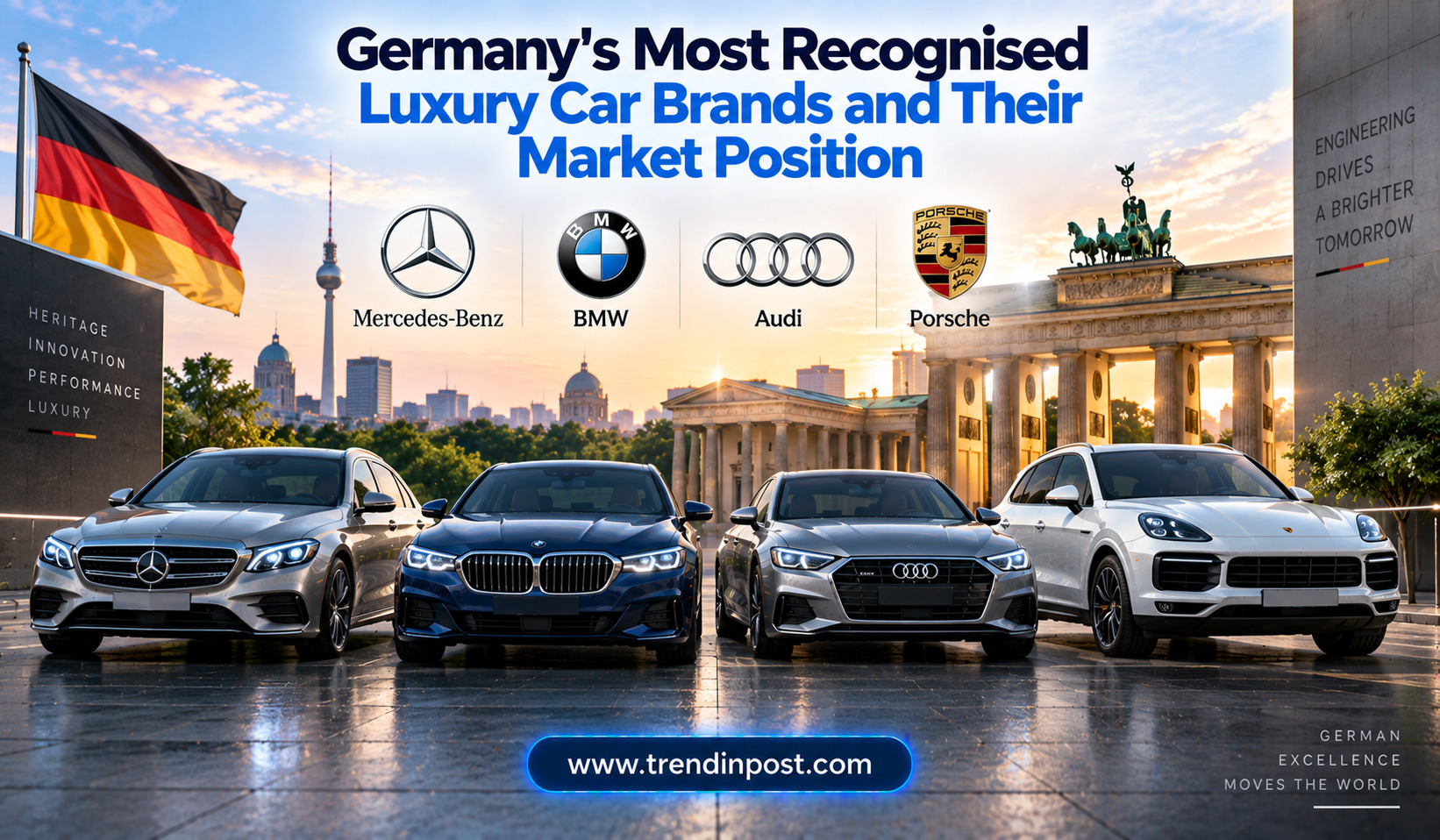
Germany’s Luxury Car Brands and Market Position
Germany has long been associated with premium automobiles, and its luxury car industry remains one of the country’s most recognisable industrial strengths. Brands such as Mercedes-Benz, BMW and Audi have built global reputations around engineering, technology, performance and premium design. Alongside them, Porsche occupies a more performance-focused position, while ultra-luxury names such as Maybach and high-end specialist divisions serve customers looking for greater exclusivity.
The importance of German luxury manufacturers can also be seen in the country’s domestic registration figures. Germany recorded around 2.86 million new passenger-car registrations in 2025. Among the country’s major premium brands, BMW recorded 253,712 registrations, Mercedes-Benz 260,415 and Audi 205,862.
These numbers show that premium cars are not a niche interest in Germany. The country’s luxury manufacturers compete across a broad range of segments, from compact premium cars and executive saloons to electric vehicles, performance SUVs and high-end sports cars.
Mercedes-Benz: A Strong Premium and Luxury Presence
Mercedes-Benz remains one of the most recognisable luxury car brands associated with Germany. Its market position is built around a combination of comfort, technology, design and a broad product portfolio.
The brand competes in several areas of the premium market. Compact models allow Mercedes-Benz to reach customers entering the luxury segment, while larger vehicles such as the E-Class and S-Class continue to represent its traditional executive-car identity. SUVs have also become increasingly important, with the brand offering vehicles across several sizes and price levels.
Mercedes-Benz registered 260,415 passenger cars in Germany in 2025, giving it a stronger registration total than BMW and Audi during the year. The figure represented a modest 1% increase compared with 2024.
Its position is not based only on sales volume. Mercedes-Benz also benefits from a strong association with premium comfort. The S-Class, in particular, has historically been used as a benchmark for luxury technology and executive-car refinement.
The company is also expanding its electric range, making electrification an increasingly important part of its future premium strategy.
BMW: Combining Luxury With Driving Appeal
BMW occupies a slightly different position in the German luxury-car landscape. While comfort and technology are important, the brand has traditionally placed considerable emphasis on driving dynamics.
Its portfolio ranges from compact premium models to large executive cars and SUVs. The 3 Series and 5 Series remain important names, while the 7 Series represents the brand’s higher-end executive offering. BMW’s X family gives the company a strong presence in the SUV market.
BMW’s German registrations reached 253,712 units in 2025, an 8.9% increase from 2024. That made it one of the country’s strongest-performing premium brands during the year.
The company’s market position is also changing with electrification. Electric versions and dedicated EV models are being introduced alongside established petrol and hybrid vehicles, allowing BMW to appeal to customers with different powertrain preferences.
This balance between traditional driving characteristics and new technology is an important part of BMW’s identity. For buyers who want a luxury car that feels engaging to drive while still offering premium comfort, the brand remains a major choice.
Audi: Technology and Modern Design
Audi is the third major German premium manufacturer and has developed a market position strongly connected with technology, design and understated luxury.
The brand’s range covers compact premium cars, executive models, SUVs and electric vehicles. Audi’s Q range has become particularly important as buyers increasingly choose SUVs over traditional saloons.
Audi registered 205,862 cars in Germany in 2025, up 1.8% compared with the previous year. Its 7.2% share of the German passenger-car market placed it firmly among the country’s leading premium manufacturers.
Audi is currently placing considerable emphasis on its electric future. In September 2026, the company introduced the new A2 e-tron, a compact electric model designed to strengthen its position in Europe’s smaller EV market. The vehicle is scheduled to enter production at Audi’s Ingolstadt plant, with deliveries expected from December 2026.
This illustrates how Audi’s future market position is likely to depend not only on established premium models but also on how effectively it adapts its technology and product range to the electric-car market.
Porsche: Performance at the Luxury End
Porsche operates differently from Mercedes-Benz, BMW and Audi. Although it has a smaller overall registration volume, the brand occupies a particularly strong position in the performance-luxury market.
The 911 remains one of the world’s best-known sports cars, while the Cayenne and Macan give Porsche a major presence in the premium SUV market. The Taycan has also established Porsche as a manufacturer capable of combining electric propulsion with high-performance driving.
Porsche registered 29,692 passenger cars in Germany in 2025, down from 36,097 in 2024.
Its lower volume does not necessarily indicate a weak market position. Porsche competes at a higher price point than many mainstream premium models, and its brand strength comes largely from performance, engineering heritage and exclusivity.
For this reason, Porsche occupies a different part of Germany’s luxury-car market. It is less about high sales volume and more about maintaining a strong premium identity.
Maybach and Ultra-Luxury Mercedes Models
At the upper end of the market, Mercedes-Maybach gives Mercedes-Benz access to customers seeking additional exclusivity and luxury.
Maybach models are positioned above conventional Mercedes-Benz vehicles, with greater emphasis on rear-seat comfort, premium materials, distinctive design and personalisation. The brand competes with names such as Bentley and Rolls-Royce rather than directly targeting the mainstream premium market.
This part of the industry is relatively small in terms of registrations, but it has strategic importance. Ultra-luxury vehicles strengthen a manufacturer’s image and demonstrate the highest level of technology, craftsmanship and customisation available within its wider portfolio.
German Luxury Brands Compared
Although the country’s leading premium brands share the same national heritage, they have developed different identities.
| Brand | Main market position | Key strengths | Important segments |
| Mercedes-Benz | Premium to luxury | Comfort, prestige, technology | SUVs, executive cars, EVs |
| BMW | Premium and performance luxury | Driving dynamics, technology | Sedans, SUVs, EVs |
| Audi | Premium technology-focused | Design, digital technology, quattro heritage | SUVs, executive cars, EVs |
| Porsche | Performance luxury | Sports-car engineering, performance | Sports cars, SUVs, EVs |
| Mercedes-Maybach | Ultra-luxury | Exclusivity, craftsmanship, comfort | Luxury sedans and SUVs |
The comparison shows why it is difficult to describe German luxury cars as one single market. Each manufacturer targets different priorities while competing for customers who are prepared to pay more for design, engineering and brand reputation.
SUVs Are Reshaping Germany’s Luxury Market
One of the biggest changes affecting German premium manufacturers is the growing importance of SUVs. Luxury buyers increasingly expect premium brands to offer practical high-riding models rather than relying entirely on traditional saloons.
BMW’s X models, Mercedes-Benz’s SUV portfolio and Audi’s Q range demonstrate how important this segment has become. Porsche has also benefited from the trend through the Cayenne and Macan.
SUVs offer manufacturers another advantage because they can combine premium equipment with higher seating positions, larger cabins and family-friendly practicality. This allows luxury brands to appeal to a broader audience without abandoning their premium image.
Electrification Could Change the Competitive Landscape
Electric vehicles are becoming one of the most important factors influencing the future of German luxury brands. Mercedes-Benz, BMW, Audi and Porsche all have electric models, but the transition is taking place during a period of intense international competition.
Germany’s overall vehicle fleet is already becoming more electrified. At the beginning of 2026, the country had more than 3.15 million battery-electric and plug-in-hybrid passenger cars in its registered fleet, compared with about 2.62 million a year earlier.
However, German luxury manufacturers face increasing competition from newer electric-car companies, particularly from China. Audi’s latest product strategy, including the new A2 e-tron, shows the pressure on established premium brands to improve efficiency, expand their electric line-ups and respond to changing consumer expectations.
The challenge will be to preserve the characteristics that made German luxury brands successful while adapting to a market where software, batteries and charging technology are becoming just as important as engines and transmissions.
Brand Reputation Remains a Major Advantage
Despite market changes, brand recognition remains one of Germany’s strongest advantages. Mercedes-Benz, BMW and Audi are widely recognised internationally, while Porsche has developed an especially strong reputation among performance-car enthusiasts.
A 2026 YouGov automotive ranking also showed the continued strength of Germany’s premium brands in consumer perception. Audi, BMW and Mercedes-Benz occupied the top three positions in the cited German brand-preference ranking, although such rankings measure brand perception rather than actual vehicle registrations.
That combination of sales presence and brand recognition gives German manufacturers a strong foundation as the industry changes.
Final Thoughts
Germany’s luxury-car industry remains one of the most influential parts of the country’s automotive sector. Mercedes-Benz, BMW and Audi continue to dominate the mainstream premium space, while Porsche adds a strong performance focus and Maybach serves customers at the ultra-luxury end.
The market is nevertheless entering a new phase. Electric vehicles, software, SUVs and changing customer expectations are forcing established manufacturers to rethink how luxury should be delivered.
Their long-established brands remain a major advantage, but future success will depend on how effectively these companies combine traditional German engineering with new technology. For buyers, that transition is creating an increasingly broad selection of premium vehicles, from efficient electric cars and practical SUVs to high-performance sports cars and highly personalised luxury models.
Frequently Asked Questions
Which are Germany’s best-known luxury car brands?
Mercedes-Benz, BMW and Audi are the country’s three most recognised premium car manufacturers. Porsche is also a major luxury-performance brand, while Mercedes-Maybach operates at the ultra-luxury end.
Which German luxury brand sells the most cars in Germany?
Among the major premium brands, Mercedes-Benz recorded 260,415 registrations in Germany in 2025, followed by BMW with 253,712 and Audi with 205,862.
Is BMW more focused on performance than Mercedes-Benz?
BMW has traditionally emphasised driving dynamics, while Mercedes-Benz has placed greater emphasis on comfort and luxury. However, both brands now offer a wide mixture of performance, comfort, SUV and electric models.
Why is Audi important in the German luxury market?
Audi has a strong position based on technology, modern design, premium interiors and a broad SUV and electric-vehicle portfolio. Its 2025 German registrations exceeded 205,000 units.
Is Porsche a luxury brand?
Yes. Porsche occupies the performance-luxury section of the market. Its smaller sales volume compared with Mercedes-Benz, BMW and Audi reflects its more specialised and higher-priced product range.
Related Post
Bentley vs Rolls-Royce: Understanding Ultra-Luxury Cars
Ultra-luxury cars occupy a very different space from conventional premium vehicles. At this level, buyers…