Cars Designed for Easy Entry and Exit for Older Passengers
>> Automobile>> Cars Designed for Easy Entry and Exit for Older Passengers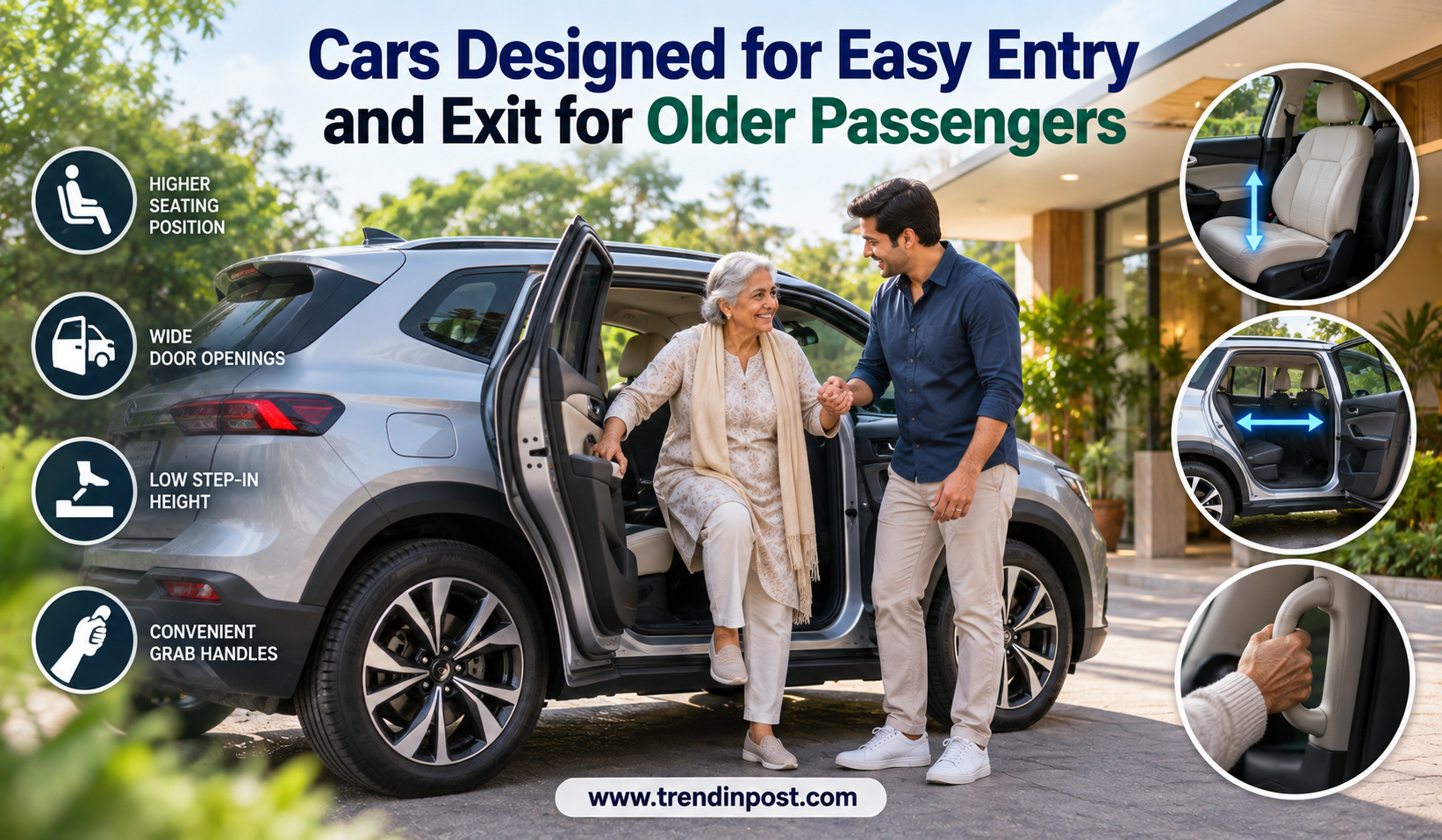
Cars Designed for Easy Entry and Exit for Older Passengers
Choosing a family car is not always about engine performance, mileage or the number of features inside the cabin. For families travelling with older parents or elderly passengers, one of the most important considerations can be something much simpler: how easily a person can get in and out of the vehicle.
Getting into a car that sits very low can require considerable bending, while climbing into a vehicle that is too tall may also be uncomfortable. The ideal family car for older passengers generally offers a balanced seat height, wide doors, good visibility and enough space around the entrance. These details can make everyday journeys more comfortable, whether the car is being used for shopping, medical appointments, family functions or long-distance travel.
As SUVs and crossovers have become increasingly popular in India, buyers now have more choices when looking for a vehicle with a convenient seating position. However, not every SUV automatically provides easy access. Vehicle height, door opening, seat design and the distance between the ground and the cabin all influence how convenient entry and exit will feel.
Why Easy Entry and Exit Matters
For younger passengers, getting into a car may seem like a minor part of the driving experience. Older passengers can see it differently. Limited flexibility, reduced balance or difficulty bending the knees can make getting into a low sedan or hatchback uncomfortable.
A well-designed cabin can reduce this effort. A seat positioned at a comfortable height allows passengers to sit down without dropping too far toward the floor. Similarly, a wide-opening door gives the passenger more room to position their legs before sitting down.
Getting out of the car is equally important. A passenger should ideally be able to place both feet securely on the ground before standing up. A vehicle that requires a deep squat or a significant step upward may not be suitable for every older passenger.
SUVs Can Offer a Useful Seating Height
One reason SUVs and crossovers are popular with families is their relatively raised seating position. Compared with many low-slung cars, these vehicles can reduce the amount of bending required when entering the cabin.
The advantage is particularly noticeable with compact and midsize SUVs that maintain a moderate overall height. Their seats are often positioned at a level that allows passengers to sit down more naturally.
However, an extremely tall SUV is not automatically better. A high floor or large step into the cabin can create a different challenge. Buyers should therefore judge the actual entry height rather than relying only on the fact that a vehicle is marketed as an SUV.
The Importance of Door Opening
Door design can have a major influence on accessibility. A wide door opening gives passengers more freedom to position themselves before sitting down. This can be especially useful in tight parking situations where the door cannot be opened completely.
Rear doors deserve particular attention in family cars. Older passengers may often sit in the second row, so they need sufficient space to enter without twisting their bodies excessively.
The angle at which the door opens also matters. A door that opens widely can make the process easier, particularly when a passenger needs assistance from another family member.
Seat Height Can Make a Big Difference
Seat height is one of the most important factors when evaluating a car for older passengers. A seat that is too low can make passengers bend their knees sharply and lower their bodies significantly. A seat that is too high can require a difficult step upward.
The best arrangement depends on the individual’s height and mobility, which is why a physical test is more useful than simply comparing specifications.
A good seating position should allow the passenger to sit down with minimal effort and place their feet comfortably on the floor. The seat should also provide enough support without making it difficult to stand up.
Visibility Helps Passengers Feel More Comfortable
Good visibility is useful not only for the driver but also for passengers. A higher seating position can give older passengers a better view of the road, which may make them feel more comfortable during a journey.
Large windows and a well-designed rear cabin can also reduce the feeling of being enclosed. This can be particularly useful during longer trips.
For drivers carrying elderly family members, visibility around the vehicle is also important because it makes picking up and dropping off passengers easier. A clear view of the curb and surrounding area can help the driver position the car more conveniently.
Cars With Easy Access: What to Look For
| Feature | Why It Matters for Older Passengers |
| Moderate seat height | Reduces excessive bending or climbing |
| Wide door opening | Provides more room to enter and exit |
| Comfortable rear-seat height | Makes second-row access easier |
| Good legroom | Reduces the need for awkward body movement |
| Supportive seats | Helps during longer journeys |
| Large windows | Improves visibility and cabin comfort |
| Low or manageable step-in height | Makes getting inside easier |
| Easy-to-reach grab areas | Can provide additional support |
Hatchbacks Can Still Be Practical
Hatchbacks are sometimes overlooked when accessibility is discussed, but their compact dimensions can be an advantage for families who frequently travel through crowded urban areas.
A hatchback with well-positioned seats and wide-opening doors can be easy to access. Its lower floor may also make stepping into the vehicle straightforward for some passengers.
However, low seating can become uncomfortable for people who find bending difficult. The only way to determine suitability is to have the intended passenger enter and exit the vehicle several times.
This is especially important because the ideal vehicle for one older passenger may not be equally comfortable for another.
Sedans Offer a Different Experience
Sedans generally have lower body heights than SUVs, which can make entry more demanding for some older passengers. At the same time, their seats may be positioned at a comfortable height relative to the door opening, depending on the model.
Rear-seat comfort is one of the major strengths of many sedans. A spacious rear bench and generous legroom can make longer journeys pleasant once the passenger is seated.
For families considering a sedan, the key is to check the entire movement from standing outside the vehicle to sitting inside. If the passenger has to bend too much or twist their legs into a narrow opening, another body style may be more suitable.
MPVs Can Be Strong Family Options
MPVs are designed around passenger space and can be especially useful for larger families. Their cabin layouts often prioritise easy movement between seating areas, while wide doors can make access more convenient.
The second row is particularly important. Captain seats in some MPVs can create a clear passage and make it easier for passengers to reach their seats. However, access to the third row may still involve climbing or bending, depending on the design.
Families should therefore distinguish between easy second-row access and overall cabin accessibility. If an older passenger will regularly travel, their preferred seating position should be tested specifically.
Automatic Gearboxes Can Reduce Driving Effort
If an older person will also drive the vehicle, the transmission becomes another consideration. Automatic gearboxes can reduce the physical effort involved in operating the car in heavy traffic.
There is no clutch pedal to operate, which can be useful for drivers who find repeated clutch use uncomfortable. Modern automatic transmissions can also make stop-and-go traffic less tiring.
This does not mean an automatic car is always the right choice. Buyers should still evaluate steering weight, pedal positioning, visibility and overall driving position.
Ride Comfort Matters After Entry
Easy entry is only one part of the experience. Once inside the car, older passengers need a comfortable ride. Excessive suspension movement, harsh bumps or uncomfortable seats can make even a spacious vehicle unpleasant during long journeys.
A well-tuned suspension can absorb road imperfections and reduce discomfort. Supportive seats with adequate cushioning can also help during extended travel.
For family buyers, this makes the test drive particularly important. A vehicle should be evaluated not only from the driver’s seat but also from the passenger seat where an older family member is likely to travel.
Safety Features Are Equally Important
Accessibility should never come at the expense of safety. A family vehicle should combine convenient entry with modern occupant-protection systems.
Features such as airbags, ABS, electronic stability control, seat-belt reminders and parking assistance can contribute to safer everyday travel. Rear parking cameras and sensors are also useful when picking up passengers in crowded locations.
For older passengers, a smooth and predictable ride can be just as important as the technology list. Sudden acceleration, harsh braking and aggressive driving can make journeys uncomfortable, so vehicle behaviour and driver habits both matter.
What Families Should Check Before Buying
A short showroom visit may not be enough to judge whether a vehicle is genuinely suitable for an older passenger. Families should allow the passenger to enter and exit the car several times and try the process from both sides where possible.
The passenger should also sit in the preferred seat for several minutes. Check whether the seat provides enough thigh support, whether the knees are positioned comfortably and whether there is enough space to move the feet.
A useful test is to simulate a normal family trip. Enter the vehicle, close the door, sit comfortably, fasten the seat belt and then get out. Repeating this process can reveal difficulties that may not be obvious during a quick inspection.
Small Features Can Improve Everyday Convenience
Modern cars often include features that make the cabin easier to use. Door handles that are easy to reach, large grab areas, electrically adjustable seats and simple controls can all improve comfort.
A high-quality parking camera can also reduce stress when the vehicle is being positioned close to a curb. In larger vehicles, features such as automatic parking assistance may further simplify manoeuvring.
However, technology should support basic usability rather than replace it. A car with straightforward controls and a comfortable cabin can sometimes be more useful to a family than a vehicle overloaded with complicated features.
Final Thoughts
For families travelling with older passengers, easy entry and exit can be one of the most valuable qualities a car offers. SUVs and crossovers often provide a convenient seating height, while hatchbacks, sedans and MPVs can also work well when their doors, seats and cabin dimensions suit the passenger.
There is no universal ideal height or body style. A vehicle that is easy for one person to enter may be difficult for another. The most important factors are the relationship between the seat, floor, door opening and ground.
Families should therefore take the intended passenger along for the test drive and allow them to evaluate the car themselves. Checking entry, seating comfort, visibility, seat-belt access and exit can provide a much better indication of everyday practicality than a specification sheet.
Ultimately, the best family car for older passengers is one that combines comfortable access with good seating support, safety, ride quality and simple everyday usability.
FAQs
Which type of car is easiest for older passengers to enter?
Compact and midsize SUVs can be convenient because their seating position is often higher than that of traditional hatchbacks and sedans. However, the actual seat and door design matters more than the vehicle category.
Are SUVs always better for elderly passengers?
No. Very tall SUVs can require a large step into the cabin. A moderately raised vehicle with a comfortable seat height may be easier to access.
Is a sedan suitable for older passengers?
A sedan can be suitable if its seat height, door opening and rear-seat access are comfortable. Buyers should test the actual vehicle rather than judging it only by its body style.
Are MPVs good for elderly family members?
MPVs can be excellent family vehicles because of their spacious cabins and large doors. Second-row access is often particularly convenient, although third-row access should be checked separately.
What seat height is best for an older passenger?
There is no single ideal measurement. The best seat height allows the passenger to sit down and stand up without excessive bending, stretching or climbing.
Related Post

Volkswagen Cars With Driver-Focused Features to Explore
Volkswagen has built its reputation around cars that put a strong emphasis on driving dynamics,…