

Jammu & Kashmir Trip
>> Travels & Tourism>> Jammu & Kashmir Trip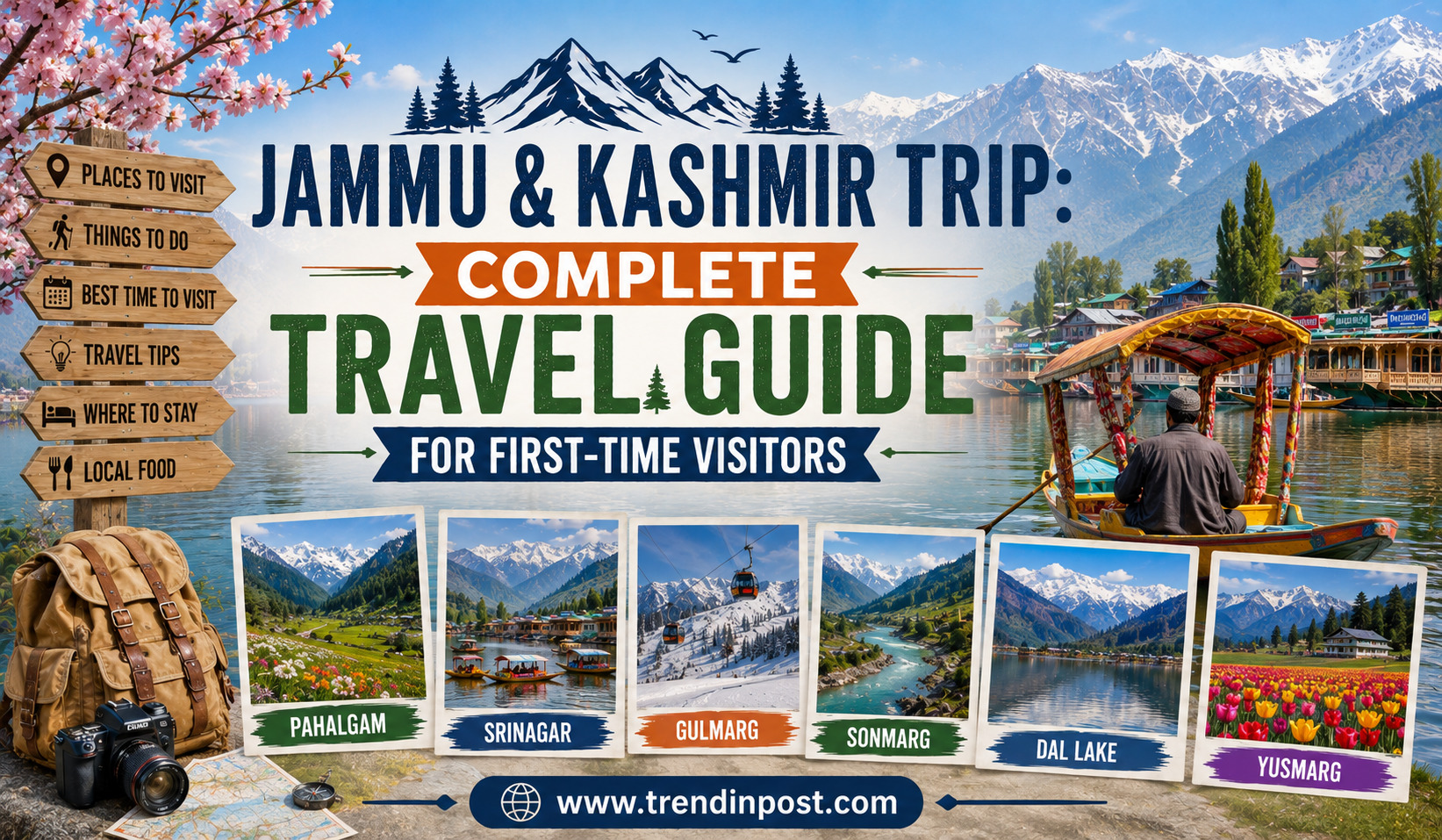
Jammu & Kashmir Trip
Complete Travel Guide for First-Time Visitors
Jammu & Kashmir remains one of India’s most fascinating travel destinations, combining snow-covered mountains, peaceful lakes, green valleys, historic temples, traditional markets and spectacular Himalayan landscapes. For first-time visitors, the region offers a wide range of experiences, from a relaxed stay beside Dal Lake in Srinagar to a scenic journey through the valleys of Pahalgam and Gulmarg.
Planning a Jammu & Kashmir trip, however, requires more preparation than an ordinary holiday. The region covers different geographical areas, weather can change quickly in the mountains, and travel times between destinations can be longer than they appear on a map. Choosing the right season and building a realistic itinerary can make the difference between a rushed holiday and a comfortable travel experience.
This complete travel guide covers the major destinations, best time to visit, transportation, accommodation, food, sightseeing and important tips that first-time visitors should know before travelling to Jammu & Kashmir.
Why Visit Jammu & Kashmir?
The Kashmir Valley is surrounded by mountains and is known for its lakes, gardens, rivers and traditional wooden architecture. Jammu, meanwhile, is strongly associated with temples, pilgrimage tourism and the lower Himalayan landscape.
Srinagar is usually the starting point for travellers exploring the Kashmir Valley. Its waterways, Mughal gardens and traditional houseboats create an experience that is very different from India’s other major tourist destinations.
Beyond Srinagar, destinations such as Gulmarg and Pahalgam provide opportunities to experience mountain scenery more closely. Sonamarg is another popular destination, known for its alpine landscape and access towards high-altitude areas.
The region is also attractive because its appearance changes dramatically with the seasons. Spring brings flowering landscapes, summer offers green valleys, autumn creates striking colours and winter transforms higher areas into snow destinations.
Best Time to Visit Jammu & Kashmir
The ideal time depends on what you want to see and do. There is no single season that can be described as perfect for every traveller.
Spring is popular among visitors interested in flowers and gardens. Srinagar’s gardens become particularly attractive as the season progresses, while the surrounding valleys begin turning green after winter.
Summer is one of the busiest periods for general sightseeing. Temperatures in the Kashmir Valley can be comfortable compared with many parts of India, making it a popular period for families and first-time travellers.
Autumn is known for its changing foliage and pleasant conditions. The landscape around Srinagar and other parts of the valley can take on warm golden and reddish shades, creating a distinctive atmosphere for photography.
Winter attracts travellers looking for snow. Gulmarg is particularly popular during the snowy season because of its winter landscape and skiing opportunities. However, winter travel requires careful attention to road and weather conditions.
Monsoon conditions are different from many other northern Indian destinations, but weather can still affect mountain travel. Travellers should check current forecasts before visiting remote or high-altitude areas.
How to Reach Jammu & Kashmir
Travellers can reach the region by air, rail and road. Srinagar has an airport with connections to several major Indian cities, making air travel the most convenient option for many visitors heading directly to the Kashmir Valley.
Jammu is an important railway and road gateway. Travellers arriving by train can continue towards Kashmir by road, depending on their itinerary and current transport conditions.
For visitors travelling from northern Indian cities, road journeys can also be part of the experience. However, mountain travel requires patience. Traffic, road construction, weather and restrictions can significantly increase journey times.
A first-time visitor should avoid booking sightseeing immediately after a long overnight journey. Reaching the destination, checking into the hotel and getting some rest can make the following days considerably more comfortable.
Srinagar: The Best Starting Point
Srinagar is generally the centre of a first-time Kashmir itinerary. The city is famous for Dal Lake, Mughal gardens, houseboats and traditional markets.
A shikara ride on Dal Lake is one of the experiences most closely associated with Srinagar. Rather than treating the ride simply as a sightseeing activity, visitors can use the experience to observe the unique relationship between the lake and the city’s traditional lifestyle.
The floating market and surrounding waterways add another dimension to the experience. Early mornings can be particularly peaceful, although visitors should discuss prices and duration with boat operators before beginning a ride.
Mughal Gardens
Srinagar’s Mughal gardens provide a different experience from Dal Lake. Shalimar Bagh, Nishat Bagh and Chashme Shahi are among the best-known gardens in the city.
Their terraces, fountains and mountain views make them popular with families and photographers. Spring and early summer can be especially attractive when flowers are in bloom.
Old Srinagar and Local Markets
Travellers who want to understand Srinagar beyond its major tourist attractions should spend some time exploring local markets and older neighbourhoods.
Traditional handicrafts, carpets, shawls, dry fruits and other regional products are widely associated with Kashmiri commerce. Visitors should compare prices and understand product quality before making expensive purchases.
Gulmarg: Mountains, Snow and Adventure
Gulmarg is one of the most popular destinations in the Kashmir Valley. The area is surrounded by mountains and is particularly well known for winter tourism.
The Gulmarg Gondola is one of the region’s major attractions, offering access to higher elevations and panoramic mountain views. Operations can depend on weather and other local conditions, so visitors should check the latest status before planning their day around the ride.
During winter, Gulmarg attracts visitors interested in skiing and snow experiences. During warmer months, the landscape becomes green and offers a completely different travel experience.
Travellers should remember that temperatures at higher elevations can be significantly lower than in Srinagar. Appropriate clothing and comfortable footwear are important even when the weather in the city feels mild.
Pahalgam: A Relaxed Valley Escape
Pahalgam is another major destination on the Kashmir tourist circuit. Located along the Lidder River, it is known for green landscapes, forests and mountain views.
The town is suitable for travellers who want a slower pace. Walking near the river, exploring nearby areas and enjoying the scenery can be more rewarding than filling every hour with activities.
Pahalgam is also associated with routes and excursions towards places such as Betaab Valley and Aru Valley. Depending on the season and local travel arrangements, visitors can explore these areas as part of a day excursion.
For families and couples, Pahalgam can be one of the most relaxing parts of a Kashmir itinerary.
Sonamarg: Gateway to High Mountain Landscapes
Sonamarg, meaning “Meadow of Gold,” is known for its striking mountain scenery and alpine environment. The landscape changes considerably depending on the season.
During warmer months, green meadows and mountain streams create a scenic setting, while winter brings snow and colder conditions.
Sonamarg is also associated with journeys towards higher-altitude destinations. Visitors should not attempt remote mountain travel without appropriate local guidance and should always follow current access rules.
Jammu: Temples and Cultural Heritage
A Jammu & Kashmir trip does not have to focus exclusively on the Kashmir Valley. Jammu provides a different cultural experience and can be included either at the beginning or end of a longer journey.
The city is widely known for religious tourism, with the Vaishno Devi pilgrimage being one of the most important travel experiences in the wider Jammu region.
Travellers visiting Jammu should also allow time to explore local food, markets and cultural attractions rather than treating the city only as a transit point.
Suggested Jammu & Kashmir Itinerary
A seven-day itinerary can provide a reasonable introduction for first-time visitors. The exact plan should be adjusted according to the season and road conditions.
| Day | Suggested Plan |
| Day 1 | Arrive in Srinagar, hotel check-in and Dal Lake |
| Day 2 | Mughal Gardens, local markets and Srinagar sightseeing |
| Day 3 | Gulmarg day trip |
| Day 4 | Travel to Pahalgam and explore the town |
| Day 5 | Pahalgam sightseeing and nearby valleys |
| Day 6 | Sonamarg excursion or additional Srinagar sightseeing |
| Day 7 | Local shopping and departure |
Visitors with more time can add Jammu, Vaishno Devi or additional days in Pahalgam. Those travelling during winter should keep the itinerary particularly flexible because weather can influence road movement.
Where to Stay
Jammu & Kashmir has accommodation ranging from budget guesthouses and homestays to luxury hotels and traditional houseboats.
In Srinagar, staying on or near Dal Lake can provide a distinctive experience. Houseboats offer a traditional accommodation option, while hotels on land may be more convenient for travellers who prefer modern facilities and easier vehicle access.
In Gulmarg and Pahalgam, visitors can choose hotels based on location, views and accessibility. During peak winter and summer periods, accommodation prices can rise, so advance booking is advisable.
Before making a reservation, first-time travellers should check recent reviews, heating arrangements, parking, hot-water availability and the exact distance from the main sightseeing areas.
Kashmiri Food You Should Try
Food is an important part of the Jammu & Kashmir travel experience. Kashmiri cuisine has a distinctive identity and includes dishes that may be unfamiliar to visitors from other parts of India.
Rogan josh, yakhni, gushtaba and other dishes associated with the traditional Wazwan culinary tradition are worth exploring for travellers interested in local cuisine. Vegetarian visitors can also find Kashmiri preparations suited to their preferences.
In Jammu, travellers can explore regional dishes and popular North Indian food. Srinagar also has cafés and restaurants serving contemporary meals for visitors who prefer familiar options.
Visitors should choose restaurants carefully and avoid ordering excessive quantities of unfamiliar food at once. Trying one or two local dishes during each meal can make the culinary experience more enjoyable.
What to Pack
A summer visitor and a winter traveller will have very different requirements.
For most trips, comfortable walking shoes, layered clothing, sunglasses, sunscreen, personal medicines and identification documents are useful. Travellers visiting during winter should add heavier jackets, thermal layers, gloves, woollen socks and suitable footwear.
A short packing list includes:
- Warm and lightweight layers appropriate for the season
- Comfortable shoes with good grip
- Sunglasses, sunscreen and personal medicines
- Identification documents, chargers and power banks
Travellers heading to higher elevations should avoid relying only on city-weather forecasts. Conditions can be significantly colder in mountain destinations.
Travel Safety and Practical Tips
First-time visitors should pay attention to local advisories and travel conditions throughout the journey. Mountain roads can change quickly because of weather, construction or other circumstances.
It is also important to keep sufficient time between major destinations. A journey that appears short on a map can take considerably longer in mountainous terrain.
Visitors should avoid travelling into isolated areas without local guidance and should follow instructions from local authorities, tourism officials and transport providers.
A few basic habits can make the trip smoother:
- Check weather and road conditions before mountain excursions.
- Keep important documents and emergency contacts accessible.
- Avoid standing close to unstable slopes, rivers or steep edges for photographs.
- Respect local customs, religious places and community traditions.
Travellers should also avoid assuming that a destination shown in a travel video will have identical conditions when they arrive. Mountain landscapes change with the season and weather.
Responsible Tourism in Jammu & Kashmir
Tourism plays an important role in the local economy, which makes responsible travel especially valuable.
Visitors can help protect the region by avoiding litter, reducing plastic consumption and not damaging natural surroundings. Trekking routes, lakes, meadows and mountain areas should be treated with care.
Local businesses should also be supported where possible. Eating at local restaurants, purchasing genuine regional products and hiring local guides or transport providers can help tourism income reach communities.
Cultural sensitivity is equally important. Visitors should dress appropriately at religious places and ask before photographing people or private spaces.
Common Mistakes First-Time Visitors Should Avoid
One common mistake is attempting to visit Srinagar, Gulmarg, Pahalgam and Sonamarg in an extremely short period. Although these destinations may look close on a map, travel time between them can make an overloaded itinerary exhausting.
Another mistake is booking every day in advance without leaving room for weather changes. A flexible itinerary is particularly valuable when visiting mountain regions.
Travellers should also be cautious about unusually cheap packages. Before booking, confirm exactly what the package includes, including transportation, accommodation, meals and sightseeing.
Finally, visitors should not spend the entire trip inside their vehicle. Kashmir is best experienced when travellers leave enough time to walk, explore local areas, enjoy the scenery and interact respectfully with the region.
Budget Planning
The cost of a Jammu & Kashmir trip varies significantly depending on travel style, season and accommodation.
Budget travellers can choose guesthouses, shared transport and local restaurants, while families and couples may prefer private taxis and comfortable hotels. Luxury travellers can opt for premium properties and customised travel experiences.
Transportation can represent a substantial part of the total budget because several popular destinations require separate road journeys. Travelling as a group can reduce the per-person cost of private transportation.
Comparing different accommodation options and booking early can help travellers manage expenses more effectively.
Final Thoughts
Srinagar introduces visitors to lakes, gardens and Kashmiri culture, Gulmarg provides dramatic mountain landscapes and winter experiences, while Pahalgam offers a quieter valley atmosphere. Sonamarg adds another dimension with its alpine scenery, and Jammu provides an important cultural and pilgrimage experience.
A thoughtfully planned itinerary with enough flexibility allows travellers to enjoy the region instead of spending most of the holiday travelling between destinations.
Choose the season according to your interests, book accommodation carefully, monitor weather and road conditions, and respect the local environment and culture.
FAQs About Jammu & Kashmir Trip
Which is the best month to visit Jammu & Kashmir?
The answer depends on your interests. Spring and summer are suitable for general sightseeing, autumn is attractive for changing foliage, and winter is popular with travellers looking for snow.
Is Kashmir suitable for first-time travellers?
Yes. Kashmir has a well-established tourism industry and many popular destinations. However, visitors should plan carefully, follow local advisories and remain flexible because mountain weather can affect travel.
What are the main places to visit in Kashmir?
Srinagar, Gulmarg, Pahalgam and Sonamarg are among the most popular destinations for first-time visitors. Jammu and Vaishno Devi can be added depending on the length and purpose of the trip.
Is a houseboat stay worth experiencing?
A houseboat stay can be a memorable part of a Srinagar visit because it provides a traditional experience connected with Dal Lake. Travellers who prefer modern facilities may choose a hotel instead.
Is Gulmarg worth visiting without snowfall?
Yes. Gulmarg is attractive throughout different seasons. While winter provides snow-based experiences, warmer months offer green landscapes, mountain views and outdoor activities.
Related Post

Thailand 7-Day Itinerary: Bangkok, Phuket and More
Planning your first trip to Thailand can feel like a difficult balancing act. You want…