
Omega Speedmaster: The Story Behind a Watch Icon
>> LifeStyle>> Omega Speedmaster: The Story Behind a Watch Icon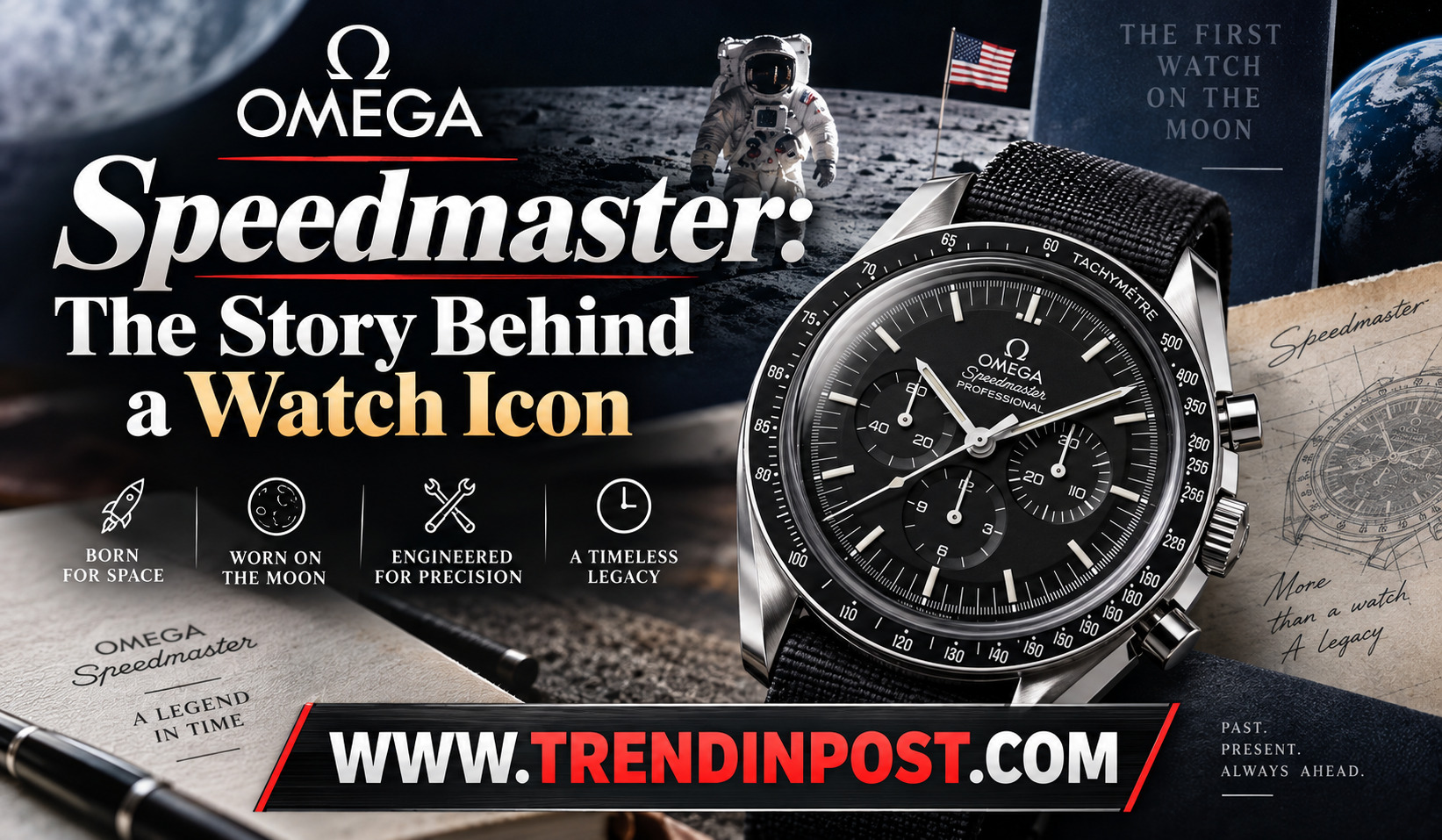
Omega Speedmaster: The Story Behind a Watch Icon
Introduction
A watch built for race car drivers ended up strapped to the wrist of the first man on the moon. That unlikely journey is the story of the Omega Speedmaster, one of the most celebrated tool watches ever made. What started as a chronograph for motorsport became a genuine piece of space history, and its appeal has never really faded since.
Built for Racers, Not Astronauts
Omega introduced the Speedmaster in 1957 as part of its Professional line, aimed squarely at race car drivers who needed a reliable way to measure elapsed time. The watch featured a tachymeter scale on the bezel, an industry first at the time, paired with a chronograph function powered by the manual-wind Caliber 321 movement.
Nothing about its original design hinted at a future in space travel. It was simply a well built tool watch made for a very specific, very earthbound job.
NASA’s Grueling Search for a Space Watch
By the mid-1960s, NASA needed a reliable chronograph for its astronauts and began testing several brands submitted for consideration. Each watch went through extreme trials designed to simulate the harshest possible conditions, including intense heat, freezing cold, heavy shock, vibration, and a total vacuum environment.
One by one, the competing watches failed under the pressure. Only the Speedmaster came through every test with its precision and reliability intact, earning official NASA qualification for all manned space missions in March 1965.
The Moon Landing Moment
On July 20, 1969, the Speedmaster reached its defining moment. As Neil Armstrong and Buzz Aldrin became the first humans to walk on the lunar surface during the Apollo 11 mission, Aldrin wore his Speedmaster Professional on his wrist throughout the moonwalk.
That single moment earned the watch its enduring nickname, the Moonwatch, along with the inscription later added to production models declaring it flight qualified by NASA for all manned space missions.
A Continuing Space Legacy
The Speedmaster’s space career did not end with Apollo 11. Astronaut Wally Schirra had already worn his personal Speedmaster into orbit years earlier during the 1962 Mercury program, making it the first Speedmaster to reach space at all.
The watch also played a critical role during the Apollo 13 crisis, when its chronograph function helped the crew time a crucial engine burn after onboard systems failed. Omega later received a special commendation from the Apollo 13 astronauts in recognition of that contribution.
| Year | Milestone |
| 1957 | Speedmaster launches for motorsport timing |
| 1962 | First Speedmaster worn in space by Wally Schirra |
| 1965 | Officially qualified by NASA for all manned space missions |
| 1969 | Worn on the moon during the Apollo 11 mission |
| 1970 | Helps time a critical engine burn during the Apollo 13 crisis |
Why the Moonwatch Formula Barely Changed
Remarkably, the Speedmaster that reached the moon was not a specially modified prototype. It was essentially the same consumer chronograph anyone could buy from a store at the time, tested and selected exactly as it came off the production line.
That authenticity is part of why Omega has kept the current Speedmaster Professional so close to its original formula. Modern versions still echo the same case shape, dial layout, and manual-wind heritage that made the original such a trusted tool.
Collector Appeal Today
Collectors are drawn to the Speedmaster for reasons that go well beyond its space history. The manual-wind version keeps a mechanical connection that automatic movements do not offer in quite the same way, since winding it daily becomes part of the ritual of wearing it.
Its relatively accessible price point compared to other historically significant luxury watches also plays a role. Buyers can own a genuine piece of space history without needing the budget required for rarer, more exclusive references from other brands.
Key Takeaways
- It began as a racing watch: The Speedmaster launched in 1957 for motorsport timing, not space travel.
- NASA testing was brutal: Only the Speedmaster survived extreme heat, cold, shock, and vacuum trials.
- The moon landing sealed its legacy: Buzz Aldrin wore his Speedmaster during the historic 1969 moonwalk.
- Its space career runs deeper than Apollo 11: The watch also helped during the Apollo 13 emergency.
- The design has stayed remarkably consistent: Modern Moonwatches still closely echo the original 1960s formula.
- Its appeal reaches beyond history: Manual winding and relative affordability keep it popular with new collectors.
FAQs
Was the Omega Speedmaster designed for space travel from the start?
No, it was originally designed in 1957 as a chronograph for motorsport timing.
Why did NASA choose the Speedmaster over other watch brands?
It was the only watch to pass every stage of NASA’s extreme testing for heat, cold, shock, and vacuum conditions.
Did the Speedmaster play any role beyond the Apollo 11 moon landing?
Yes, it also helped time a critical engine burn during the Apollo 13 emergency in 1970.
Is the modern Speedmaster very different from the one worn on the moon?
Not drastically, since Omega has intentionally kept the Moonwatch’s core design close to the original formula.
Is the Omega Speedmaster considered an affordable entry point into historic luxury watches?
Compared to many other historically significant luxury watches, yes, it is often seen as a relatively accessible option.
Conclusion
The Omega Speedmaster earned its place in history not through marketing, but through genuine performance under the harshest conditions imaginable. From a racetrack tool to NASA’s official choice for space travel, its journey to the moon and back gave it a legacy few other watches can claim. That authentic story, paired with a design that has barely changed, is exactly why the Speedmaster remains such a beloved icon among collectors today.
Related Post

Are Smaller Luxury Watches Becoming More Popular?
Introduction Watch forums that once mocked anything under 40mm are now filled with people hunting…