
Best Things to Do in Rome: Top Attractions and Experiences for Travelers
>> Travels & Tourism>> Best Things to Do in Rome: Top Attractions and Experiences for Travelers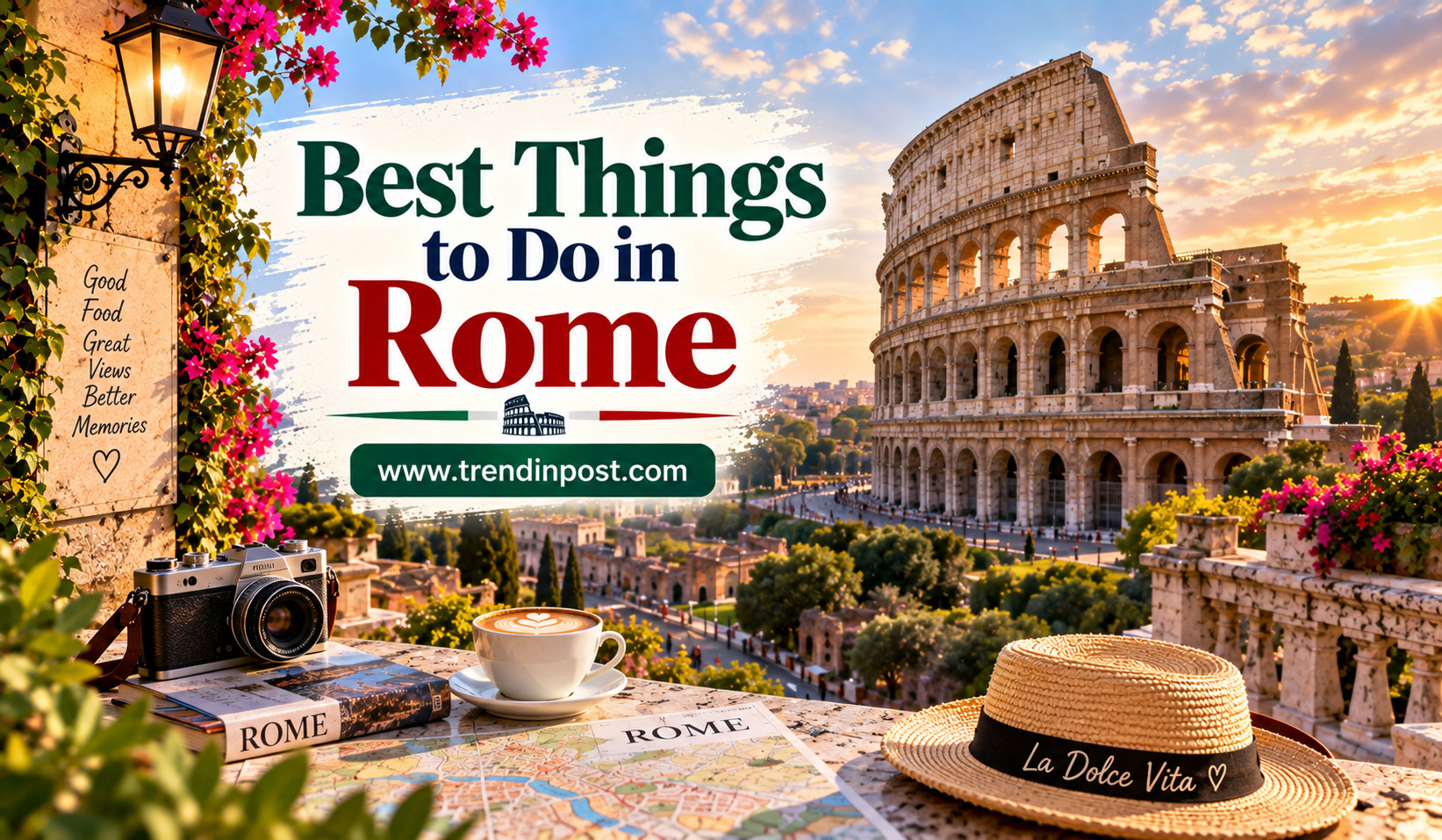
Best Things to Do in Rome: Top Attractions and Experiences for Travelers
Rome is one of the world’s most fascinating travel destinations, where ancient history, impressive architecture, art, food, and modern Italian life come together. Often called the Eternal City, Rome offers travellers the opportunity to walk through streets shaped by thousands of years of history while enjoying lively neighbourhoods, traditional restaurants, beautiful fountains, and bustling public squares.
For first-time visitors, deciding what to do in Rome can be challenging because the city has an enormous number of attractions and experiences. From exploring ancient Roman ruins to enjoying gelato beside a historic fountain, the best experiences are not limited to famous monuments.
Whether you are travelling with family, friends, a partner, or exploring Italy alone, these are some of the best things to do in Rome.
Explore the Colosseum
The Colosseum is one of Rome’s most recognisable landmarks and an essential stop for first-time visitors. This ancient amphitheatre was built during the Roman Empire and was used for public spectacles.
Visitors can explore different sections of the monument and learn about the history of ancient Roman entertainment and architecture.
The surrounding archaeological area also includes the Roman Forum and Palatine Hill, making it possible to explore several major historical sites in one visit.
It is advisable to reserve tickets ahead of time during busy travel periods because the Colosseum attracts large numbers of visitors.
Walk Through the Roman Forum
Located near the Colosseum, the Roman Forum was once an important centre of political, religious, and commercial activity in ancient Rome.
Today, visitors can walk among the remains of temples, government buildings, arches, and other structures.
The site provides a fascinating glimpse into everyday life and public activity during ancient Roman times.
Combining the Roman Forum with the Colosseum and Palatine Hill can make for a full day of historical sightseeing.
Visit the Pantheon
The Pantheon is one of Rome’s best-preserved ancient buildings and is known for its remarkable dome and architectural design.
The building has served different purposes throughout its long history and remains one of the city’s most impressive architectural landmarks.
The Pantheon is located in a lively area surrounded by cafes, restaurants, and historic streets. After visiting the monument, travellers can spend time exploring the neighbourhood on foot.
Make a Wish at the Trevi Fountain
The Trevi Fountain is one of Rome’s most famous public landmarks and a popular stop for visitors.
The enormous Baroque fountain features elaborate sculptures and is particularly beautiful when illuminated in the evening.
A traditional Rome experience involves throwing a coin into the fountain. The popular tradition is associated with the hope of returning to Rome someday.
The area can become extremely busy during the day, so visiting early in the morning or later in the evening can provide a more relaxed experience.
Explore Vatican City
Vatican City is an independent city-state located within Rome and an important destination for visitors interested in art, architecture, and religious history.
St. Peter’s Basilica is one of its most important landmarks. Visitors can also explore the Vatican Museums, which contain extensive collections of artworks and historical objects.
The Sistine Chapel is another major attraction within the Vatican Museums.
Because Vatican attractions are highly popular, advance planning can help reduce waiting time and make the visit more comfortable.
Visit Piazza Navona
Piazza Navona is one of Rome’s most attractive public squares. Its large open space, fountains, historic buildings, cafes, and restaurants make it a pleasant place to spend time.
The square is particularly enjoyable in the evening when visitors can sit at a nearby cafe and watch the activity around them.
Piazza Navona can easily be included in a walking route connecting the Pantheon, Trevi Fountain, and other central attractions.
Walk Around Trastevere
Trastevere offers a different atmosphere from Rome’s major historical sites. The neighbourhood is known for narrow streets, colourful buildings, small restaurants, cafes, and a lively evening atmosphere.
Walking through Trastevere allows travellers to experience a more local side of Rome.
The area is particularly popular around dinner time, when restaurants begin filling with visitors and residents.
It is a good place to try traditional Roman dishes and enjoy an evening away from the busiest tourist attractions.
Try Traditional Roman Food
Food is an essential part of experiencing Rome. Travellers can discover traditional dishes that reflect the city’s culinary history.
Popular Roman pasta dishes include carbonara, cacio e pepe, amatriciana, and gricia.
Pizza, supplì, fresh bread, and gelato are also easy to find throughout the city.
Instead of eating exclusively around major tourist landmarks, explore local neighbourhood restaurants where traditional dishes are often part of the regular menu.
Visit Castel Sant’Angelo
Castel Sant’Angelo is a historic fortress located near the Vatican. Originally constructed as a mausoleum, the building later served different purposes and eventually became a fortified structure.
Visitors can explore its interior and enjoy views across Rome from higher sections of the building.
Its location near the Tiber River and Vatican City makes it easy to include in a sightseeing itinerary.
Explore the Spanish Steps
The Spanish Steps connect Piazza di Spagna with the area above it and are among Rome’s most recognisable landmarks.
The surrounding neighbourhood is known for fashion stores, cafes, restaurants, and elegant streets.
The steps are particularly attractive as part of a walking tour through central Rome.
Visitors should remember that rules around sitting on the steps can be enforced, so it is better to admire the landmark without treating it as a picnic or resting area.
Discover Villa Borghese
Travellers looking for a break from busy streets can visit Villa Borghese, one of Rome’s most famous parks.
The large green space provides walking paths, gardens, viewpoints, and opportunities to relax.
The park is also home to the Borghese Gallery, which houses an important collection of sculptures, paintings, and other artworks.
A visit to Villa Borghese can add a quieter experience to an otherwise busy Rome itinerary.
Explore Rome’s Historic Streets on Foot
Some of Rome’s most memorable moments happen between major attractions.
Walking through the historic centre allows visitors to discover small churches, fountains, local shops, cafes, courtyards, and architectural details that may not appear on a typical sightseeing list.
A walking route connecting the Pantheon, Piazza Navona, Trevi Fountain, and Spanish Steps can be an enjoyable way to explore central Rome.
Comfortable shoes are highly recommended because sightseeing often involves considerable walking.
Visit the Capitoline Museums
The Capitoline Museums are located on Capitoline Hill and offer visitors an opportunity to explore ancient Roman sculptures, paintings, archaeological objects, and other historical collections.
The museums are particularly useful for travellers who want more context about Rome’s ancient history after visiting outdoor archaeological sites.
The surrounding Capitoline Hill also provides interesting views of parts of the Roman Forum.
Experience Rome After Sunset
Rome takes on a different atmosphere after dark. Historic monuments and fountains are illuminated, restaurants become livelier, and many central streets remain active into the evening.
An evening walk around Piazza Navona, the Pantheon, Trevi Fountain, and nearby streets can be a memorable experience.
Night-time sightseeing can also be more comfortable during warmer months when daytime temperatures are high.
Shop for Italian Products
Rome offers plenty of opportunities for shopping, from international fashion brands to small Italian boutiques.
Visitors can explore areas around Via del Corso, Via Condotti, and other central shopping streets.
Travellers looking for souvenirs can consider Italian leather goods, handmade products, food items, and locally inspired gifts.
It is worth comparing prices and quality before purchasing expensive products, particularly in busy tourist areas.
Take a Day Trip From Rome
If you are staying in Rome for several days, consider taking a day trip outside the city.
Tivoli is known for its historic villas and gardens, while Ostia Antica offers archaeological remains connected to the ancient Roman port.
Travellers with additional time can also explore destinations farther away, although longer trips should be planned carefully to avoid spending most of the day travelling.
Best Time to Explore Rome
Spring and autumn are generally comfortable seasons for exploring Rome because temperatures are often more suitable for walking.
Summer attracts large numbers of visitors and can be hot, particularly in July and August. Travellers visiting during this period should plan sightseeing during cooler parts of the day and stay hydrated.
Winter can be quieter and may offer a different atmosphere, although temperatures can be cooler and rain is possible.
Final Thoughts
Rome offers much more than a collection of famous monuments. The city combines ancient ruins, Renaissance architecture, art galleries, lively neighbourhoods, traditional food, shopping streets, and beautiful public spaces.
First-time visitors should make time for major attractions such as the Colosseum, Roman Forum, Pantheon, Trevi Fountain, and Vatican City. At the same time, leaving space for spontaneous walks, local food, and neighbourhood exploration can make the experience more memorable.
Whether you are spending two days or a full week in the Italian capital, Rome provides countless opportunities to discover history, culture, architecture, and everyday Italian life.
Related Post

How Much Does a Dubai Trip Cost from India?
Planning a Dubai holiday sounds exciting until you start adding up flights, hotels, food, sightseeing,…