Why Some Luxury Handbags Appreciate Over Time
>> Fashion>> Why Some Luxury Handbags Appreciate Over Time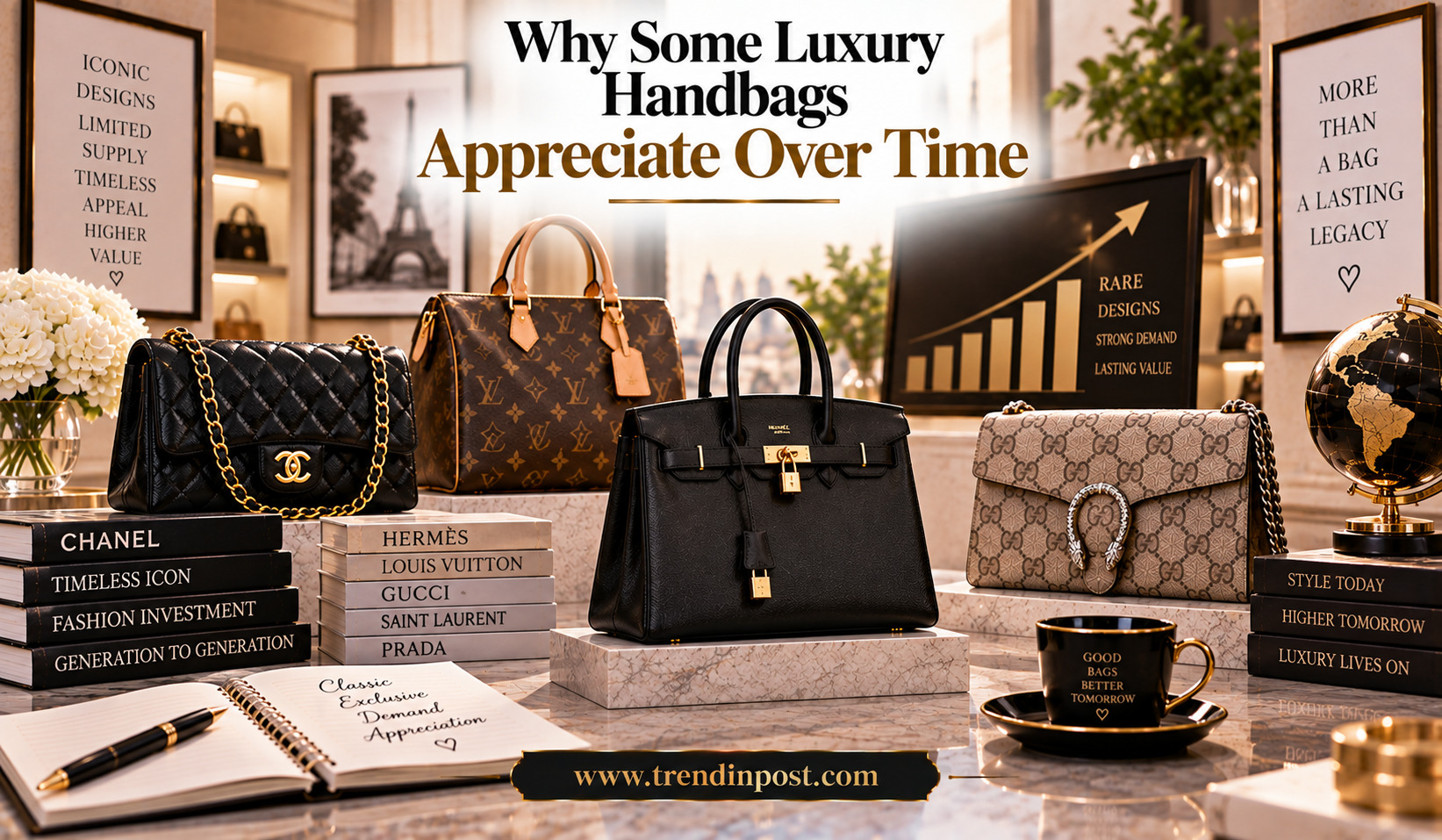
Why Some Luxury Handbags Appreciate Over Time
Luxury handbags have increasingly become more than fashion accessories. For collectors and fashion enthusiasts, certain bags can represent pieces of design history, while strong demand in the resale market can sometimes allow selected models to retain or even increase their value over time.
But why do some luxury handbags appreciate while others lose value after purchase? The answer is not simply the price of the bag or the reputation of the fashion house. A combination of brand heritage, scarcity, craftsmanship, design recognition, condition and consumer demand can determine whether a handbag becomes a desirable collectible.
The growth of the luxury resale and auction market has made this difference more visible. Exceptional handbags from established brands can attract international collectors, while ordinary or heavily produced models may experience much more modest resale performance. This has encouraged shoppers to look at luxury handbags from both a fashion and collecting perspective.
Brand Heritage Creates Long-Term Demand
One of the most important factors behind a handbag’s potential appreciation is the reputation of the brand that created it. Luxury houses with decades of history have an advantage because their most recognizable designs can become connected to fashion culture.
Names such as Hermès, Chanel and Louis Vuitton have developed extensive histories in the handbag market. Their most established designs are often recognized by consumers even outside specialist fashion circles.
A long-standing brand can also continue promoting its historical designs to new generations. When a fashion house repeatedly references an archival handbag in campaigns, collections or celebrity styling, it can reinforce the product’s relevance.
However, brand reputation alone is not enough. A famous fashion house can produce many handbags that never become highly collectible. The individual model remains extremely important.
Iconic Designs Tend to Perform Better
A handbag with a distinctive and recognizable design can have an advantage over an accessory that follows a short-lived trend.
Consider classic silhouettes such as the Hermès Birkin and Kelly, Chanel’s iconic flap designs or Louis Vuitton’s historic monogram styles. These handbags have identities that extend beyond individual fashion seasons.
Their continued recognition means that buyers can understand what they are purchasing even years after a particular version was released.
This creates an important distinction between a classic handbag and a trend-driven handbag. A seasonal design may attract significant attention when it is first launched, but demand can decline once fashion preferences change.
Classic designs have a better chance of remaining desirable because their appeal is connected to a broader fashion history.
Scarcity Can Increase Collector Interest
Supply and demand play a major role in almost every collectible market, and luxury handbags are no exception.
When a particular handbag is difficult to find, collectors may be willing to pay more to acquire it. Limited production, discontinued designs, unusual materials and special editions can all contribute to scarcity.
Auction results provide examples of how rarity can influence prices. In 2026, Christie’s reported a record €635,000 sale for a Hermès Faubourg Birkin at its Paris handbag auction, illustrating the extraordinary prices that can be achieved by exceptional and highly desirable pieces.
That kind of result should not be interpreted as a typical resale value. It represents the very high end of the market, where rarity, condition and collector demand can combine.
For most shoppers, the lesson is simpler: scarcity can matter, but rarity without demand does not automatically create value.
Materials and Craftsmanship Matter
The materials used to produce a handbag can also influence its desirability. Certain leathers, exotic materials, special finishes and carefully crafted details may be more attractive to collectors.
Craftsmanship matters for another reason: physical condition is an important part of resale value.
A handbag that has been carefully stored and maintained is generally more appealing to a future buyer than one showing extensive wear. Scratched hardware, damaged corners, stains, stretched leather and unpleasant odors can all affect a bag’s resale prospects.
Collectors often pay close attention to details that an everyday buyer might overlook. Stitching, hardware condition, lining, leather quality and the presence of original accessories can all help establish the overall condition of a pre-owned handbag.
Condition Can Make a Major Difference
Two identical handbags can have very different resale values if one has been heavily used while the other has been carefully maintained.
This is why buying a luxury handbag with potential resale value should also involve thinking about long-term care. Proper storage can help protect the shape and materials, while careful handling can reduce unnecessary damage.
Important considerations include:
- Protecting the bag from excessive moisture and direct sunlight.
- Storing it appropriately when it is not being used.
- Avoiding overloading that can distort its structure.
- Keeping original accessories and documentation where possible.
Good condition does not guarantee appreciation, but poor condition can make an otherwise desirable handbag significantly less attractive to collectors.
Limited Editions and Discontinued Models
A handbag can become more interesting to collectors after production ends. Once a particular version is no longer available from the brand, buyers who want that exact model may need to search the secondary market.
This can create additional demand, particularly when the design has already developed a strong following.
Discontinued colors can also become desirable. A shade that is no longer produced may appeal to collectors who want something different from the current collection.
However, discontinued does not automatically mean valuable. A handbag needs continuing demand to benefit from scarcity. If consumers stop wanting a particular design, limited availability alone may not be enough to increase its price.
Celebrity Influence Can Strengthen Demand
Fashion trends are heavily influenced by celebrities, models and social media personalities. When a recognizable figure repeatedly carries a particular handbag, public interest can increase quickly.
This effect can be especially powerful for heritage designs. A classic handbag may suddenly appear fashionable to a younger generation after being featured in contemporary styling.
Celebrity exposure can therefore contribute to a handbag’s cultural relevance. But it is important to distinguish temporary social-media popularity from long-term collector demand.
A viral moment can increase short-term searches and resale prices, while genuine appreciation generally requires sustained interest over a much longer period.
The Role of the Luxury Resale Market
The expansion of online resale platforms has made luxury handbags easier to buy and sell. This has increased price transparency and allowed consumers to observe how different models perform after leaving the original boutique.
Fashion resale company FASHIONPHILE’s 2025 resale report highlighted continued interest in heritage handbags, including models from Louis Vuitton, Chanel and Hermès. Its research also identified several established handbag designs among its most-shopped “timeless treasures.”
This growing secondary market can support the value of recognizable handbags because buyers have more opportunities to locate older or discontinued models.
It also creates greater competition among sellers. If hundreds of similar bags are available, prices may be pressured downward. A handbag with fewer comparable examples may have a stronger position.
Why Some Bags Lose Value
Understanding appreciation also requires looking at depreciation.
Not every luxury handbag is designed to become a collectible. Seasonal products, heavily produced styles and designs that depend strongly on a particular trend can lose demand when consumer preferences change.
Retail pricing can also create a challenge. A handbag purchased at a high boutique price does not necessarily command the same amount on the secondary market immediately afterward.
The difference between the original purchase price and the resale price can be affected by commissions, authentication costs, taxes, shipping and other transaction expenses.
This means buyers should not calculate potential profit simply by comparing today’s retail price with a headline auction result.
Which Features Are Most Attractive to Collectors?
Collectors generally look for handbags that have a compelling combination of history, recognition and scarcity. The strongest pieces often have a story behind them.
A handbag associated with a major moment in a brand’s history can have greater cultural value than an ordinary seasonal product. Provenance can also become important for exceptionally rare pieces.
For someone considering a handbag with future resale potential, these characteristics can be useful signals:
- Established model: A design with a long and recognizable history.
- Strong demand: Evidence that buyers actively seek the model in the resale market.
- Limited availability: Scarcity that is genuine rather than simply a marketing claim.
- Excellent condition: Minimal wear and well-preserved materials.
- Authenticity: Reliable documentation and provenance where available.
None of these guarantees appreciation, but together they can make a handbag more attractive to the secondary market.
Luxury Handbags Compared With Traditional Investments
Luxury handbags can have investment-like characteristics, but they should not be confused with conventional financial assets.
A handbag does not normally generate dividends or interest. Its value depends on the willingness of another buyer to pay for it in the future.
| Factor | Luxury Handbag | Traditional Investment |
| Physical ownership | Yes | Usually no |
| Personal use | Yes | Usually no |
| Income generation | Generally none | May generate income |
| Value influenced by trends | High | Varies |
| Maintenance required | Yes | Usually limited |
| Resale value | Depends on demand | Depends on market conditions |
| Collector value | Can be significant | Usually not applicable |
For this reason, luxury handbags are best viewed as collectible luxury goods with possible financial upside, rather than guaranteed investment vehicles.
Does Price Appreciation Always Happen?
No. This is perhaps the most important point for anyone entering the luxury handbag market.
Even a highly respected designer bag can decline in resale value. Consumer preferences can change, economic conditions can influence discretionary spending and new designs can take attention away from older products.
Auction records represent exceptional transactions, not guarantees for ordinary owners.
A buyer should therefore avoid purchasing a handbag solely because they expect its price to rise. The better strategy is to choose a bag they genuinely like while considering characteristics that could support future demand.
How Buyers Can Think More Carefully in 2026
The luxury resale market in 2026 provides more information than ever before. Buyers can compare pre-owned prices, study auction results and research the history of individual handbag models before spending significant amounts.
The most sensible approach is to look beyond social-media claims that a particular handbag is an “investment.” Instead, examine the actual characteristics of the product and the strength of its secondary-market demand.
A classic handbag that you enjoy carrying can offer personal value even if its resale price remains unchanged. If it also retains a significant portion of its original value, that can make the purchase more financially attractive.
Final Thoughts
Some luxury handbags appreciate over time because they develop an identity that extends far beyond their original purpose as fashion accessories. Heritage, scarcity, craftsmanship, condition and lasting demand can transform a handbag into a collectible.
The modern resale and auction markets have made this phenomenon easier to observe. Exceptional pieces can command extraordinary prices, while established everyday classics can maintain strong demand among pre-owned shoppers.
However, appreciation should never be treated as automatic. The luxury handbag market is selective, and a famous brand name alone cannot guarantee a profitable resale.
Frequently Asked Questions
Why do some luxury handbags appreciate over time?
Certain handbags are appreciated because they combine strong brand heritage, limited availability, recognizable design, craftsmanship and sustained demand in the resale or collector market.
Which luxury handbags are most likely to retain value?
Established models from major luxury houses generally have stronger resale recognition, but performance varies significantly by specific model, size, material, condition and market demand.
Does a higher-priced handbag appreciate more?
Not necessarily. Price alone does not determine future value. A less expensive classic with strong demand can perform better than a more expensive seasonal design.
Does rarity make a handbag more valuable?
Rarity can increase desirability, but only when there is sufficient collector demand. A rare handbag that few people want may still have limited resale value.
Does condition affect resale value?
Yes. Excellent condition can make a handbag significantly more attractive to buyers, while heavy wear, stains, scratches or damaged hardware can reduce its resale appeal.
Related Post

How to Choose the Right Luxury Handbag for Your Style
A luxury handbag is more than an expensive fashion accessory. For many buyers, it is…