Gucci Jackie: The Story Behind a Fashion Classic
>> Fashion>> Gucci Jackie: The Story Behind a Fashion Classic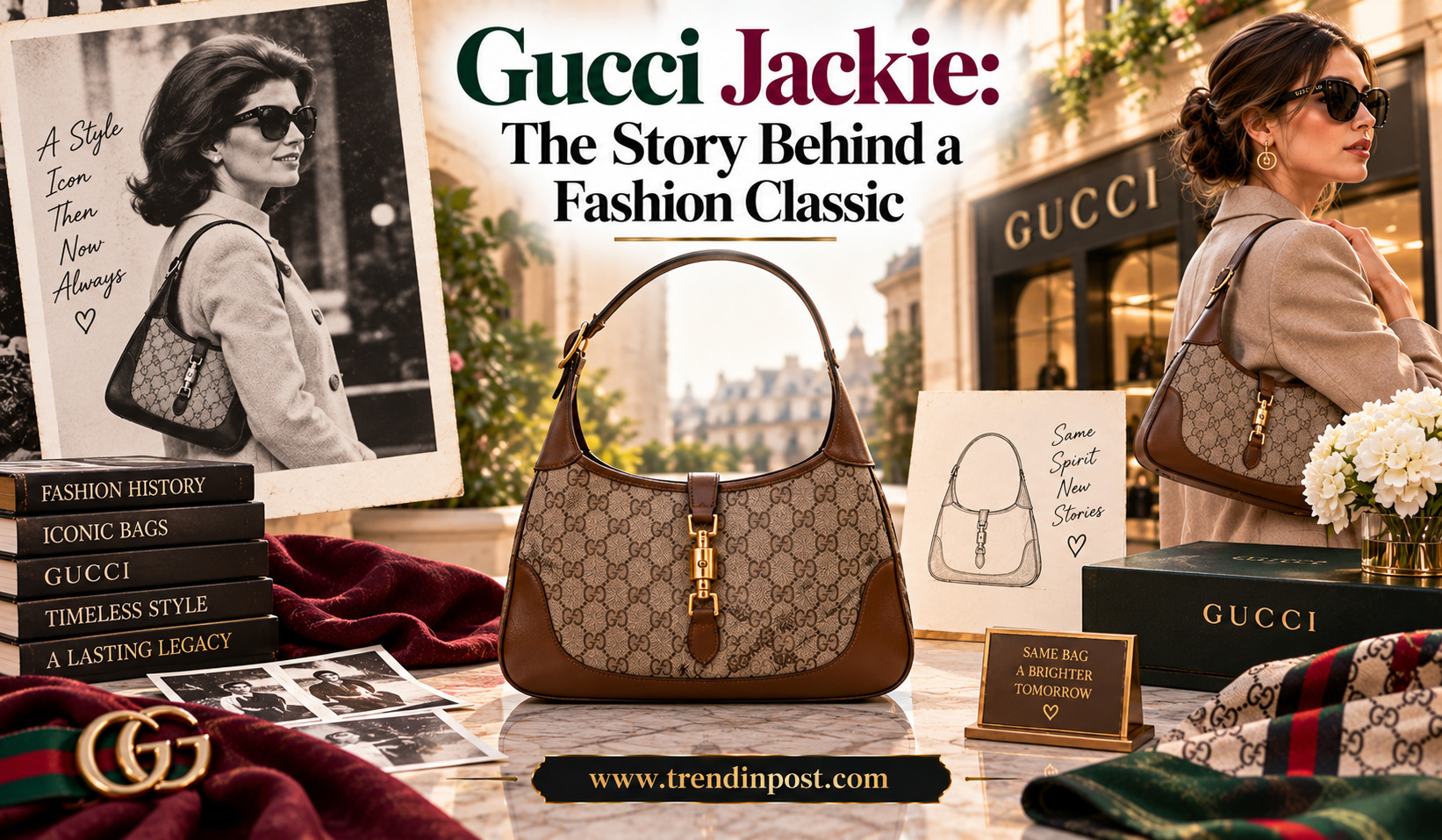
Gucci Jackie: The Story Behind a Fashion Classic
The Gucci Jackie is one of the most recognizable handbags in the history of Italian luxury fashion. Known for its curved shape, compact construction and distinctive piston-style hardware, the bag has remained relevant through changing fashion trends and generations of designers. While many handbags become popular for a season or two, the Jackie has developed a much longer story, making it an important part of Gucci’s handbag heritage.
Its appeal comes from a combination of elegant design, practicality and cultural recognition. The handbag has also benefited from repeated reinterpretations, allowing Gucci to introduce the style to new audiences without completely losing its original identity. Today, the Jackie continues to appear in different materials, colors and sizes, while its signature silhouette remains easy to recognize.
How the Gucci Jackie Began
The story of Jackie began during the 1960s, when Gucci was already building an international reputation for luxury leather goods. The handbag was originally known by different references before becoming associated with the name Jackie.
The bag eventually became strongly linked with Jacqueline Kennedy, the former First Lady of the United States. Her frequent use of the handbag helped give it significant visibility and contributed to its eventual nickname, the Jackie.
The association was particularly powerful because Jacqueline Kennedy was already regarded as an influential fashion figure. Her clothing and accessories attracted considerable public attention, meaning that the appearance of a particular handbag in her wardrobe could quickly influence how consumers viewed it.
Gucci later embraced the Jackie name, turning the connection into an important part of the handbag’s identity.
A Shape That Stands Apart
One of the most interesting features of the Gucci Jackie is its silhouette. Instead of following the rigid rectangular structure common in many luxury handbags, the Jackie has a softer, curved shape.
Its rounded profile gives the bag a relaxed appearance while maintaining an elegant overall structure. This balance has helped the design remain versatile. It can look sophisticated with tailored clothing but also works naturally with more casual outfits.
The shape is also closely connected to the way the bag is carried. The curved body sits comfortably against the side of the wearer, reinforcing the handbag’s practical character.
Several design elements have become closely associated with the Jackie:
- Curved, half-moon-inspired silhouette
- Distinctive piston-style closure
- Short shoulder strap
- Structured yet relaxed construction
These details give the handbag a recognizable appearance without requiring excessive branding.
Why the Hardware Matters
The hardware is another important part of Jackie’s identity. Its piston-style closure is positioned prominently on the front and provides a visual focal point.
Rather than using a large logo as the primary design element, Gucci has historically allowed the hardware and silhouette to communicate the handbag’s character. This approach gives the Jackie a relatively understated appearance compared with heavily logo-driven luxury accessories.
The hardware also adds a sense of functionality. It is not simply decorative; it forms part of the opening and closing mechanism, reinforcing the idea that the handbag was designed to be both fashionable and practical.
That combination has helped Jackie maintain its appeal as luxury consumers have increasingly shown interest in products that balance recognizable design with a less obvious approach to branding.
Jacqueline Kennedy and the Bag’s Rise to Fame
The connection with Jacqueline Kennedy remains one of the most important chapters in Jackie’s history. During an era when celebrity and public figures were becoming increasingly influential in fashion, her association with Gucci gave the handbag an exceptional level of visibility.
Her personal style was often associated with elegance and simplicity rather than excessive decoration. Jackie fit naturally into that image.
The handbag’s association with such a recognizable figure also helped transform it from a Gucci accessory into a fashion reference. The name Jackie became part of the product’s identity, linking the design with one of the most influential style figures of the twentieth century.
This illustrates how cultural recognition can contribute to the longevity of a luxury product. A handbag may begin as a design created by a fashion house, but its meaning can expand through the people who wear it.
The Jackie Has Survived Changing Trends
Fashion trends have changed dramatically since the 1960s. Handbag preferences have moved from structured designs to oversized bags, miniature accessories, logo-heavy styles and minimalist silhouettes.
Jackie, however, has repeatedly returned to the fashion conversation.
One reason is that its fundamental design is not strongly tied to one particular decade. The curved shape can be presented in a vintage-inspired form or interpreted with more contemporary materials and proportions.
Gucci has also periodically refreshed the design, allowing the Jackie to appear relevant to modern consumers while retaining the characteristics that make it recognizable.
This strategy is common among luxury fashion houses with heritage products. Instead of replacing an established design completely, brands can reinterpret it for changing consumer tastes.
Gucci’s Modern Approach to the Jackie
The Jackie has experienced renewed attention in the modern luxury market as Gucci has continued to revisit its archival designs. Rather than treating the handbag solely as a historical product, the fashion house has presented it as a continuing part of its contemporary handbag collection.
Modern versions can differ in size, material, color and finishing. This gives shoppers more choice while keeping the recognizable foundation of the Jackie.
The ability to adapt is particularly important in today’s fashion industry. Consumers increasingly discover products through social media, celebrity styling and online fashion communities. A classic design can regain attention quickly when presented in a new way.
The Jackie therefore occupies an interesting position: it is both an archival Gucci design and a contemporary fashion accessory.
Why the Jackie Appeals to Today’s Luxury Buyers
The modern luxury customer is not necessarily looking only for the newest product. There is growing interest in pieces that have a story, recognizable craftsmanship and a connection to fashion history.
The Gucci Jackie fits those expectations particularly well.
Its appeal can be linked to four major characteristics:
- Heritage: The handbag has decades of Gucci history behind it.
- Recognizable design: Its curved silhouette and distinctive closure make it easy to identify.
- Versatility: It can be used with casual, professional and evening looks.
- Cultural significance: Its connection with Jacqueline Kennedy gives it a memorable place in fashion history.
These qualities make the Jackie different from a handbag whose popularity depends entirely on a short-term trend.
A Handbag for Different Occasions
Another strength of the Jackie is its ability to work across different settings. The bag’s shape is elegant enough for formal occasions but does not look excessively dressy when paired with everyday clothing.
A smaller version can complement an evening outfit, while a larger variation can provide more practical space for daytime use.
The handbag can also be worn with several fashion aesthetics. It can fit naturally into a classic wardrobe, a minimalist outfit or a more contemporary street-style look.
This flexibility is one reason heritage handbags continue to attract younger consumers. A product with a long history can still feel relevant when it works with modern clothing.
Craftsmanship and Gucci’s Leather-Goods Heritage
Jackie’s popularity is also connected to Gucci’s long-standing reputation for leather goods. The fashion house was established in Florence in 1921 and developed a strong identity around luxury craftsmanship, travel products and leather accessories.
Over the decades, Gucci expanded its product range, but handbags remained an important part of the brand.
Jackie benefits from this wider heritage. Its value is not based only on its appearance; consumers also associate the design with Gucci’s broader reputation for luxury craftsmanship and Italian fashion.
Materials and construction can vary between versions, so buyers should always consider the specific model rather than assuming every Jackie has identical characteristics.
How the Jackie Compares With Other Gucci Icons
Gucci has created numerous handbags that have become recognizable in their own right. The Bamboo, Horsebit and Dionysus are examples of designs with distinct visual identities.
The Jackie stands apart because of its relaxed curved profile. It does not rely on the same structured handle concept as the Bamboo or the more prominent decorative hardware associated with some other Gucci designs.
| Gucci handbag | Recognizable feature | Overall character |
| Jackie | Curved silhouette and piston closure | Relaxed and elegant |
| Bamboo | Bamboo handle | Distinctive and structured |
| Horsebit | Horsebit hardware | Refined and equestrian-inspired |
| Dionysus | Tiger-head closure | Bold and contemporary |
This variety allows Gucci to appeal to consumers with very different preferences while maintaining a connection to the brand’s heritage.
Is the Gucci Jackie an Investment Bag?
The term “investment bag” is frequently used in luxury fashion, but buyers should approach it carefully. A designer handbag can retain demand or have strong resale interest, but that does not mean every model will automatically increase in value.
Factors such as condition, authenticity, material, color, size, age and market demand can influence resale prices.
The Jackie is attractive as a collectible because it has a long history and strong brand recognition. However, its primary value should still be considered from the perspective of design, craftsmanship and personal use rather than a guaranteed financial return.
For someone purchasing the bag because they appreciate its history and appearance, its long-term appeal may be more important than its resale performance.
Why the Jackie Remains a Fashion Classic
The Gucci Jackie has lasted because its identity is stronger than any single fashion trend. Its connection with Jacqueline Kennedy gave the handbag cultural significance, while its curved silhouette and recognizable hardware gave it a distinctive visual identity.
Gucci’s decision to revisit the design over the years has also helped prevent it from becoming simply a historical artifact.
The handbag demonstrates how a luxury product can evolve without losing its original character. New materials and versions can attract contemporary shoppers, while the fundamental design continues to connect the product with its past.
That balance between heritage and modern fashion is difficult to achieve, which is why the Jackie remains one of Gucci’s most important handbag designs.
Final Thoughts
The Gucci Jackie is more than a handbag with a famous name. Its story combines Gucci’s leather-goods heritage, the influence of Jacqueline Kennedy and a distinctive design that has managed to survive changing fashion cycles.
Its curved silhouette, practical shoulder-carrying style and recognizable closure have given it a strong visual identity. At the same time, Gucci’s willingness to reinterpret the design has allowed Jackie to reach new generations of luxury shoppers.
In a market filled with constantly changing handbag trends, the Jackie represents a different approach. It shows that a well-designed accessory can remain relevant when its core identity is strong enough to adapt without disappearing.
That combination of history, versatility and recognizable style explains why the Gucci Jackie continues to be regarded as a fashion classic.
Frequently Asked Questions
Why is Gucci Jackie called Jackie?
The handbag became strongly associated with Jacqueline Kennedy, whose public appearances with the design contributed to its popularity. Gucci eventually adopted the Jackie name for the handbag.
When was Gucci Jackie created?
The design dates back to the 1960s and became one of Gucci’s recognizable handbag styles during that period.
What makes the Gucci Jackie different?
Its curved silhouette and distinctive piston-style closure give the Jackie a visual identity that separates it from many other luxury handbags.
Can the Gucci Jackie be worn every day?
Yes. Its relatively relaxed shape makes it suitable for everyday styling, although the appropriate size and material will depend on how the owner intends to use it.
Is the Gucci Jackie still fashionable?
Yes. Gucci has continued to reinterpret the Jackie, helping the design remain relevant while preserving its connection to the original handbag.
Is the Gucci Jackie worth buying?
For shoppers who appreciate Gucci’s heritage and Jackie’s distinctive shape, it can be an appealing luxury purchase. Buyers should consider their budget, preferred size, material and intended use before making a decision.
Related Post

What Makes a Handbag a Luxury Investment?
Luxury handbags have moved beyond their traditional role as fashion accessories. For many shoppers, a…