What Makes a Handbag a Luxury Investment?
>> Fashion>> What Makes a Handbag a Luxury Investment?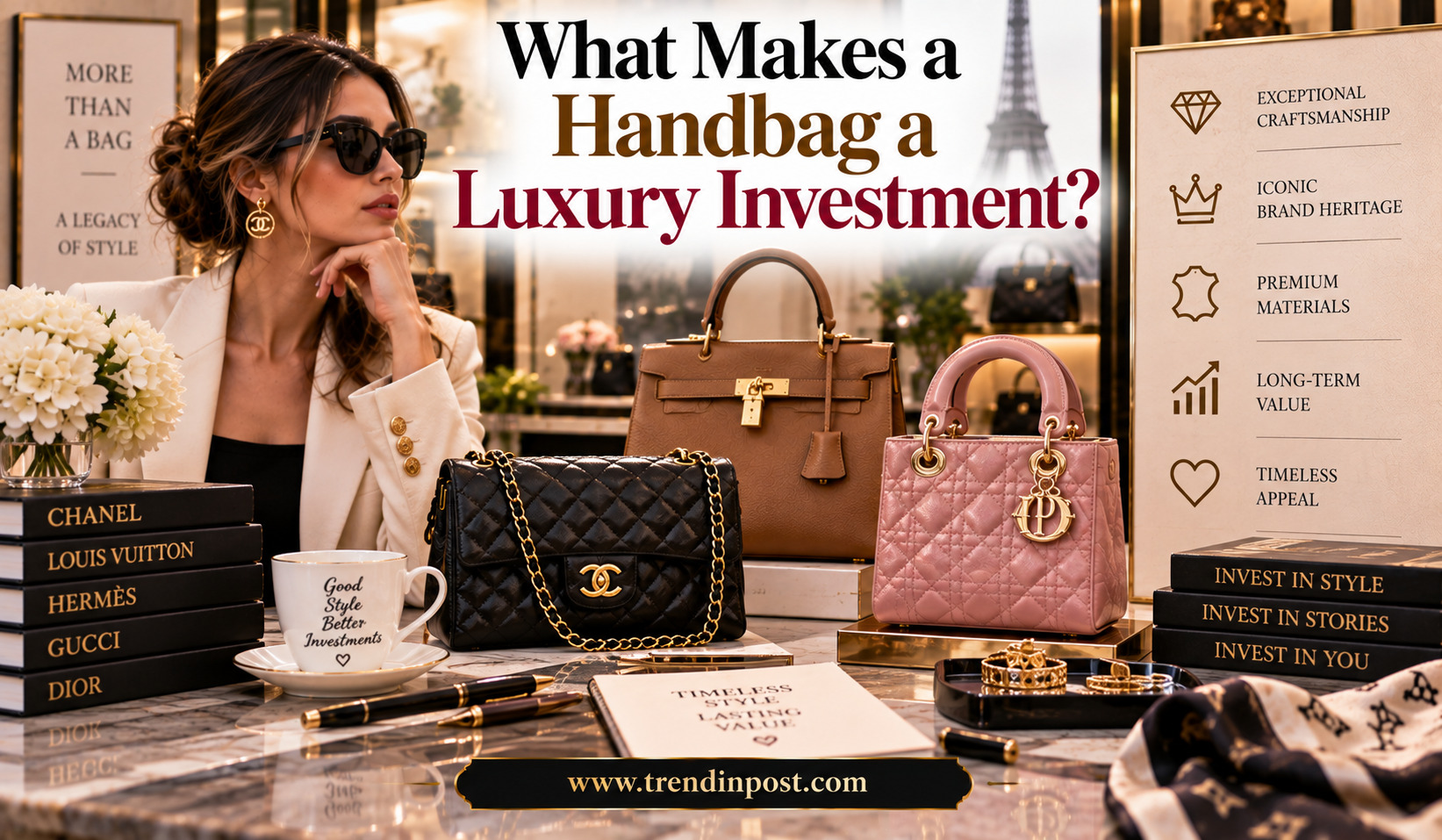
What Makes a Handbag a Luxury Investment?
Luxury handbags have moved beyond their traditional role as fashion accessories. For many shoppers, a designer handbag represents craftsmanship, personal style, exclusivity, and in some cases, long-term financial value. As interest in premium fashion continues to grow, buyers are increasingly asking an important question: what actually makes a handbag a luxury investment?
The answer is more complicated than simply choosing a famous designer or purchasing the most expensive model available. A handbag can become valuable because of its materials, construction, brand reputation, rarity, design history, condition, and demand in the resale market. At the same time, not every luxury handbag will increase in value, making careful selection particularly important.
Understanding these factors can help shoppers distinguish between a luxury purchase made for personal enjoyment and a handbag that has stronger potential to retain or increase its value over time.
Craftsmanship Is at the Heart of Luxury
One of the most important characteristics of a luxury handbag is the quality of its construction. High-end handbags are often distinguished by carefully selected materials, detailed stitching, quality hardware, precise finishing, and attention to small design elements.
Craftsmanship can also influence how a handbag looks after years of use. A well-made bag may develop a desirable patina while maintaining its structure and functionality. Poor construction, on the other hand, can result in damaged handles, loose stitching, worn corners, or malfunctioning hardware.
This is why buyers should look beyond a designer logo. The actual quality of construction can tell more about the long-term value of a handbag than branding alone.
Brand Reputation Plays a Major Role
The reputation of the fashion house is another significant factor. Established luxury brands have spent decades building recognition, customer loyalty, and demand around their products.
A strong brand can create a sense of exclusivity and consistency. Buyers in the resale market are often more familiar with established luxury houses, which can make certain handbags easier to authenticate and resell.
However, brand recognition alone does not guarantee investment potential. A designer may have numerous handbags in its collection, but only particular models may maintain strong demand. Signature silhouettes, iconic designs, and limited editions often attract greater attention than ordinary seasonal products.
Timeless Designs Can Outperform Short-Lived Trends
Fashion trends change rapidly, but some handbag designs remain popular for decades. This longevity can be an important characteristic of an investment-worthy luxury handbag.
A timeless silhouette is less dependent on a particular season or social-media trend. Its continued recognition can help maintain demand among both new buyers and collectors.
For example, classic structured handbags, recognizable top-handle designs, and certain established crossbody silhouettes may remain relevant even as fashion preferences change. Their ability to work with different styles can contribute to long-term desirability.
This does not mean modern or unconventional handbags cannot become valuable. Some unusual designs become highly collectible precisely because they represent a particular moment in fashion history.
Materials Influence Long-Term Value
The material used to make a handbag can have a major effect on its durability and appearance. Premium leather is often associated with luxury handbags because of its texture, finish, strength, and ability to develop character with age.
Different materials behave differently. Some types of leather can resist everyday wear better than others, while delicate finishes may require more careful handling. Exotic materials can also command higher prices, although their value depends on market demand, authenticity, condition, and applicable regulations.
Buyers should therefore consider not only how luxurious a material looks when new but also how it is likely to age.
Rarity and Limited Availability
Scarcity can significantly increase desirability. When a handbag is produced in limited quantities or released as a special edition, its availability may be considerably lower than that of a standard collection piece.
Limited production can create collector interest, particularly when a design has a strong connection with a significant fashion period, collaboration, celebrity association, or brand milestone.
However, the word “limited” should not automatically be interpreted as “valuable.” A limited-edition handbag still needs genuine demand. If collectors do not consider the design desirable, scarcity alone may not create strong resale value.
Condition Can Make or Break Resale Value
Even an iconic handbag can lose significant value if it has been poorly maintained. Condition is one of the most closely examined factors in the pre-owned luxury market.
A handbag with clean interiors, minimal scratches, well-maintained leather, functioning hardware, and original accessories can generally be more attractive to buyers than a heavily worn example.
Storage also matters. Exposure to excessive humidity, sunlight, heat, or unsuitable storage conditions can affect leather and other materials.
For owners who want to preserve long-term value, proper care is therefore part of the investment process.
Factors That Can Support a Handbag’s Resale Appeal
- Strong and established brand recognition
- Consistent demand for the particular model
- Excellent overall condition
- Original packaging and accessories
- A classic or historically significant design
These factors do not guarantee a profit, but they can make a handbag more desirable in the secondary market.
Original Packaging and Documentation Matter
Luxury handbag buyers increasingly pay attention to authenticity and completeness. Depending on the brand and model, original receipts, authenticity-related documentation, dust bags, boxes, straps, locks, keys, and other accessories can strengthen buyer confidence.
A complete set can also make the resale process easier because prospective buyers have more information about the item’s history and original configuration.
That said, packaging should not be confused with proof of authenticity. Sophisticated counterfeit products can also include boxes, cards, and other accessories. Professional authentication and purchase documentation remain important when establishing provenance.
Resale Demand Is More Important Than the Original Price
A high retail price does not automatically make a handbag a good investment. What matters is whether buyers are willing to pay for that particular model in the secondary market.
Some expensive handbags experience significant depreciation after purchase, while certain highly sought-after models can retain a substantial portion of their original price. In exceptional cases, resale prices may exceed the original retail price, although this is not guaranteed and depends heavily on market conditions.
This is why researching resale demand before purchasing can be more useful than simply comparing retail prices.
| Factor | Potential Impact on Value |
| Brand reputation | Builds buyer recognition and demand |
| Craftsmanship | Supports durability and quality perception |
| Classic design | Can remain desirable across fashion cycles |
| Rarity | May increase collector interest |
| Condition | Strongly affects resale appeal |
| Original accessories | Can improve buyer confidence |
| Market demand | Determines actual resale potential |
The Role of Heritage and Fashion History
A handbag connected to a fashion house’s history can have a different level of desirability from an ordinary seasonal product. Designs associated with important designers, cultural moments, or recognizable brand heritage can become part of fashion history.
This historical connection can create a stronger emotional and collectible appeal. Over time, certain handbags may be viewed not merely as accessories but as representations of a particular era.
Collectors often value this type of story because it gives the product significance beyond its material construction.
Celebrity and Cultural Influence
Popular culture can also influence handbag demand. When a particular style becomes strongly associated with a celebrity, fashion personality, film, television show, or cultural moment, consumer interest can increase.
Social media has accelerated this effect. A handbag can become highly visible worldwide within a short period, creating sudden demand for specific colours, shapes, or vintage versions.
However, popularity generated by social media can be temporary. Buyers looking at a handbag as a long-term purchase should distinguish between lasting cultural relevance and a short-lived viral trend.
Buying New vs Pre-Owned
The pre-owned luxury handbag market has become an important part of the industry. Buyers can sometimes access discontinued, vintage, or hard-to-find designs that are no longer available through traditional retail channels.
Pre-owned shopping can also provide an opportunity to purchase certain handbags at a different price point. At the same time, buyers need to pay close attention to authenticity, condition, seller reputation, and transaction policies.
Vintage handbags can be particularly interesting because some older designs develop collector appeal as they become harder to find. But age alone does not guarantee value.
Is Every Luxury Handbag an Investment?
No. This is perhaps the most important point for potential buyers.
A luxury handbag should not automatically be considered a financial investment simply because it carries a prestigious brand name. Its resale value can be affected by changing consumer preferences, economic conditions, fashion trends, production levels, condition, and availability.
The safest approach is to buy a handbag because you genuinely appreciate its design and expect to use it. Any future resale appreciation should be viewed as a potential benefit rather than a guaranteed financial return.
Smart Considerations Before Buying
- Research the specific model rather than only the brand.
- Compare current retail prices with pre-owned market prices.
- Understand maintenance and storage requirements.
- Check the authenticity and purchase documentation.
- Consider whether you would still like the handbag if its resale value declined.
Why Luxury Handbags Continue to Attract Buyers
The appeal of luxury handbags comes from a combination of fashion, craftsmanship, identity, and exclusivity. For some buyers, the handbag represents a personal milestone. For others, it is a collectible item or a way to participate in fashion history.
The growth of online resale platforms has also changed how consumers think about ownership. A handbag is no longer necessarily the end point of a purchase. Owners can potentially resell, exchange, or pass on their pieces, creating a more active secondary market.
This has encouraged shoppers to think more carefully about quality and longevity rather than focusing only on the initial purchase.
Final Thoughts
A luxury handbag becomes an attractive long-term purchase when several qualities come together: strong craftsmanship, enduring design, desirable materials, brand heritage, scarcity, excellent condition, and sustained market demand.
There is no formula that can guarantee a handbag will appreciate in value. Market preferences can change, and even famous luxury products can experience fluctuations in resale prices. The strongest strategy is therefore to combine personal enjoyment with careful research.
Choosing a well-made handbag that suits your style and has established demand can provide the best of both worlds. You get an accessory you enjoy carrying today while owning a product that may continue to hold meaningful value in the future.
FAQs
What makes a handbag a luxury investment?
Craftsmanship, brand reputation, timeless design, rarity, condition, materials, and strong resale demand can all contribute to a handbag’s investment potential.
Do all designer handbags increase in value?
No. Many luxury handbags depreciate after purchase, while a smaller number of highly desirable models may retain or increase their value.
Does the brand matter when buying a luxury handbag?
Yes, brand reputation can influence recognition and resale demand, but the specific handbag model, condition, design, and market demand are equally important.
Does keeping the original box increase handbag value?
Original packaging and accessories can improve buyer confidence and resale appeal, particularly when the handbag is otherwise in excellent condition.
Are vintage handbags a good investment?
Some vintage handbags can become highly desirable because of rarity, heritage, or changing fashion preferences. However, age by itself does not guarantee an increase in value.
Related Post

Best Luxury Handbags for Work and Business
The right handbag can make a noticeable difference to a professional wardrobe. In business environments,…