Why Seeds Are Becoming Everyday Nutrition Staples
>> LifeStyle>> Why Seeds Are Becoming Everyday Nutrition Staples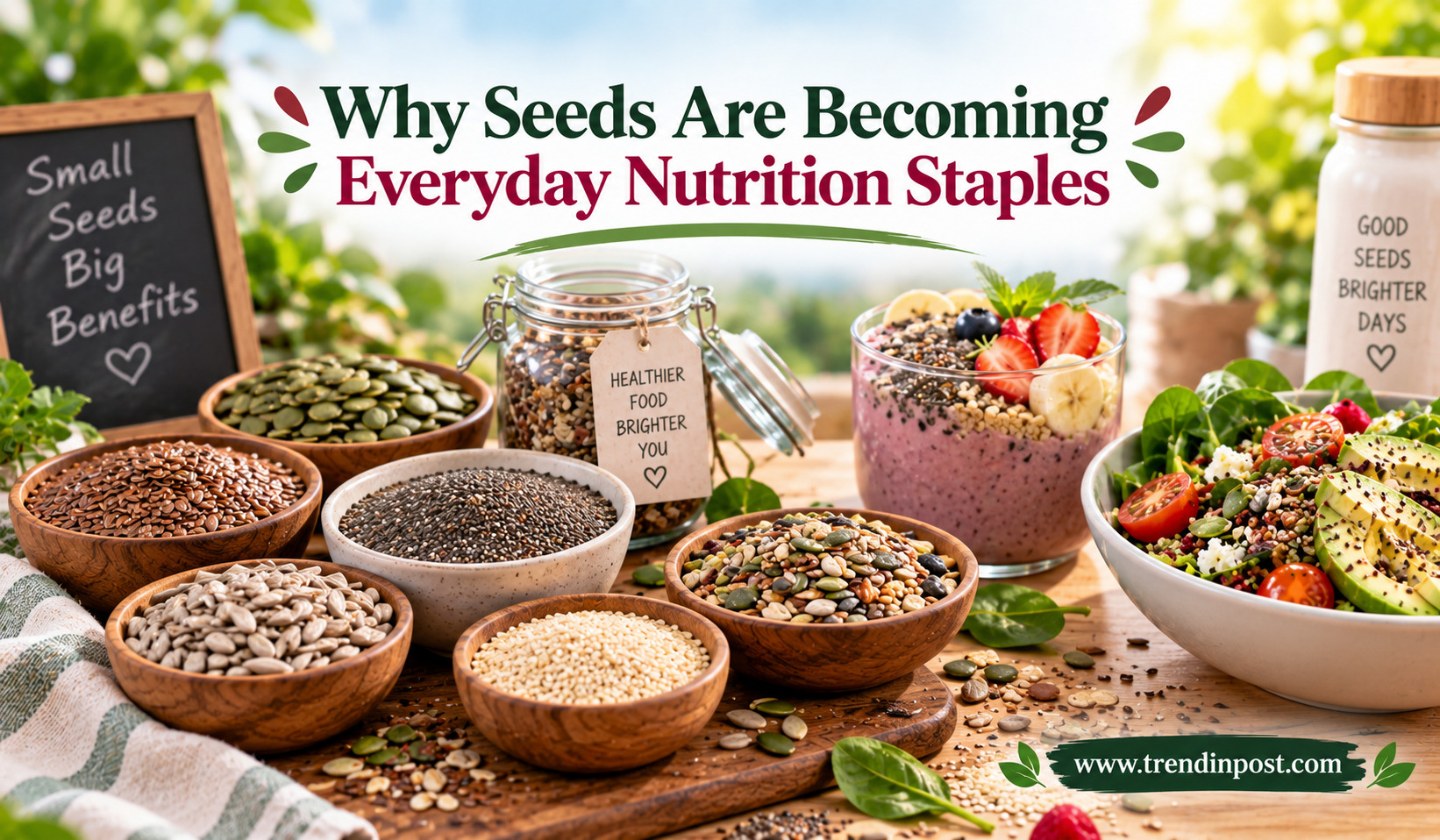
Why Seeds Are Becoming Everyday Nutrition Staples
Seeds are moving from the sidelines of the food market into everyday meals as consumers look for simple ways to add variety and nutrients to their diets. Chia, flax, pumpkin, sunflower, sesame and hemp seeds are increasingly appearing in breakfast bowls, smoothies, salads, bakery products and packaged snacks.
What makes this trend particularly interesting is that seeds are not a new discovery. Many have been used for generations in traditional cooking across different parts of the world. What has changed is the way consumers are using and talking about them. Modern food culture has transformed seeds from occasional cooking ingredients into convenient additions to everyday meals.
Growing interest in plant-based foods, digestive health, protein, healthy fats and minimally processed ingredients has helped push seeds into the spotlight. Their small size also makes them easy to incorporate into existing meals without requiring major changes to cooking routines.
The growing seed trend is therefore less about a sudden new food fad and more about traditional ingredients finding a stronger place in modern nutrition habits.
Why Consumers Are Paying More Attention to Seeds
One of the biggest reasons for the growing popularity of seeds is their nutritional density. Different seeds provide different combinations of nutrients, but many contain fibre, fats, protein, vitamins and minerals.
Chia and flax seeds, for example, are often discussed for their fibre and plant-based omega-3 fatty acid content. Pumpkin and sunflower seeds can provide protein, minerals and unsaturated fats. Sesame seeds are widely used in traditional foods and can contribute minerals and healthy fats to the diet.
However, no single seed provides every nutrient a person needs. The growing interest is better understood as part of a wider movement toward dietary variety.
Consumers are also attracted to the fact that seeds are easy to add to food. A spoonful can be mixed into yoghurt, sprinkled over a salad or incorporated into breakfast recipes without substantially changing the meal.
Seeds Fit Into the Modern Breakfast
Breakfast has become one of the most important spaces for seed-based foods. Overnight oats, smoothies, yoghurt bowls and homemade granola have created natural opportunities for adding seeds.
Chia seeds are particularly visible in breakfast recipes because they can absorb liquid and develop a gel-like texture. This property has made them popular in puddings and overnight preparations.
Flax seeds can be added to cereals and smoothies, while pumpkin and sunflower seeds can provide texture to oatmeal or granola. These applications require little preparation and can be adjusted according to individual taste.
The breakfast trend is also strongly connected to social media. Colourful bowls topped with seeds, fruits and nuts are easy to photograph and share, giving traditional ingredients a modern presentation.
Seeds Commonly Seen in Modern Diets
- Chia seeds
- Flax seeds
- Pumpkin seeds
- Sunflower and sesame seeds
Each has a different flavour, texture and nutritional profile, giving consumers several options rather than one dominant seed.
The Growing Interest in Plant-Based Nutrition
The rise of plant-forward eating has created another opportunity for seeds. Consumers do not necessarily need to follow a fully vegetarian or vegan diet to be interested in plant-based ingredients.
Seeds can complement meals based around vegetables, grains, legumes and other plant foods. Their versatility makes them useful in both traditional recipes and contemporary food products.
Some food manufacturers are also using seeds in snack bars, crackers, cereals and bakery products. This gives consumers more ways to encounter them outside the home kitchen.
The growing interest in plant-based nutrition is not only about replacing animal products. It is also about increasing the diversity of foods on the plate. Seeds fit naturally into that approach.
Fiber and Digestive Health Add to Their Appeal
The increasing focus on digestive health has also contributed to interest in seeds. Several commonly consumed seeds contain dietary fibre, which is an important part of a balanced diet.
Consumers are becoming more familiar with the relationship between fibre and digestion, while interest in the gut microbiome has made the subject even more prominent.
Still, adding seeds to a meal should not be treated as a quick solution to every digestive concern. Individual responses to fibre can vary, and a sudden increase in fibre intake may cause discomfort for some people.
A varied diet containing fruits, vegetables, legumes and whole grains remains an important foundation. Seeds can complement that pattern rather than replace other sources of fibre.
A Small Ingredient With Multiple Uses
Seeds have an advantage that many specialty foods do not: they can fit into a wide range of dishes.
A person does not need to learn a complicated recipe to use them. They can be added to food that is already part of a regular routine.
| Seed | Common Nutritional Interest | Popular Uses |
| Chia | Fibre and plant-based omega-3 fats | Puddings, oats, smoothies |
| Flax | Fibre and plant-based omega-3 fats | Smoothies, cereals, baking |
| Pumpkin | Protein, fats and minerals | Snacks, salads, granola |
| Sunflower | Unsaturated fats and nutrients | Snacks, salads, breads |
| Sesame | Fats, protein and minerals | Sauces, breads, chutneys |
Nutritional composition varies by variety and serving size, so these descriptions are broad rather than a complete nutritional assessment.
Food Brands Are Turning Seeds Into Convenient Products
The food industry has recognised the growing consumer interest in seeds. Packaged products containing multiple seed varieties are appearing across snack, breakfast and bakery categories.
Seed-based snack mixes are particularly suited to consumers looking for portable food. Instead of buying individual seeds, shoppers can purchase combinations containing pumpkin, sunflower, flax, sesame or other varieties.
Manufacturers are also experimenting with seed-based toppings, cereal blends and baked products. The challenge is ensuring that the nutritional value of the seeds is not overshadowed by excessive amounts of added sugar, salt or other ingredients.
This makes label reading important. A product can contain nutritious seeds while still having a broader nutritional profile that consumers need to consider.
Seeds and the Convenience Food Movement
Modern consumers increasingly value foods that can be incorporated into meals quickly. Seeds require very little preparation and can be stored for use over multiple meals.
This makes them particularly attractive to busy households. A small packet can provide several servings, and the ingredients can be used across breakfast, lunch and snacks.
Their long-standing role in traditional cooking also helps. Consumers do not need to treat seeds as unfamiliar health products. Sesame, sunflower and other seeds have already been used in many cuisines for flavour and texture.
The modern trend is essentially expanding those uses and connecting them with contemporary nutrition preferences.
Traditional Ingredients Are Getting a Modern Makeover
The popularity of seeds also reflects a broader return to traditional ingredients. Food trends often cycle between novelty and rediscovery, and seeds are benefiting from the latter.
Sesame has been part of Asian, Middle Eastern and other culinary traditions for centuries. Flax has a long history of use in food, while sunflower and pumpkin seeds have been consumed in various regions as snacks and ingredients.
Modern marketing has given these familiar foods a new language. Terms such as “plant-based,” “nutrient-dense” and “high-fibre” have helped consumers understand why these ingredients are attracting renewed attention.
The shift demonstrates how an old ingredient can become relevant to a new generation without fundamentally changing what it is.
Are Seeds Becoming Too Trendy?
As with many nutrition trends, there is a risk of exaggeration. Social media can sometimes present individual foods as solutions for broad health goals, even though nutrition is much more complicated.
Seeds can contribute valuable nutrients, but portion size and the overall diet still matter. They are also relatively energy-dense, meaning that a small amount can contain a significant amount of energy.
For most consumers, the practical approach is to view seeds as one useful ingredient among many. Adding them to an otherwise varied diet can provide nutritional diversity without turning them into a single “superfood.”
This balanced perspective may actually help the trend last longer because it focuses on realistic everyday eating rather than temporary health claims.
Sustainability Could Strengthen Their Appeal
Seeds may also benefit from growing consumer interest in plant-based and environmentally conscious foods. However, sustainability varies significantly between crops and production systems.
Factors such as farming practices, water use, transportation, processing and packaging can all influence environmental impact. Therefore, it is difficult to make a universal sustainability claim about every type of seed.
Local sourcing can be relevant in some markets, while responsible agricultural practices can influence the broader sustainability profile. As consumers become more interested in food origins, seed producers and brands may face greater demand for supply-chain transparency.
How Consumers Are Using Seeds Differently
The modern seed trend is not limited to one particular demographic. Families may use them in breakfast foods, fitness-focused consumers may add them to smoothies, and home cooks may incorporate them into traditional recipes.
Restaurants and cafés have also helped normalise seeds as toppings and ingredients. Their presence on salads, bowls and bakery products makes them visible even to consumers who do not actively follow nutrition trends.
Simple Everyday Uses
- Sprinkle seeds over yoghurt, oats or salads.
- Add ground seeds to smoothies or homemade recipes.
- Use seed mixtures as toppings for breads and bowls.
- Eat suitable roasted seeds as a snack.
The ease of these applications is one reason seeds can transition from a trend into a regular pantry ingredient.
What the Future Could Look Like
The seed category is likely to continue evolving as food companies experiment with combinations, flavours and convenient formats. Products featuring several seeds may become increasingly common, while traditional seed-based foods could receive renewed attention.
At the same time, consumers are likely to become more knowledgeable about the differences between seeds. Instead of treating all seeds as interchangeable, shoppers may increasingly select them according to taste, texture, cooking applications and nutritional preferences.
This could lead to a more mature market in which seeds are no longer sold simply as fashionable health ingredients but as ordinary components of everyday food.
Conclusion
Seeds are becoming everyday nutrition staples because they offer a rare combination of convenience, versatility and nutritional value. They can be added to meals with minimal preparation and fit comfortably into breakfast foods, snacks, salads, bakery products and traditional recipes.
Their popularity also reflects a larger change in consumer behaviour. People are increasingly interested in plant-based ingredients, fibre, digestive health and foods that can be easily incorporated into busy lifestyles.
The most important development may be the shift from seeds being viewed as specialty health ingredients to becoming ordinary pantry staples. Their long history in traditional cuisines gives them a strong foundation, while modern food culture is introducing them to new consumers and new applications.
If the trend continues, seeds may become less of a “health food” trend and more of a normal part of everyday cooking. Their future appeal will likely depend not on exaggerated claims, but on their practical ability to add flavour, texture and useful nutrients to a wide range of meals.
Frequently Asked Questions
Why are seeds becoming popular?
Seeds are gaining attention because they are easy to use and can provide fibre, protein, unsaturated fats and various micronutrients. Interest in plant-based foods and digestive health has also increased their visibility.
Which seeds are commonly used in modern diets?
Chia, flax, pumpkin, sunflower and sesame seeds are among the most familiar choices. Hemp and other varieties are also available in some markets.
Can seeds be eaten every day?
Many people include seeds regularly as part of a varied diet. The appropriate amount depends on individual dietary needs, and portion size is worth considering because many seeds are energy-dense.
How can seeds be added to meals?
They can be mixed into oats and yoghurt, added to smoothies, sprinkled over salads, incorporated into baked foods or eaten as suitable roasted snacks.
Are seeds a good source of fibre?
Several commonly eaten seeds contain dietary fibre. The amount varies significantly between types and serving sizes.
Related Post

Best Apps for Instagram Reels Transitions
Instagram Reels are all about movement, timing, and visual flow. While strong content is the…