Why Luxury Handbag Authentication Matters
>> Fashion>> Why Luxury Handbag Authentication Matters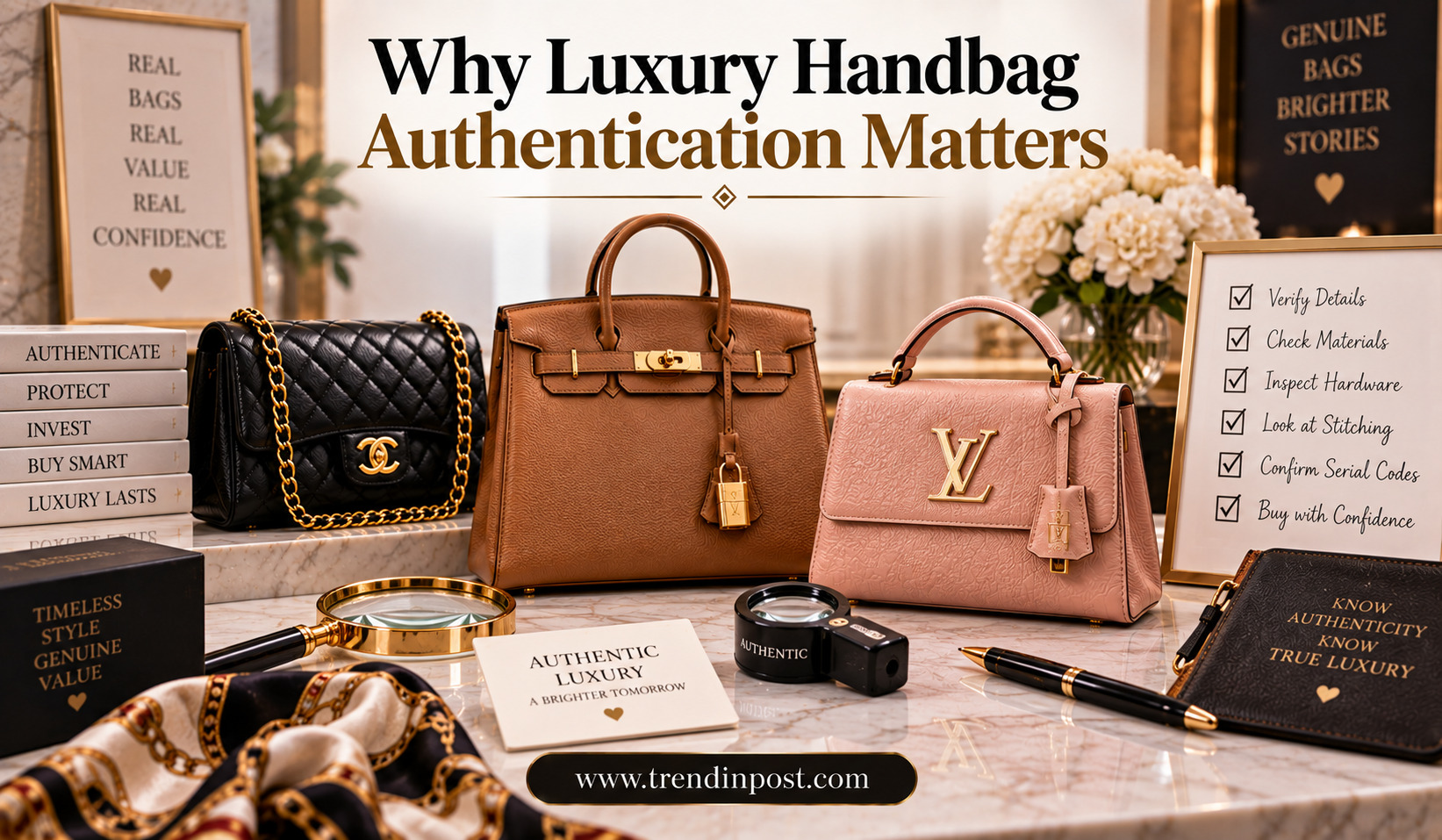
Why Luxury Handbag Authentication Matters
Luxury handbags have become more than fashion accessories. For many buyers, they represent craftsmanship, personal style, exclusivity, and in some cases, a significant financial purchase. As demand for designer handbags continues to grow across both new and pre-owned markets, another part of the luxury industry has become increasingly important: authentication.
Authentication is the process of examining a handbag to determine whether it is genuine and consistent with the characteristics of the brand, model, and production period it claims to represent. This can involve checking materials, stitching, hardware, logos, date or serial information, construction methods, and other details. For buyers and sellers, authentication provides an additional layer of confidence before money changes hands.
The importance of authentication has become especially noticeable in the resale market. Pre-owned luxury handbags are widely traded online through marketplaces, specialist retailers, social media sellers, and private transactions. While this has made luxury fashion more accessible, it has also created opportunities for counterfeit products to enter the market.
The Growing Need for Luxury Handbag Authentication
Counterfeit handbags are not always easy to identify by simply looking at photographs. Modern replicas can imitate the appearance of popular designer models with considerable attention to visible details. A bag may have a familiar logo, similar colors, and apparently high-quality materials while still failing to match the original manufacturer’s construction standards.
This is why authentication involves more than checking whether a logo looks correct. An experienced authenticator examines the handbag as a complete product. Details that appear minor individually can become important when considered together.
For example, the spacing of stitching, the shape of a logo, the texture of leather, the engraving on metal hardware, the placement of internal labels, and the construction of pockets can all provide useful evidence. Authenticators may also consider whether these characteristics are appropriate for the particular model and production period.
The authentication process therefore helps transform a subjective impression—“this bag looks real”—into a structured assessment based on identifiable characteristics.
Protecting Buyers From Expensive Mistakes
One of the clearest reasons authentication matters is the financial risk involved in purchasing a luxury handbag. Designer bags can cost hundreds or thousands of dollars, while rare or highly sought-after pieces can command substantially higher prices in the secondary market.
Buying a counterfeit item at a premium price can result in a major financial loss. In addition to losing money, the buyer may face difficulties obtaining a refund if the transaction takes place through an individual seller or an online platform with limited buyer protection.
Authentication can reduce this risk by providing an independent assessment before or after a purchase. Buyers who are considering a pre-owned handbag can use authentication as part of their overall due-diligence process, alongside checking the seller’s reputation, transaction policies, photographs, and proof of purchase where available.
It is important to remember that authentication is not the same as a guarantee of value. A genuine handbag can still have undisclosed damage, extensive wear, replacement parts, or alterations. Authentication primarily addresses authenticity rather than condition or investment performance.
Authentication Is Important in the Pre-Owned Market
The second-hand luxury market has changed the way consumers shop for designer handbags. Instead of purchasing only from traditional boutiques, shoppers can now find older collections, discontinued models, limited editions, and unusual colors through resale channels.
This creates opportunities for collectors but also introduces additional complexity. A buyer may not have access to the original purchase receipt or packaging, particularly when purchasing a bag that is several years old. In such cases, authentication can become an important part of evaluating the item.
The process is particularly relevant when the handbag is being sold online. Buyers may only see photographs before completing a transaction, making it difficult to examine physical details themselves. Professional authentication services can provide another layer of verification.
Some resale businesses also use authentication as part of their intake process before listing products. This can help establish greater trust between the platform, seller, and eventual buyer.
What Authenticators Examine
Authentication methods differ depending on the brand, model, age, and available evidence. There is no single feature that can reliably establish authenticity for every luxury handbag.
Instead, professionals generally examine multiple characteristics together. These can include the following:
- Materials and craftsmanship: Leather, canvas, lining, stitching, construction, and overall finishing are examined for consistency with the brand’s known production standards.
- Brand markings: Logos, fonts, stamps, labels, and engravings can be compared with authentic examples from the relevant period.
- Hardware: Zippers, clasps, buckles, feet, chains, and other metal components can provide useful authentication clues.
- Model-specific details: Interior layouts, pockets, dimensions, serial or date information, and other construction details can help determine whether the handbag matches the claimed model and production period.
The most reliable assessment usually comes from considering these elements together rather than relying on one supposedly “secret” authentication trick.
Why Serial Numbers Alone Are Not Enough
One common misconception is that a serial number automatically proves a handbag is authentic. While serial numbers, date codes, identification tags, or other brand-specific markings can provide useful information, they should not normally be treated as the only evidence.
Counterfeit manufacturers may reproduce identification details found on genuine products. A number can therefore appear legitimate while the handbag itself has inconsistencies elsewhere.
Similarly, the absence of a particular code does not automatically mean a handbag is fake. Luxury brands have changed their labeling and identification systems over time, and some products may use different methods depending on their production period or collection.
This is why a complete examination is generally more useful than focusing on a single number or label.
Authentication and the Resale Value of Luxury Handbags
Authenticity can also influence the resale process. Buyers in the secondary market typically want confidence that they are purchasing a genuine product. A handbag with credible authentication documentation may therefore be easier to present to potential buyers than an item whose authenticity is uncertain.
However, authentication should not be confused with a formal valuation. Several other factors can affect resale prices, including brand, model, rarity, condition, color, age, market demand, accessories, and provenance.
A genuine handbag with significant damage may sell for less than a well-preserved example of the same model. Likewise, a rare discontinued design may attract more attention than a common model even when both are authentic.
| Factor | Why It Matters |
| Authenticity | Establishes whether the handbag is genuine |
| Condition | Indicates wear, damage, repairs, or alterations |
| Model | Different designs have different market demand |
| Rarity | Limited or discontinued pieces may attract collectors |
| Provenance | Purchase history or documentation can add confidence |
| Accessories | Original packaging, receipts, and accessories may affect buyer interest |
The Role of Technology in Authentication
Technology is becoming another tool in the authentication process. High-resolution photography allows experts to inspect details that may not be visible in ordinary images. Digital databases can also help specialists compare handbags with known characteristics from particular brands and production periods.
Some businesses use digital authentication certificates or records that can be connected to a specific transaction. These systems can make it easier for buyers and sellers to maintain documentation during resale.
Artificial intelligence and image-analysis technologies are also being explored across the wider authentication industry. However, technology does not eliminate the need for expertise. A handbag is a physical object with variations in materials, manufacturing periods, repairs, and wear. Human examination and brand-specific knowledge can remain important when an item presents unusual characteristics.
When Should You Authenticate a Luxury Handbag?
Authentication can be useful at several points in the life of a handbag. A buyer may request authentication before purchasing an expensive pre-owned item. A seller may authenticate a handbag before listing it for resale. Owners may also seek authentication when preparing to consign a valuable collection.
It can be particularly sensible when the transaction involves a high-value handbag, an unfamiliar seller, an unusually low price, or a rare model for which mistakes could be expensive.
A practical approach is to consider authentication as one part of a broader purchasing process. Buyers should also investigate the seller, review return policies, inspect photographs carefully, compare the item with reliable references, and avoid making decisions solely because a handbag is being offered at a substantial discount.
Choosing an Authentication Service
Not every authentication service follows the same process, so consumers should understand what they are paying for. A reputable service should explain what information is required, what elements are examined, how the result is delivered, and what happens if the evidence is inconclusive.
Before submitting a handbag, buyers and sellers should consider:
- Experience with the specific brand and model
- Whether physical or photograph-based authentication is offered
- What type of authentication report or certificate is provided
- The service’s policies for inconclusive results and disputes
Consumers should also be cautious about services that claim one simple feature can prove authenticity for every handbag. Luxury brands regularly change manufacturing details, and genuine products can show variations caused by production year, factory, materials, or age.
Authentication Benefits Both Buyers and Sellers
Authentication is often presented as protection for buyers, but sellers can benefit as well. A seller who can provide credible evidence of authenticity may find it easier to establish trust with prospective customers.
For resale businesses, authentication can also protect brand reputation. A single counterfeit transaction can damage customer confidence, particularly in a market where trust is central to purchasing decisions.
For collectors, authentication can help maintain organized records of valuable pieces. Keeping authentication reports alongside receipts, photographs, repair records, and other documentation can create a useful history for future resale or insurance purposes.
Conclusion
Luxury handbag authentication has become an important part of today’s designer resale market. It helps buyers reduce the risk of purchasing counterfeit products and gives sellers another way to establish trust. While no single detail should be treated as absolute proof, a careful examination of materials, construction, branding, hardware, model-specific characteristics, and production information can provide a stronger basis for evaluating authenticity.
As luxury handbags continue to hold strong appeal among fashion consumers and collectors, authentication is likely to remain a valuable step in responsible buying and selling. For anyone spending significant money on a pre-owned designer handbag, taking the time to verify what they are purchasing can be just as important as choosing the right style.
FAQs
Is luxury handbag authentication necessary for every purchase?
Not necessarily. For inexpensive purchases from established retailers, authentication may not add much value. It becomes more relevant when purchasing expensive pre-owned, rare, or difficult-to-verify handbags.
Can a serial number prove that a handbag is authentic?
A serial number or date code can provide useful information, but it should not normally be treated as conclusive proof. Other elements of the handbag should also be examined.
Does authentication guarantee a handbag’s value?
No. Authentication concerns whether the item is genuine. Resale value depends on factors such as condition, model, rarity, demand, provenance, and market conditions.
Can photographs be used for authentication?
Some services offer photograph-based authentication, while others require physical inspection. The level of certainty can depend on image quality, the handbag itself, and the service’s methodology.
Why is authentication especially important for pre-owned handbags?
Pre-owned handbags can change hands several times, and original purchase documentation may not always be available. Authentication can provide additional confidence when the buyer cannot verify the product through the original retailer.
Related Post
How Collectors Evaluate Rare Luxury Handbags
Rare luxury handbags have become an important part of the high-end fashion and collecting world.…