Tata vs Mahindra: Which Brand Offers the Better SUV Line-Up?
>> Automobile>> Tata vs Mahindra: Which Brand Offers the Better SUV Line-Up?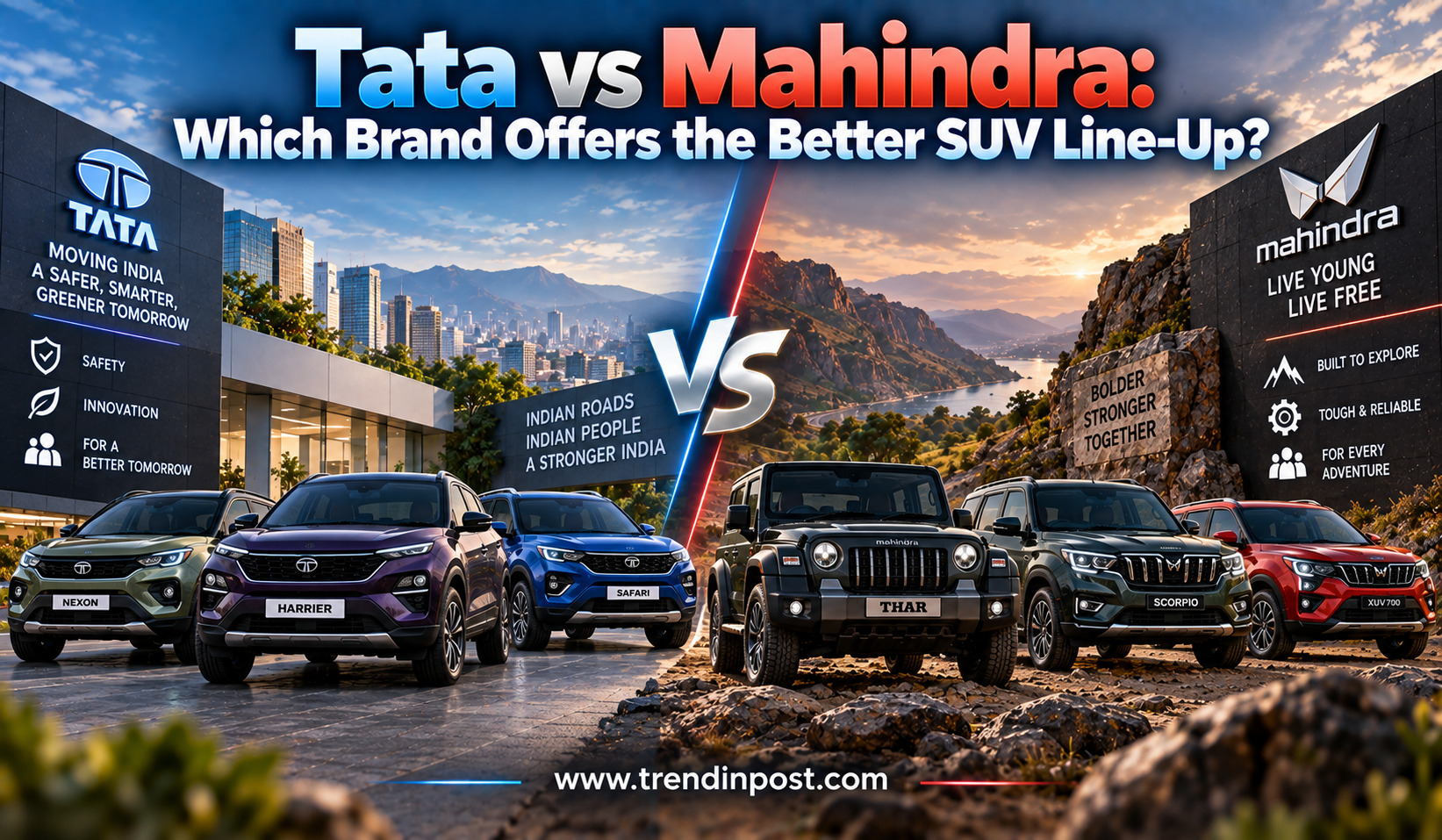
Tata vs Mahindra: Which Brand Offers the Better SUV Line-Up?
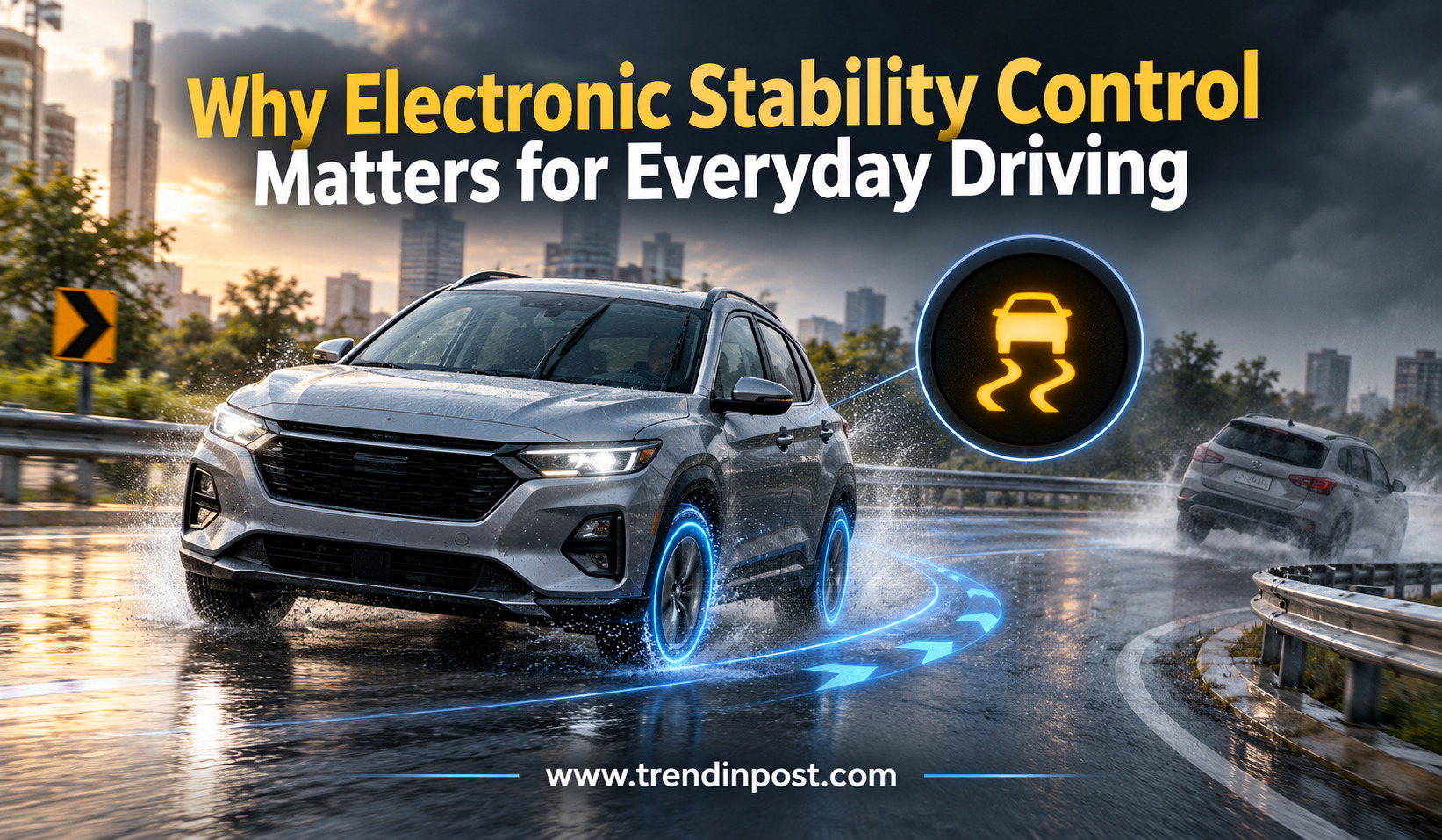
Tata Motors and Mahindra have become two of the most important names in India’s SUV market. Both brands have strong Indian roots, offer products designed around local driving conditions and have expanded their SUV portfolios significantly in recent years. While Tata Motors has built a broad range covering petrol, diesel and electric SUVs, Mahindra has developed an increasingly strong combination of traditional SUVs and new-generation electric vehicles.
The competition is particularly interesting because the two manufacturers are approaching the SUV market from slightly different directions. Tata continues to offer established models such as the Harrier and Safari while expanding its electric portfolio with the Harrier EV. Mahindra, meanwhile, is pushing aggressively into electric mobility through models such as the BE 6, XEV 9e and the larger XEV 9S.
For Indian buyers, the question is no longer simply which company makes a good SUV. It is about which brand offers the more complete line-up for different budgets, fuel preferences, family requirements and technology expectations.
Tata’s SUV Strategy: Broad Choice Across Powertrains
Tata Motors has built its SUV portfolio around variety. Its range includes compact SUVs, mid-size SUVs, larger three-row models and electric vehicles. This gives customers the option of choosing a conventional petrol or diesel SUV or moving towards an EV without leaving the Tata brand.
The Harrier remains one of Tata’s important offerings in the mid-size SUV segment. The current Harrier starts at approximately ₹12.99 lakh ex-showroom, according to Tata Motors’ India website. The model is available with different equipment levels and powertrain options, giving buyers flexibility depending on their budget and requirements.
The Safari sits above the Harrier in terms of passenger practicality, with its three-row configuration making it particularly relevant for larger families. Tata’s current website lists the Safari from approximately ₹13.29 lakh ex-showroom.
Tata Harrier: A Strong Mid-Size SUV Contender
The Harrier has developed a distinctive position in Tata’s SUV portfolio. Its design gives it a strong road presence, while the cabin focuses on space, comfort and technology.
The model is also available with multiple transmission and powertrain choices, allowing customers to select a configuration according to their driving requirements. Tata has continued updating the Harrier with new features and variants rather than treating it as a static product.
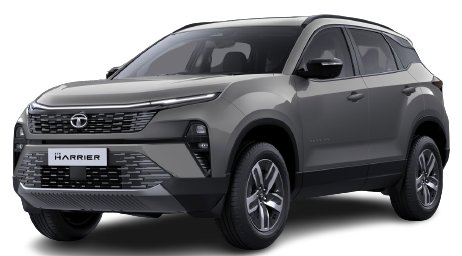
The Harrier’s appeal is therefore based on a combination of design, cabin space, safety-focused equipment and a relatively wide variant range. It competes in a part of the market where buyers are increasingly looking for an SUV that can work equally well for city driving and highway travel.
Tata Safari: Practicality for Larger Families
The Safari takes Tata’s SUV formula into the three-row space. Its major advantage is the additional seating capacity, making it relevant for buyers who regularly travel with family or need greater passenger flexibility.
Tata introduced updated versions of the Safari with a more feature-focused approach, including multiple personas and equipment levels. The company has also expanded its petrol powertrain availability for the Harrier and Safari.
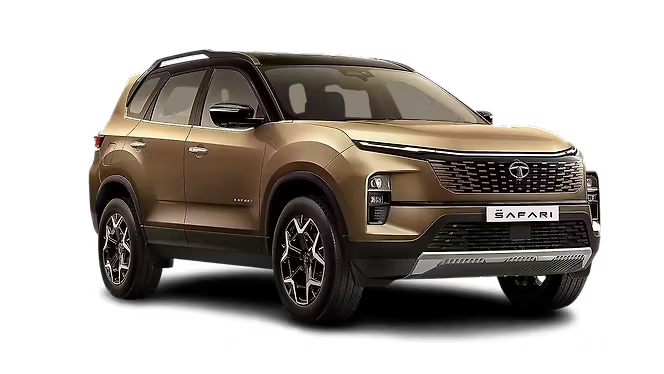
The Safari starts at approximately ₹13.29 lakh ex-showroom, although higher variants can move well beyond ₹20 lakh depending on configuration.
For customers who prioritise passenger space and a traditional large SUV experience, the Safari remains one of Tata’s strongest options.
Tata Harrier EV Brings Electric Power to the SUV Range
The Harrier EV is perhaps the clearest example of Tata Motors’ strategy for the next stage of SUV development. Instead of simply converting an existing petrol or diesel vehicle into an electric model, Tata has positioned the Harrier EV as a technology-focused electric SUV.
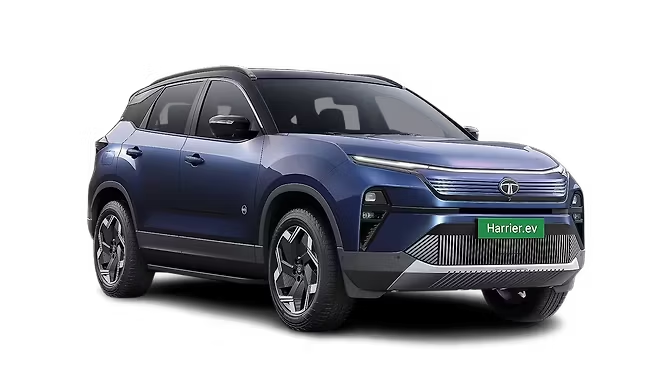
The Harrier EV was introduced with an introductory starting price of ₹21.49 lakh ex-showroom for the 65 kWh Adventure variant. Higher versions include the 75 kWh battery, with the Empowered 75 priced at approximately ₹27.49 lakh at launch.
Tata also introduced dual-motor all-wheel-drive versions of the Harrier EV, with prices starting at approximately ₹28.99 lakh ex-showroom for the AWD range.
The Harrier EV therefore gives Tata a strong answer for customers who want an electric SUV without moving away from a familiar SUV format.
Mahindra’s SUV Strategy: Performance, Design and Electric Technology
Mahindra’s SUV portfolio has traditionally been associated with ruggedness, road presence and strong utility. Models such as the Scorpio and That helped create that identity, but the company’s latest electric SUVs show how quickly its strategy is expanding.
The BE 6 and XEV 9e were developed on Mahindra’s INGLO electric architecture and use the company’s MAIA software and electronic technology platform. Rather than presenting EVs as simple alternatives to combustion-powered cars, Mahindra has positioned these models as a new generation of technology-focused SUVs.
This gives Mahindra a distinctive position in the Indian EV market, particularly among customers who want performance and futuristic design.
Mahindra BE 6: A Performance-Focused Electric SUV
The BE 6 is one of Mahindra’s most distinctive new products. Its design is more aggressive and athletic than a conventional family SUV, and its positioning is aimed at buyers who want an electric vehicle with a strong performance-oriented character.
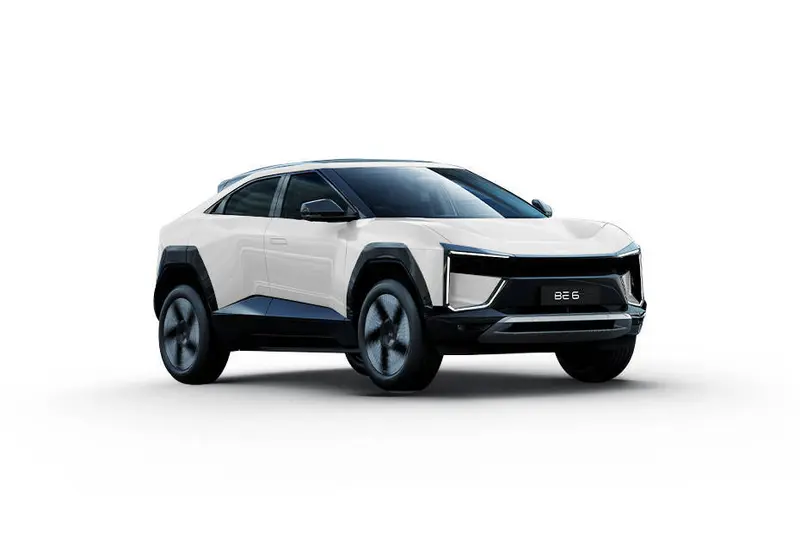
Mahindra initially introduced the BE 6 at ₹18.90 lakh ex-showroom for the entry Pack One. The Pack Three version with the 79 kWh battery was priced at ₹26.90 lakh ex-showroom.
The BE 6 also offers a 59 kWh and 79 kWh battery choice across its range. Mahindra has highlighted the vehicle’s electric performance, advanced technology and long-range capability as key parts of its proposition.
This makes the BE 6 particularly interesting for buyers who want an EV that feels more performance-oriented than a conventional city electric SUV.
Mahindra XEV 9e: Premium Electric SUV-Coupe
The XEV 9e takes Mahindra’s electric strategy into a more premium direction. Its coupe-inspired SUV design is intended to give the vehicle a distinctive appearance while maintaining a spacious cabin.
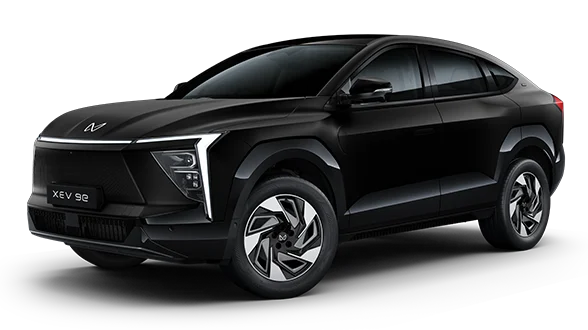
The XEV 9e originally started at ₹21.90 lakh ex-showroom, while the top Pack Three version with the 79 kWh battery was priced at approximately ₹30.50 lakh.
Mahindra has also introduced a special XEV 9e Cineluxe Edition at ₹29.35 lakh ex-showroom, further highlighting the model’s premium positioning.
The XEV 9e is therefore aimed at buyers who want an electric SUV with premium styling, advanced cabin technology and strong road presence.
Mahindra XEV 9S: A Seven-Seater Electric SUV
The XEV 9S adds another important dimension to Mahindra’s electric range. It is a seven-seat electric SUV designed around the INGLO platform, giving Mahindra a product specifically aimed at larger families.
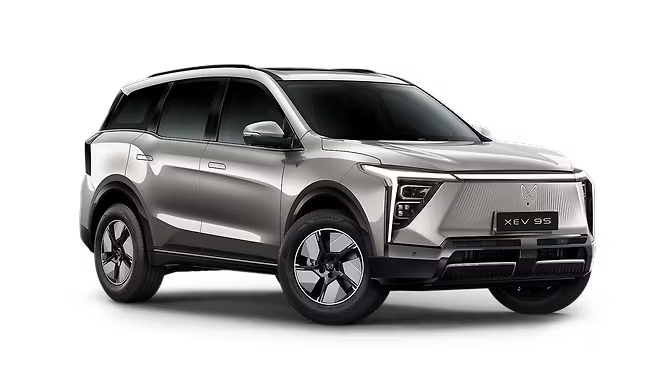
The XEV 9S starts at approximately ₹19.95 lakh ex-showroom, while the fully loaded Pack Three Above 79 kWh version reaches approximately ₹29.45 lakh. Mahindra began deliveries of the model in January 2026.
Its flat-floor electric architecture provides additional flexibility for passenger space, while the seven-seat configuration gives Mahindra an advantage for buyers who need greater seating capacity in an EV.
Tata vs Mahindra: SUV Line-Up Comparison
| Model | Powertrain | Seating | Approx. Starting Ex-Showroom Price |
| Tata Harrier | Petrol/Diesel | 5 | ₹12.99 lakh |
| Tata Safari | Petrol/Diesel | 6/7 | ₹13.29 lakh |
| Tata Harrier EV | Electric | 5 | ₹21.49 lakh |
| Mahindra BE 6 | Electric | 5 | ₹18.90 lakh |
| Mahindra XEV 9e | Electric | 5 | ₹21.90 lakh |
| Mahindra XEV 9S | Electric | 7 | ₹19.95 lakh |
*Prices are indicative of ex-showroom India figures. Actual prices depend on variant, battery/powertrain, city, taxes and manufacturer pricing at the time of purchase. Tata Harrier and Safari prices are from Tata Motors’ current listings, while EV prices reflect Mahindra and Tata’s announced prices. *
Which Brand Offers More Variety?
When looking at the broader SUV portfolio, Tata’s advantage is the combination of conventional and electric products. The Harrier and Safari provide familiar petrol and diesel choices, while the Harrier EV gives buyers an electric alternative in a similar SUV category.
Mahindra has a particularly strong position in electric SUVs. The BE 6 targets performance-oriented buyers, the XEV 9e provides a premium coupe-SUV alternative, and the XEV 9S focuses on family practicality with seven seats.
This means the answer depends heavily on what type of SUV the buyer wants.
Tata may appeal more to buyers looking for:
- Petrol or diesel SUV options
- A conventional five- or seven-seat family SUV
- An electric SUV with a familiar Harrier identity
- A broader mix of traditional and electric powertrains
Mahindra may appeal more to buyers looking for:
- Electric SUVs with strong performance
- Distinctive and futuristic designs
- Large electric SUVs with advanced technology
- Seven-seat electric SUV practicality
Safety and Technology Are Becoming Central
Both companies are using safety and technology as major selling points. Tata’s modern SUVs have placed significant emphasis on safety equipment, while the Harrier EV adds advanced electric technology and all-wheel-drive capability.
Mahindra’s electric SUVs have also made safety a major focus. The XEV 9e and BE 6 achieved five-star Bharat NCAP ratings, with the XEV 9e recording a perfect 32/32 score for adult occupant protection and the BE 6 scoring 31.97/32.
Technology is another area where the competition is becoming intense. Large displays, connected-car functions, advanced driver assistance and software-based vehicle features are increasingly common in the premium SUV segment.
The Electric SUV Battle Could Change the Comparison
The competition between Tata and Mahindra may become even more interesting as electric SUVs become more mainstream in India.
Tata has already established a significant electric-vehicle presence, and the Harrier EV strengthens its position in a larger SUV category. Mahindra, meanwhile, has introduced a dedicated electric platform with several models rather than relying on a single EV.
The XEV 9e, BE 6 and XEV 9S show Mahindra’s intention to build an entire electric SUV family. Tata’s advantage is its experience across both conventional and electric passenger vehicles, while Mahindra’s dedicated INGLO platform allows it to design its electric models around EV-specific requirements from the beginning.
Which Brand Has the Better SUV Line-Up?
There is no universal winner because Tata and Mahindra are targeting somewhat different buyer priorities.
Tata has a strong case for customers who want a traditional SUV with petrol or diesel power, especially with the Harrier and Safari. Its Harrier EV also provides a transition into electric SUV ownership while retaining a familiar nameplate.
Mahindra is particularly compelling for buyers interested in new-generation electric SUVs. The BE 6, XEV 9e and XEV 9S cover different customer requirements while sharing Mahindra’s modern electric technology approach.
For a buyer focused on family practicality and a mix of powertrain choices, Tata’s line-up may be more versatile. For someone attracted to futuristic EV design, performance and dedicated electric architecture, Mahindra’s latest portfolio is particularly strong.
Final Thoughts
Tata Motors and Mahindra are both building strong SUV portfolios, but their strategies are evolving in different ways. Tata combines established SUVs such as the Harrier and Safari with newer electric products such as the Harrier EV. This gives it a broad mix of conventional and electric options.
Mahindra, on the other hand, is using its traditional SUV identity as a foundation for a major push into electric mobility. The BE 6, XEV 9e and seven-seat XEV 9S demonstrate how the company is attempting to create an entire family of premium electric SUVs.
The better line-up ultimately depends on the buyer. Tata has an advantage for those wanting flexibility between petrol, diesel and electric SUVs, while Mahindra makes a particularly strong case for customers looking for technology-rich, dedicated electric SUVs.
As India’s SUV market continues to expand, the competition between these two home-grown manufacturers is likely to become even more important. Their growing portfolios show that Indian buyers now have more choices than ever across traditional and electric SUV categories.
FAQs
1. Which is better, Tata or Mahindra for SUVs?
Both brands have strong SUV line-ups. Tata offers a broad combination of petrol, diesel and electric SUVs, while Mahindra has developed a particularly strong portfolio of new-generation electric SUVs.
2. What is the price of the Tata Harrier in India?
The Tata Harrier currently starts at approximately ₹12.99 lakh ex-showroom in India, according to Tata Motors’ current listing.
3. What is the price of the Tata Safari?
The Tata Safari starts at approximately ₹13.29 lakh ex-showroom in India. Higher variants cost more depending on the selected configuration.
4. What is the Tata Harrier EV price in India?
The Harrier EV was introduced at an introductory starting price of ₹21.49 lakh ex-showroom. Higher variants and AWD versions are priced above the entry version.
5. What is the Mahindra BE 6 price in India?
The Mahindra BE 6 originally started at ₹18.90 lakh ex-showroom, while the Pack Three 79 kWh version was priced at ₹26.90 lakh.
Related Post
What Makes a Car Safer for Long Highway Journeys?
Long highway journeys can be comfortable and enjoyable, but they also place different demands on…