

Smart Luggage Tracker vs GPS Tracker: Key Differences
>> Travels & Tourism>> Smart Luggage Tracker vs GPS Tracker: Key Differences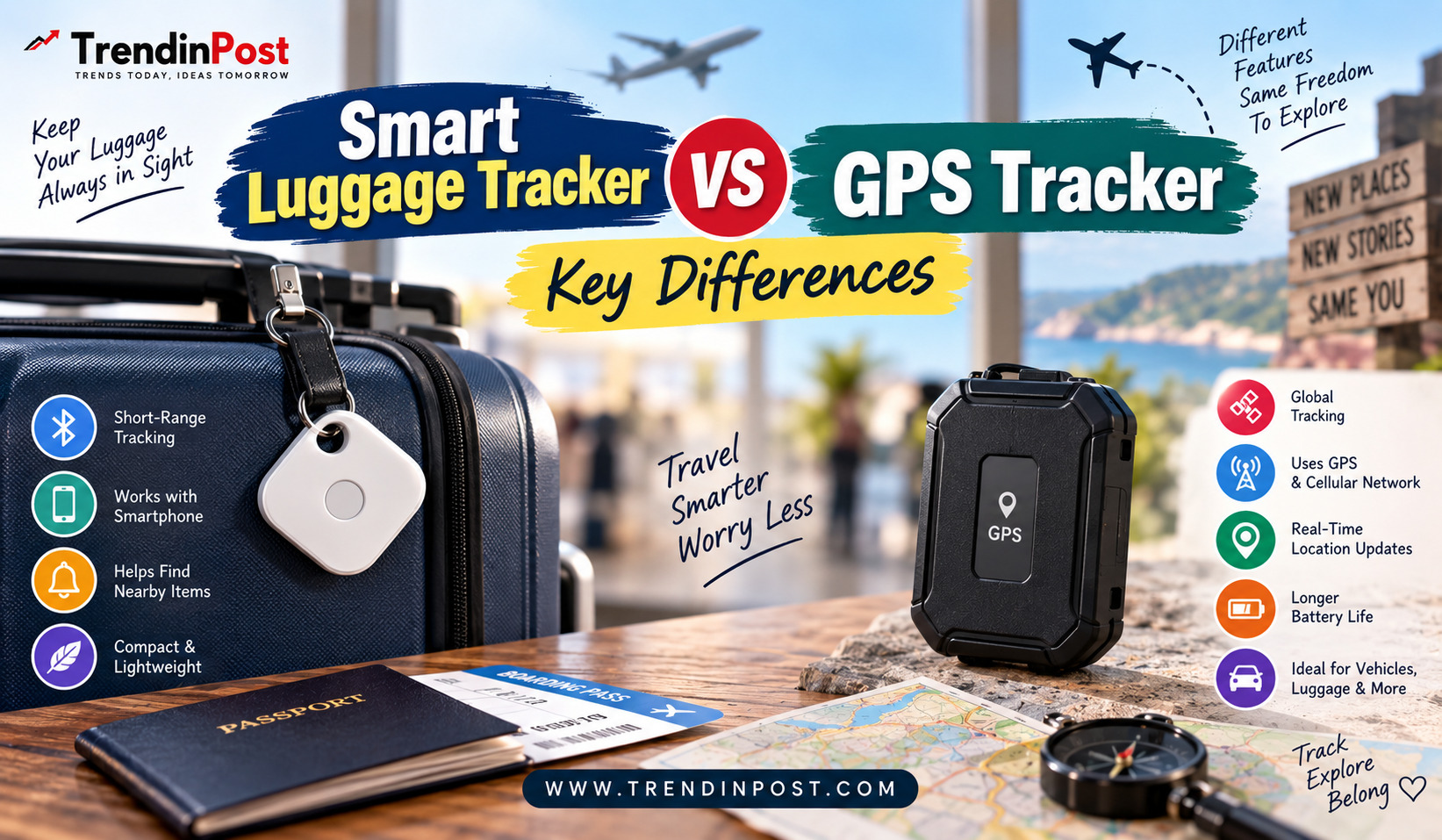
Smart Luggage Tracker vs GPS Tracker: Key Differences
Introduction
Losing a bag at the airport is a special kind of stress. A smart luggage tracker can save you from that panic, but so can a regular GPS tracker, and the two are not the same thing. This article breaks down how each one works, where they differ, and which one actually makes sense for your travel bag. By the end, you will know exactly what to buy and why.
1. What Is a Smart Luggage Tracker
A smart luggage tracker is a small tag or device you slip into your suitcase. It usually connects to your phone through Bluetooth and relies on a wide network of other devices to help locate your bag.
Most of these trackers are compact, lightweight, and built to survive rough baggage handling. Brands like Apple AirTag, Tile, and Chipolo fall into this category. They are made for one job: helping you find something that has gone missing nearby or within a shared device network.
2. What Is a GPS Tracker
A GPS tracker is a device that uses satellite signals to pinpoint a location almost anywhere on Earth. Many models also use cellular data to send that location straight to an app on your phone.
These devices are common in vehicles, shipping containers, and high-value cargo. Some luggage-specific GPS trackers exist too, built smaller so they fit inside a suitcase pocket.
3. How Smart Luggage Trackers Work
Smart luggage trackers send out a quiet Bluetooth signal at all times. Any nearby phone that is part of the same tracker network can pick up that signal.
The Network Effect
This is where the real value shows up. When another user’s phone passes near your lost bag, it silently reports the tag’s location back to you.
- No cellular plan required
- Works best in busy areas like airports
- Relies on other users being nearby to relay location
The catch is simple: if your bag ends up somewhere with no other network phones around, the tracker cannot report its position.
4. How GPS Trackers Work
A GPS tracker talks to satellites directly, which means it does not depend on strangers walking by. It calculates its location using signals from multiple satellites, then transmits that data using a cellular connection.
Real-Time Location
Because of this setup, GPS trackers can show near real-time location almost anywhere, including remote areas.
- Works in rural or isolated locations
- Requires a SIM card or built-in cellular plan
- Often needs a monthly or yearly subscription fee
This makes GPS trackers a stronger fit for cargo, vehicles, or bags heading through less populated routes.
5. Key Differences Between the Two
The gap between these two devices comes down to a few core factors.
- Technology used: Bluetooth network versus satellite and cellular signals
- Coverage: Smart trackers depend on crowd density; GPS trackers work almost everywhere
- Cost structure: Smart trackers are mostly a one-time purchase; GPS trackers often need a subscription
- Size: Smart trackers tend to be smaller and slimmer
- Accuracy in remote areas: GPS trackers win here by a wide margin
Airports, train stations, and city hotels tend to favor smart trackers simply because so many phones pass through them daily. Cargo routes and rural travel tend to favor GPS trackers instead.
6. Battery Life and Charging
Battery life is one of the biggest practical differences buyers overlook.
Smart luggage trackers usually run on a small coin-cell battery. That battery can often last up to a year before it needs replacing, and some models use a replaceable cell rather than a rechargeable one.
GPS trackers, on the other hand, use a rechargeable battery that needs regular charging. Because they constantly ping satellites and cell towers, that battery may only last a few days to a couple of weeks on a single charge.
If you travel often and dislike charging extra gadgets, this difference alone might decide your choice.
7. Cost and Value for Money
Price is another area where these two devices split apart.
Smart luggage trackers are usually cheaper upfront, often costing far less than a GPS unit. There is typically no ongoing fee, aside from optional premium app features in some brands.
GPS trackers cost more initially and usually carry a recurring subscription for cellular data. Over a year or two, that subscription can add up to more than the tracker itself.
For someone who values a low upfront cost, a smart tracker is the easier pick. For someone who needs guaranteed global coverage, the subscription cost may be worth paying.
8. Which One Should You Choose
Think about where you actually travel before deciding.
If most of your trips involve airports, cities, and populated transit hubs, a smart luggage tracker will likely serve you well. The device network in these places is usually dense enough to locate a bag quickly.
If you travel through remote regions, ship cargo, or simply want a tracker that does not depend on crowd density, a GPS tracker is the safer bet. It costs more, but it does not rely on luck or foot traffic to work.
Some travelers even carry both, using a smart tag for everyday trips and a GPS unit for longer or more remote journeys.
Key Takeaways
- Smart luggage trackers: Use Bluetooth and a shared device network; work best in crowded areas.
- GPS trackers: Use satellite and cellular signals; work almost anywhere, including remote regions.
- Battery life: Smart trackers can last up to a year; GPS trackers need frequent charging.
- Cost: Smart trackers are usually cheaper with no subscription; GPS trackers often carry a monthly fee.
- Best use case: Choose a smart tracker for city and airport travel, and a GPS tracker for remote or cargo travel.
FAQs
Does a smart luggage tracker work without Wi-Fi? Yes, it works through Bluetooth and does not need Wi-Fi to function.
Do GPS trackers need a SIM card? Most GPS trackers need a SIM card or built-in cellular connection to send location data.
Which tracker is better for international flights? Smart luggage trackers usually work well on international flights because airports have dense device networks.
Can a GPS tracker work in the desert or forest? Yes, a GPS tracker can work in remote areas as long as it has a clear view of the sky and cellular coverage.
Do smart luggage trackers need charging? No, most smart luggage trackers use a coin-cell battery instead of a rechargeable one.
Conclusion
Choosing between a smart luggage tracker and a GPS tracker comes down to how and where you travel. A smart luggage tracker offers a low-cost, low-maintenance way to keep tabs on your bag in busy, populated areas. A GPS tracker offers wider, more reliable coverage for remote travel, at a higher price and with an ongoing subscription. Match the tracker to your travel pattern, and you will spend a lot less time worrying about a missing suitcase.
Related Post

Best Forts in Maharashtra to Watch the Sunset
Maharashtra’s forts are usually associated with Maratha history, ancient stone walls and challenging trekking routes.…