How Blind Spot Monitoring Makes Highway Driving Safer
>> Automobile>> How Blind Spot Monitoring Makes Highway Driving Safer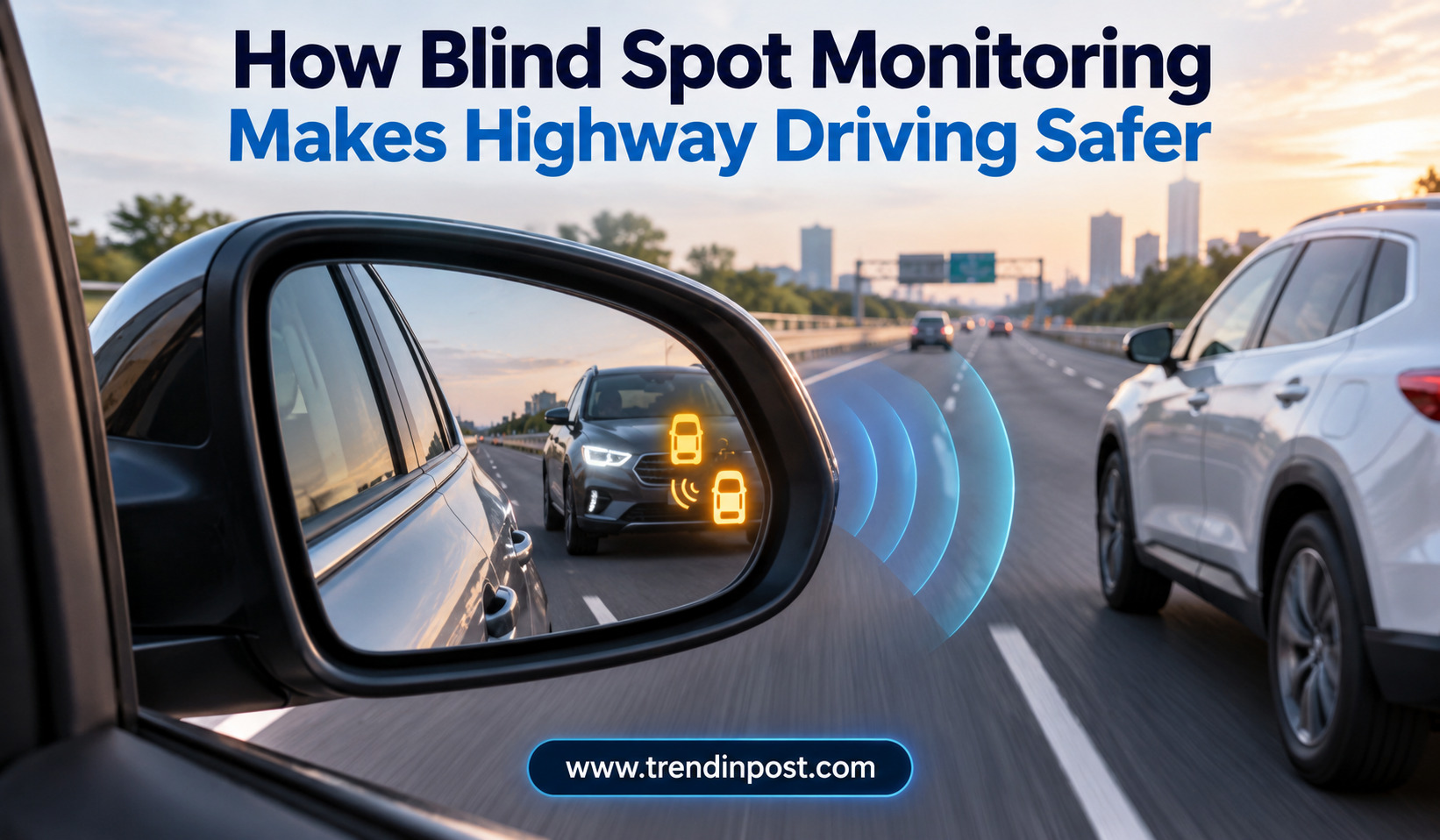
How Blind Spot Monitoring Makes Highway Driving Safer
Highway driving demands constant attention. Vehicles move at higher speeds, lane changes happen frequently, and a car that appears to be at a safe distance can quickly enter a driver’s blind area. One of the technologies designed to address this challenge is Blind Spot Monitoring, commonly known as BSM or Blind Spot Detection.
The feature has become increasingly common in modern cars, particularly in mid-range and premium models. It uses sensors to monitor areas beside and slightly behind the vehicle that may not be visible through the side mirrors. When another vehicle enters this zone, the system can alert the driver, providing an additional layer of awareness before a lane change.
While Blind Spot Monitoring does not replace careful mirror checks or shoulder checks, it can make highway driving more predictable and potentially reduce the risk of collisions caused by unnoticed vehicles.
What Is Blind Spot Monitoring?
Blind Spot Monitoring is an electronic driver-assistance system designed to detect vehicles traveling in areas that are difficult for the driver to see. These areas are commonly known as blind spots.
The blind spot can vary depending on the size and design of the vehicle, mirror adjustment and the driver’s seating position. A vehicle traveling alongside the rear quarter of a car may disappear from the driver’s direct view even though it is only a short distance away.
BSM typically uses radar sensors or other sensing technology positioned around the rear or sides of the vehicle. The system continuously monitors nearby traffic and determines whether another vehicle is occupying a relevant detection area.
When a vehicle is detected, the driver may receive a warning through an indicator on the side mirror, instrument cluster or head-up display. Some systems can also provide an audible or steering-related warning if the driver begins moving toward an occupied lane.
Why Blind Spots Become More Important on Highways
Highway driving often involves maintaining a steady speed while vehicles approach from behind at different rates. Because of this, a driver may check the mirror, see a clear lane and then begin changing lanes without realizing that another vehicle has entered the blind spot moments later.
The problem becomes more difficult when traffic is dense. Multiple vehicles may be positioned around the car simultaneously, making it harder to track every movement using mirrors alone.
Large vehicles can create another challenge. Trucks, buses and SUVs may spend considerable time alongside a smaller car, blocking visibility and occupying areas where the driver cannot easily see them.
Blind Spot Monitoring adds another source of information. Instead of relying exclusively on what the driver can see, the system keeps monitoring the surrounding area and alerts the driver when a vehicle is detected.
How Does Blind Spot Monitoring Work?
Most modern systems rely on sensors mounted toward the rear corners of the vehicle. Radar is commonly used because it can detect objects around the vehicle across different lighting conditions.
The sensors continuously evaluate nearby traffic. Software then determines whether an object is likely to be another vehicle and whether it is positioned within the system’s warning zone.
If the system determines that a vehicle is present in the blind spot, a warning light may appear on the corresponding side mirror. If the driver activates the turn indicator while another vehicle is detected, some systems provide a stronger warning.
Depending on the vehicle, this may include an audible alert, visual warning or steering intervention.
A typical warning sequence can involve:
- Sensors detecting a vehicle beside or behind the car.
- A visual warning appears on the relevant mirror.
- A stronger alert when the driver signals toward the occupied lane.
- Additional assistance on vehicles equipped with active lane-change technology.
The exact operation varies between manufacturers and vehicle models, so drivers should understand how their particular system behaves.
How BSM Helps During Lane Changes
Changing lanes is one of the most common situations in which Blind Spot Monitoring can be useful. A driver normally checks the rear-view mirror, side mirror and surrounding traffic before moving across.
Even with careful checking, however, another vehicle can remain hidden in a mirror’s viewing area.
BSM can provide an additional warning when a vehicle is detected in that area. This does not mean the driver should change lanes simply because the warning is absent. Instead, the system should be viewed as a backup to normal observation.
The technology becomes particularly useful when traffic moves at different speeds. A vehicle approaching quickly from behind may enter the blind spot during the short period between mirror checks.
BSM and Highway Overtaking
Overtaking on a highway requires the driver to judge both the speed and position of surrounding vehicles. A car approaching from behind can sometimes be difficult to notice, particularly when the driver is focused on the road ahead.
Blind Spot Monitoring can help identify a vehicle occupying the adjacent lane. This can be useful before moving back into the lane after overtaking another vehicle.
For example, a driver may pass a slower car and prepare to return to the original lane. If another vehicle is already approaching from behind in that lane, the blind spot warning can provide an additional indication that the lane is not yet suitable for a move.
This can help reduce reliance on a single glance at the mirrors.
What Happens When the Driver Ignores the Warning?
The behavior depends on the vehicle. Basic Blind Spot Monitoring may only provide a visual warning. More advanced systems can issue additional alerts when the driver activates the turn signal toward a detected vehicle.
Some newer vehicles combine blind spot detection with steering assistance. If the driver begins moving toward an occupied lane, the vehicle may provide corrective steering or resistance.
However, drivers should not assume that every BSM system can physically prevent a lane-change collision. The technology differs significantly between manufacturers and models.
The driver remains responsible for checking traffic and making the final decision.
Blind Spot Monitoring vs Rear Cross-Traffic Alert
Blind Spot Monitoring and Rear Cross-Traffic Alert are often included in the same safety package, but they serve different purposes.
| Feature | Main Purpose | Common Situation |
| Blind Spot Monitoring | Detects vehicles alongside or behind the car | Highway lane changes |
| Rear Cross-Traffic Alert | Warns about traffic approaching from the sides behind the vehicle | Reversing out of parking spaces |
| Lane Departure Warning | Alerts when the vehicle leaves its lane unintentionally | Highway or road driving |
| Lane Keeping Assist | Helps steer the vehicle back toward its lane | Unintentional lane movement |
Understanding these differences is useful when comparing vehicle safety packages. A car may advertise multiple driver-assistance technologies, but each system is designed to address a different type of risk.
Benefits for Long Highway Journeys
Long-distance highway trips can be mentally demanding. Drivers need to monitor speed, lane position, road signs and surrounding traffic for extended periods.
Blind Spot Monitoring can provide another layer of awareness without requiring the driver to constantly focus on the side of the vehicle. A small indicator in the mirror can immediately draw attention to traffic that might otherwise be overlooked.
This can be particularly helpful during long journeys when fatigue or changing traffic conditions make it more difficult to track every nearby vehicle.
Nevertheless, BSM should never encourage drivers to become less attentive. It is an assistance system, not an autonomous driving feature.
Limitations Drivers Should Understand
Despite its benefits, Blind Spot Monitoring has limitations. Sensors may not detect every object in every situation, and the detection range can vary depending on the system.
Motorcycles, bicycles and other smaller objects can present different detection challenges depending on the technology being used. Stationary objects, roadside barriers and unusual road layouts may also affect how a system behaves.
Weather and road conditions can sometimes influence sensor performance. Dirt, mud, snow or other debris covering sensor areas can also interfere with operation.
Drivers should therefore remain aware of their surroundings even when the system appears to be functioning normally.
Drivers should remember:
- Check mirrors before every lane change.
- Use the turn indicator early enough to communicate intentions.
- Look directly toward the adjacent lane when appropriate.
- Never depend entirely on a warning light or automated assistance.
Does Blind Spot Monitoring Make Driving Safer?
The main value of Blind Spot Monitoring is that it adds an extra layer of information. It can identify nearby traffic that may be difficult to see through conventional mirrors and alert the driver at an important moment.
The technology is most effective when used together with good driving habits. Proper mirror adjustment, adequate following distance, correct indicator use and careful observation remain essential.
For highway drivers, the combination can make lane changes more controlled because the driver has multiple sources of information rather than relying on one visual check.
The Future of Blind Spot Safety
As vehicle technology continues to develop, blind spot systems are becoming more integrated with other driver-assistance features. Instead of simply warning the driver, advanced systems can work with cameras, radar and steering controls to provide additional assistance.
Future vehicles are likely to use increasingly sophisticated sensor combinations to understand traffic around the vehicle. This could make lane-change assistance more responsive and better integrated with other safety technologies.
However, the fundamental purpose will remain the same: helping drivers become more aware of vehicles that may be difficult to see.
Final Thoughts
Blind Spot Monitoring has become an important feature for modern highway driving because it addresses one of the most common visibility challenges faced during lane changes. By monitoring areas beside and behind the vehicle, the system can warn drivers when another vehicle occupies a potentially dangerous position.
Its greatest benefit comes when it is treated as a safety backup rather than a replacement for responsible driving. Mirrors, indicators, direct observation and good judgment remain essential.
For people spending significant time on highways, BSM can provide valuable additional awareness. As manufacturers continue improving driver-assistance technology, features such as blind spot detection are likely to become an increasingly important part of everyday vehicle safety.
FAQs
1. What is Blind Spot Monitoring?
Blind Spot Monitoring is a driver-assistance feature that uses sensors to detect vehicles in areas alongside or behind a car that may be difficult for the driver to see.
2. Is Blind Spot Monitoring useful on highways?
Yes. It can be particularly helpful on highways because vehicles frequently approach from behind and drivers often need to change lanes at higher speeds.
3. Can Blind Spot Monitoring prevent a crash?
Not necessarily. Some advanced systems can provide steering assistance, but basic BSM generally provides warnings rather than preventing collisions. Drivers must remain responsible for checking traffic.
4. Does BSM replace checking mirrors?
No. Drivers should continue checking the rear-view and side mirrors and visually confirming that the lane is clear before changing lanes.
5. Does Blind Spot Monitoring detect motorcycles?
It depends on the vehicle’s sensing system, the motorcycle’s position and other conditions. Drivers should always look carefully for motorcycles and smaller road users rather than assuming the system will detect everything.
Related Post
Ather Electric Scooters: What Makes Them Different?
Ather has developed a distinctive position in India's electric scooter market by treating an electric…