Car Safety Features Worth Paying More for in 2026
>> Automobile>> Car Safety Features Worth Paying More for in 2026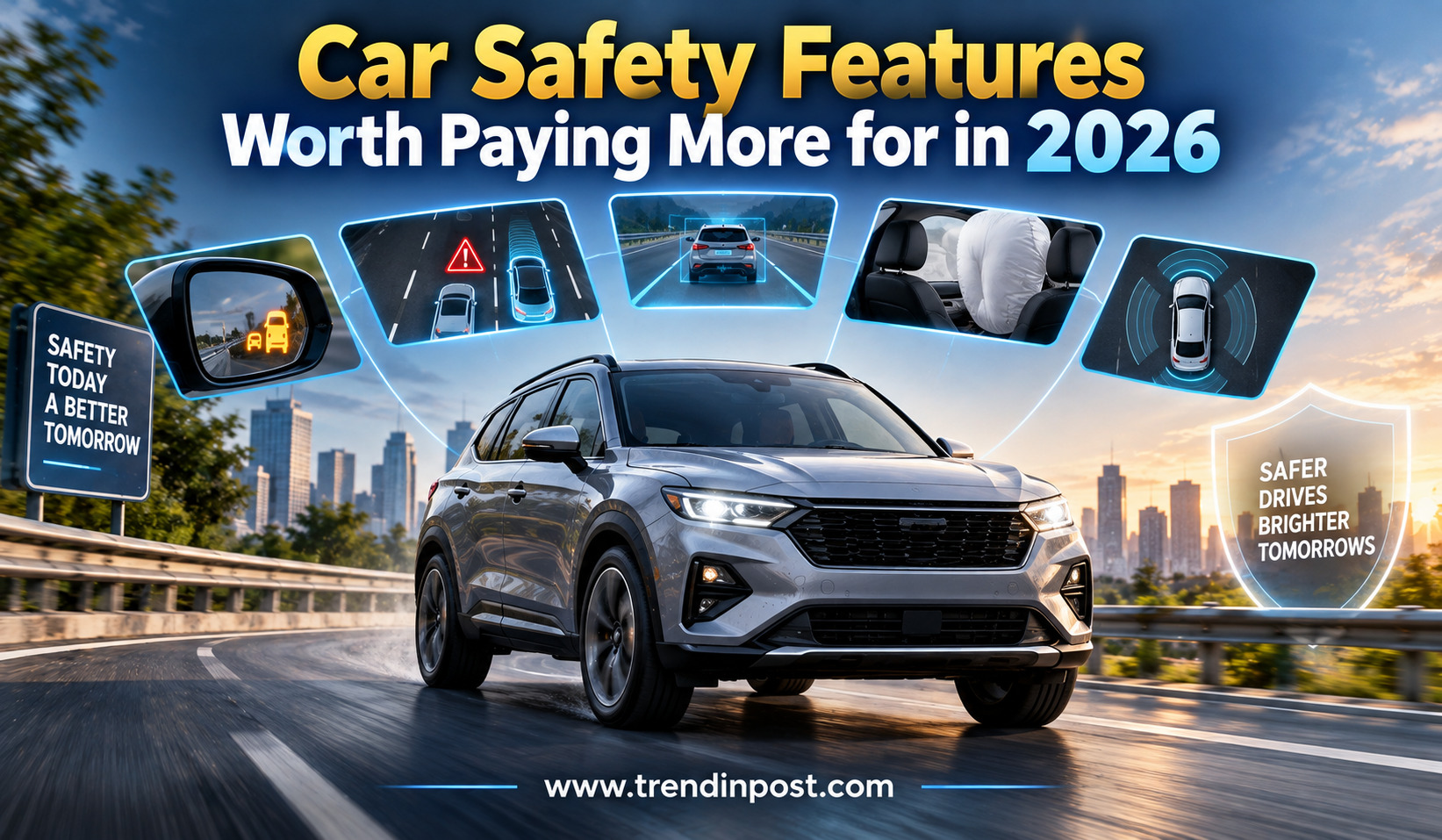
Car Safety Features Worth Paying More for in 2026
Car buyers in 2026 have more safety technology to choose from than ever before. Even mainstream vehicles can now offer features that were once limited to expensive premium models. However, as safety packages become more complicated, buyers face an important question: which features are genuinely worth paying extra for?
Not every electronic feature provides the same level of practical value. Some systems can help prevent or reduce the severity of common crashes, while others mainly add convenience. For buyers working with a fixed budget, understanding the difference can make it easier to choose a vehicle or variant that provides meaningful safety benefits without paying for technology they may rarely use.
Safety should not be judged by the number of features listed in a brochure. The quality of the vehicle’s structure, braking system, tires and driver-assistance technology all matter. In 2026, several active and passive safety features stand out as particularly valuable for everyday driving.
Automatic Emergency Braking Deserves Attention
Automatic Emergency Braking, or AEB, is one of the safety features worth prioritizing when comparing vehicle variants. The system uses cameras, radar or a combination of sensors to monitor the road ahead and detect potential collisions.
If the system determines that a crash may be imminent and the driver has not reacted sufficiently, it can provide a warning and, depending on the vehicle, apply the brakes automatically.
AEB can be particularly useful in situations involving sudden traffic slowdowns, distracted moments or unexpected obstacles. Some advanced systems can also detect pedestrians and cyclists, although performance varies between vehicles.
For buyers deciding whether to spend more on a safety package, AEB is generally more valuable than features that are primarily designed for comfort or entertainment.
Electronic Stability Control Is a High-Priority Feature
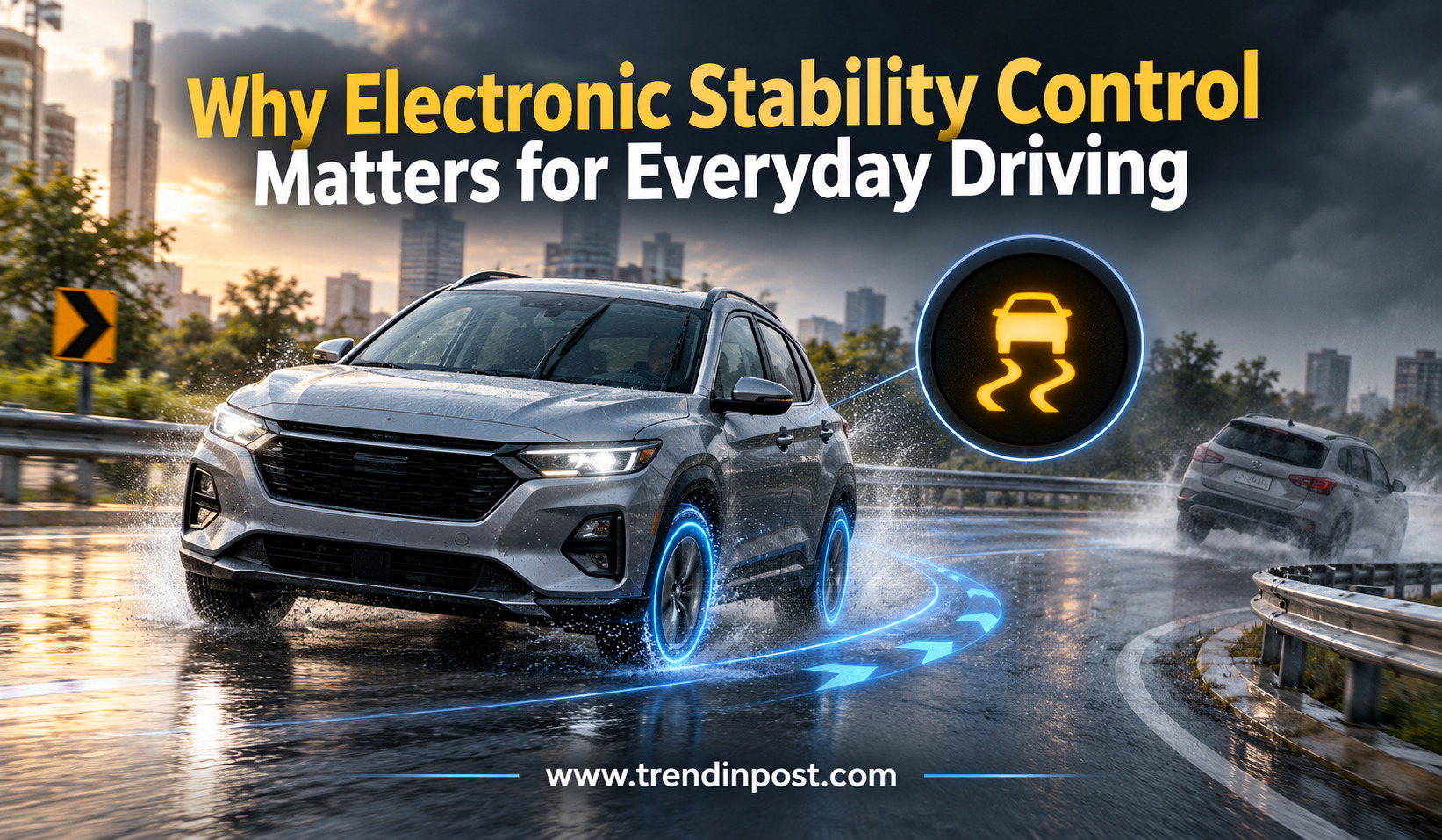
Electronic Stability Control, commonly called ESC, is another technology that deserves serious consideration. It helps the driver maintain directional control when the vehicle begins to skid or move differently from the intended steering path.
The system monitors factors such as wheel speed, steering input and vehicle movement. When instability is detected, it can selectively brake individual wheels and, in some situations, reduce engine power.
ESC can become especially useful during sudden maneuvers or when road surfaces are slippery. Because loss of control can occur unexpectedly, having electronic assistance available can provide an important additional safety layer.
For this reason, buyers should generally prioritize ESC over cosmetic upgrades or convenience features when comparing two otherwise similar variants.
Blind Spot Monitoring Can Be Valuable for Frequent Highway Drivers
Blind Spot Monitoring is particularly useful for people who spend significant time on highways. It uses sensors to monitor areas beside and behind the vehicle that may not be clearly visible through conventional mirrors.
When another vehicle enters a monitored blind spot, the system typically provides a warning through an indicator on the side mirror or instrument panel. More advanced systems may provide a stronger alert if the driver signals toward an occupied lane.
This feature does not replace checking mirrors or looking toward the adjacent lane, but it can provide an additional warning when changing lanes.
For drivers who regularly travel on multi-lane highways, paying extra for Blind Spot Monitoring can make more sense than spending the same amount on purely convenience-oriented equipment.
Adaptive Cruise Control Can Reduce Highway Driving Fatigue
Adaptive Cruise Control, or ACC, combines the convenience of conventional cruise control with the ability to adjust speed according to traffic ahead.
Instead of maintaining one fixed speed, the system can slow the vehicle when traffic gets closer and accelerate again when the road opens up, depending on the system’s capabilities and settings.
For people who regularly drive long distances, this can reduce some of the workload associated with maintaining speed and following gaps. It does not make highway driving autonomous, and drivers still need to monitor traffic and remain ready to intervene.
ACC is therefore a feature worth considering for frequent highway travelers, although its value will be lower for someone whose driving is mostly limited to congested city streets.
Lane Keeping Assistance Can Be Worth the Upgrade
Lane-related technology has become increasingly common in new cars. Lane Departure Warning alerts the driver when the vehicle unintentionally begins moving out of its lane, while Lane Keeping Assist can provide steering assistance to help guide the vehicle back toward the lane.
These systems can be useful when a momentary lapse in attention causes a vehicle to drift. They are particularly relevant during long journeys, when fatigue can gradually affect concentration.
However, buyers should understand that lane assistance is not designed to replace active steering. Road markings, weather and system limitations can affect performance.
When offered as part of a reasonably priced safety package, lane assistance can be a worthwhile upgrade, especially for drivers who frequently undertake long highway trips.
Airbags Remain Essential
Modern active safety technology receives considerable attention, but passive protection remains fundamental. Airbags are designed to help protect occupants during a collision, and vehicles can offer different combinations depending on their variant and market.
A buyer should look beyond simply asking whether a car has airbags. The number, placement and type of airbags can differ between models and variants.
When comparing variants, buyers should check for:
- Front and side airbags
- Curtain airbags
- Protection for occupants in different seating positions
- Availability across the exact variant being considered
Airbags work alongside seat belts and vehicle crash structures. They should therefore be considered part of a complete occupant-protection system rather than a standalone safety solution.
360-Degree Cameras Are Useful, but Not Always a Priority
A 360-degree camera system can provide a bird’s-eye-style view around the vehicle. It can be especially helpful when parking larger vehicles or maneuvering through tight spaces.
Although this technology can prevent low-speed bumps and improve visibility, it does not usually provide the same type of crash-prevention benefit as AEB or ESC.
For buyers with a limited safety budget, active crash-avoidance and stability systems should generally take priority. A 360-degree camera becomes more attractive when the buyer frequently drives a large SUV, parks in tight spaces or wants additional low-speed visibility.
Tire Pressure Monitoring Is a Small Feature With Practical Benefits
Tire Pressure Monitoring Systems may not seem as impressive as advanced driver assistance, but they can provide meaningful everyday value.
Incorrect tire pressure can affect handling, braking, tire wear and fuel efficiency. A monitoring system can alert the driver when pressure falls below an appropriate level.
For long-distance drivers, this warning can be particularly useful because tire-related problems can become more serious at highway speeds.
If a tire-pressure monitoring system is included in a reasonably priced package, it is a feature worth having. However, drivers should still manually check tire condition and pressure regularly.
Advanced Headlights Can Improve Night Driving
Headlight technology has evolved significantly, with some vehicles offering adaptive lighting systems that adjust illumination according to road conditions and surrounding traffic.
Automatic high-beam systems can reduce the need for drivers to repeatedly switch between high and low beams. More sophisticated lighting systems may alter the distribution of light to improve visibility while reducing glare for other road users.
For drivers who frequently travel at night, better lighting can provide genuine practical value. For people who rarely drive after dark, it may be less important than features such as AEB, ESC or blind spot detection.
Which Safety Features Are Worth Paying Extra For?
The answer depends partly on driving habits, but some technologies offer broader safety benefits than others.
| Safety Feature | Main Benefit | Upgrade Priority |
| Automatic Emergency Braking | Helps reduce frontal collision risk | Very High |
| Electronic Stability Control | Helps maintain vehicle control | Very High |
| Airbags | Protect occupants during crashes | Very High |
| Blind Spot Monitoring | Helps during lane changes | High |
| Adaptive Cruise Control | Reduces workload on long drives | High |
| Lane Keeping Assist | Helps with unintended lane drift | High |
| Tire Pressure Monitoring | Warns about low tire pressure | Medium-High |
| 360-Degree Camera | Improves low-speed visibility | Medium |
| Advanced Headlights | Improves night-time visibility | Medium |
This ranking should not be interpreted as a universal rule. Buyers should consider how they drive and what is included as standard equipment on the vehicle.
Safety Ratings Still Matter
A long list of electronic features should not distract buyers from fundamental vehicle safety. Independent crash-test ratings can provide useful information about how a vehicle performs in controlled crash scenarios.
The exact rating system depends on the market, and buyers should check ratings relevant to the vehicle they are purchasing. It is also important to confirm that the tested specification matches the version being considered.
A car with numerous driver-assistance features is not automatically safer overall if its structural performance or occupant protection is weaker.
Features Drivers Should Not Pay For Blindly
Manufacturers increasingly bundle safety technology with premium trims. This can make buyers pay significantly more for features they may not need.
For example, a buyer may be interested in blind spot monitoring but have to move several trim levels higher to obtain it. The upgrade may also include larger wheels, premium upholstery, a larger screen and cosmetic changes.
In such cases, buyers should calculate the complete price difference rather than assuming every included feature represents equal value.
It can also be useful to compare competing models. Another vehicle may offer similar safety equipment at a lower price or include important features as standard.
The Importance of Driver Assistance in 2026
The automotive safety market is increasingly focused on preventing accidents rather than simply reducing injuries after a collision. Cameras, radar and software are allowing vehicles to monitor their surroundings more effectively.
However, these technologies remain assistance systems. Drivers must continue to observe traffic, understand system limitations and remain ready to take control.
This distinction is particularly important because marketing terms can sometimes make advanced systems sound more capable than they actually are. Buyers should read the manufacturer’s documentation and understand what each feature can and cannot do.
Final Thoughts
In 2026, paying more for a car’s safety equipment can be a worthwhile investment, but buyers should focus on features that provide meaningful protection rather than simply choosing the most expensive package.
Automatic Emergency Braking, Electronic Stability Control, airbags and other core safety technologies should be high on the priority list. Blind Spot Monitoring, Adaptive Cruise Control and Lane Keeping Assistance can also provide significant value, particularly for drivers who spend considerable time on highways.
Convenience features such as 360-degree cameras and advanced lighting can be useful, but their importance depends more heavily on individual driving habits.
The best approach is to compare the complete safety package, crash-test performance and exact vehicle variant before making a purchase. In the end, the most valuable safety feature is one that genuinely helps protect occupants or prevent a crash when an unexpected situation occurs.
FAQs
1. Which car safety feature is most worth paying extra for?
Automatic Emergency Braking, Electronic Stability Control and strong occupant protection should generally be among the highest priorities. The best choice depends on the vehicle and the driver’s needs.
2. Is Blind Spot Monitoring worth the extra cost?
It can be, especially for drivers who frequently use highways or multi-lane roads. It provides an additional warning when another vehicle enters an area that may be difficult to see.
3. Should I choose a higher variant just to get more airbags?
Occupant protection is an important consideration, so buyers should carefully compare the number and type of airbags across variants. If a significantly safer configuration is available for a reasonable price difference, it can be worth considering.
4. Is Adaptive Cruise Control a safety feature or a convenience feature?
It can serve both purposes. By helping maintain speed and following distance, ACC can reduce driver workload, particularly during long highway journeys. However, it does not remove the driver’s responsibility to monitor traffic.
5. Are 360-degree cameras essential for safety?
No. They can improve visibility during parking and tight maneuvers, but features such as ESC and Automatic Emergency Braking generally have greater relevance to crash prevention.
Related Post
What Makes a Car Safer for Long Highway Journeys?
Long highway journeys can be comfortable and enjoyable, but they also place different demands on…