
Ola S1 Pro vs Bajaj Chetak: Range, Price and Running Costs Compared
>> Automobile>> Ola S1 Pro vs Bajaj Chetak: Range, Price and Running Costs Compared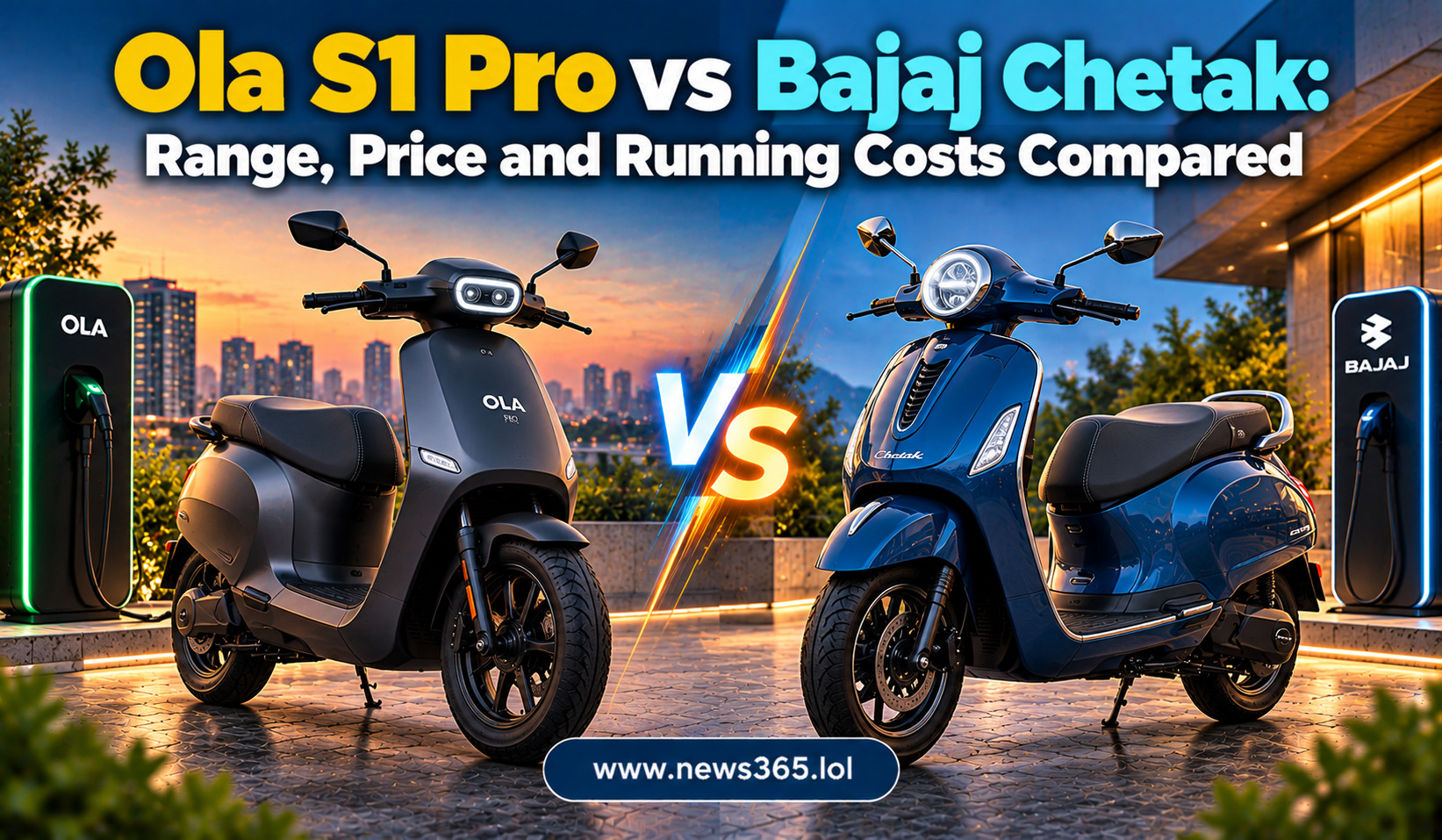
Ola S1 Pro vs Bajaj Chetak: Range, Price and Running Costs Compared
Electric scooters are becoming an increasingly practical alternative to petrol-powered two-wheelers in India. Lower daily running expenses, convenient home charging and fewer routine maintenance requirements make them attractive to people who regularly commute to work, college or nearby markets. Among the popular options, the Ola S1 Pro and Bajaj Chetak offer two different approaches to electric mobility.
The Ola S1 Pro focuses on performance, technology and longer claimed riding range. The Bajaj Chetak, meanwhile, combines its familiar design with multiple battery options and a relatively accessible starting price. But which scooter offers better value when you consider its purchase price, range, charging requirements and everyday running costs?
Let’s compare the two electric scooters to understand which one makes more sense for Indian buyers.
Ola S1 Pro vs Bajaj Chetak: Price in India
Price is often the first consideration when choosing an electric scooter. Both manufacturers offer different configurations, so buyers should compare the battery capacity and features of their preferred variants rather than looking only at the starting price.
The Ola S1 Pro Gen 3 lineup includes 3kWh and 4kWh configurations. The 3kWh version is listed at an introductory ex-showroom price of ₹1,30,999, while the 4kWh version is listed at ₹1,40,999. These prices are subject to change and should be confirmed before booking.
Bajaj offers a wider range of Chetak variants. The C2501 starts at approximately ₹96,400, followed by the 3001 at around ₹99,500. The 3503 is priced at approximately ₹1.09 lakh, the 3502 at ₹1.22 lakh and the top-end 3501 at ₹1.34 lakh (ex-showroom).
This makes the Chetak an attractive option for buyers who want to enter the electric scooter market with a smaller initial investment. The Ola S1 Pro costs more, but its higher-performance specifications and larger battery options appeal to people who prioritise speed and range.
Remember that on-road prices can differ depending on the city, insurance, registration charges and applicable state incentives.
Battery Capacity and Claimed Range
Battery capacity and riding range are important when choosing an electric scooter for regular commuting. A larger battery can reduce charging frequency, although it can also increase the purchase price.
The Ola S1 Pro Gen 3 comes with two battery configurations. Its 3kWh version offers a claimed IDC range of 176km, while the 4kWh version claims up to 242km. These figures make the S1 Pro particularly appealing to riders who travel longer distances or prefer fewer charging sessions.
The Bajaj Chetak offers more battery choices across its current lineup. The C2501 features a 2.5kWh battery with a claimed range of 113km. The 3001 comes with a 3kWh battery and claims 127km. The larger 3.5kWh variants offer claimed ranges of approximately 151–153km, depending on the model.
On paper, the Ola S1 Pro has a clear advantage in claimed range. Even its 3kWh version offers a higher IDC figure than the larger-battery Chetak variants.
However, IDC range is measured under controlled testing conditions. Actual distance per charge can be lower because of riding speed, passenger weight, traffic, road conditions, temperature and selected riding mode. Buyers should consider their daily travel requirements rather than assuming they will achieve the maximum advertised range.
Motor Performance and Top Speed
Performance is another area where the two scooters have different strengths.
The Ola S1 Pro uses a mid-drive IPM motor. The 3kWh version produces up to 11kW of peak power, while the 4kWh version offers up to 13kW. Their claimed top speeds are 117km/h and 125km/h, respectively. The scooter also offers multiple riding modes, including Eco, Normal, Sports and Hyper.
The Bajaj Chetak is more focused on urban commuting. Its C2501 uses a hub-mounted motor with a peak output of 2.2kW and a claimed top speed of 55km/h. The 3001 offers a higher top speed of approximately 62km/h, while the larger 3500-series models reach up to 73km/h, depending on the variant.
The Ola S1 Pro is clearly the better choice for buyers who want stronger acceleration and higher-speed performance. The Chetak is more suitable for riders who primarily travel through city streets and do not need a high-performance electric scooter.
Charging Time and Convenience
Home charging is one of the biggest advantages of electric scooter ownership. Both brands provide charging solutions, but charging times differ according to battery capacity and the charger supplied with the selected variant.
According to Ola’s published specifications, the S1 Pro 4kWh takes approximately four hours and 50 minutes to charge from 0 to 80%. The 5.2kWh S1 Pro+ configuration has a different charging specification, so buyers should not apply its charging time to the standard S1 Pro.
Bajaj Chetak charging times also vary by battery configuration. The C2501 takes approximately three hours and 45 minutes for a full charge, while the 3.5kWh 3501 is listed at around three hours for a full charge. Other variants have different charging requirements.
These figures are manufacturer or published specification estimates and can vary with charger output, battery temperature and charging conditions.
For people who charge overnight, the difference may not be especially important. However, those who need frequent daytime charging should compare the charging time of the exact variant they intend to purchase.
Running Costs: Ola S1 Pro vs Bajaj Chetak
One of the strongest reasons to switch to an electric scooter is the potential reduction in daily running expenses. Unlike petrol scooters, electric models do not require regular fuel purchases.
To understand the difference, consider an illustrative calculation using an electricity tariff of ₹8 per unit and an estimated energy consumption of 40Wh per kilometre, including approximately 10% charging losses.
At this consumption level, an electric scooter costs approximately ₹0.35 per kilometre to operate. Actual consumption will vary according to the scooter, riding conditions and charging efficiency.
For comparison, assume a petrol scooter delivers 45km per litre and petrol costs ₹105 per litre. Its estimated fuel expense would be approximately ₹2.33 per kilometre.
If you travel 30km daily, your monthly distance would be around 900km.
Under these assumptions, the estimated monthly electricity expense for an electric scooter would be approximately ₹317. A petrol scooter would require around ₹2,100 worth of fuel for the same distance.
This represents a potential monthly saving of approximately ₹1,783, excluding purchase price, insurance, servicing, tyre replacement and other ownership expenses.
The Ola S1 Pro and Bajaj Chetak may have different real-world energy consumption figures, so their exact charging costs will not necessarily be identical. Nevertheless, both can offer substantially lower energy costs than a comparable petrol scooter when charged at home.
Features, Storage and Everyday Practicality
The Ola S1 Pro offers a technology-focused riding experience. Its equipment includes a 7-inch touchscreen instrument cluster, digital key functionality, LED lighting and connected features through the MoveOS ecosystem. Depending on the software version and variant, riders can access navigation, alerts, ride information and other connected functions.
It also provides approximately 34 litres of under-seat storage, making it useful for carrying everyday belongings.
The Bajaj Chetak takes a different approach, combining its familiar design with a metal body structure and practical features. Depending on the variant, buyers can get a digital instrument console, Bluetooth connectivity, navigation assistance, ride information and additional connected functions. The C2501 offers approximately 25 litres of under-seat storage, while larger Chetak models provide more storage capacity.
The Ola S1 Pro may appeal to technology-focused buyers who enjoy a feature-rich touchscreen experience. The Chetak is worth considering for people who prefer its traditional scooter styling and solid-feeling metal body construction.
Feature availability is variant-specific, so checking the equipment list before booking is important.
Which Electric Scooter Should You Buy?
The Ola S1 Pro is a strong choice for riders who want performance, a higher claimed range and a technology-rich experience. Its 3kWh and 4kWh configurations offer substantially different range and power options, making it possible to select a version based on commuting requirements and budget.
The Bajaj Chetak is a practical alternative for buyers who prioritise a lower entry price, everyday city commuting and multiple battery configurations. Its C2501 is particularly relevant for people who have shorter daily travel requirements, while the larger 3500-series models provide more range and performance.
If maximum claimed range and acceleration matter most, the Ola S1 Pro has the advantage. If affordability and relaxed urban commuting are your priorities, the Bajaj Chetak deserves serious consideration.
Final Verdict
Both scooters can help reduce daily transportation expenses, but they target slightly different buyers. The Ola S1 Pro is better suited to people who want stronger performance, longer claimed range and advanced digital features. The Bajaj Chetak makes sense for buyers looking for a more accessible electric scooter with practical city-focused performance.
Before making a final decision, compare the on-road prices of the exact variants, check the warranty conditions, take a test ride and understand the service support available in your area. The best electric scooter is ultimately the one that matches your daily distance, charging access and long-term ownership budget.
Related Post

How Luxury EVs Are Reshaping Premium Car Choices in Europe
Luxury cars in Europe are entering a new phase as electric vehicles move from being…