Switzerland Visa Guide for Indians
>> Travels & Tourism>> Switzerland Visa Guide for Indians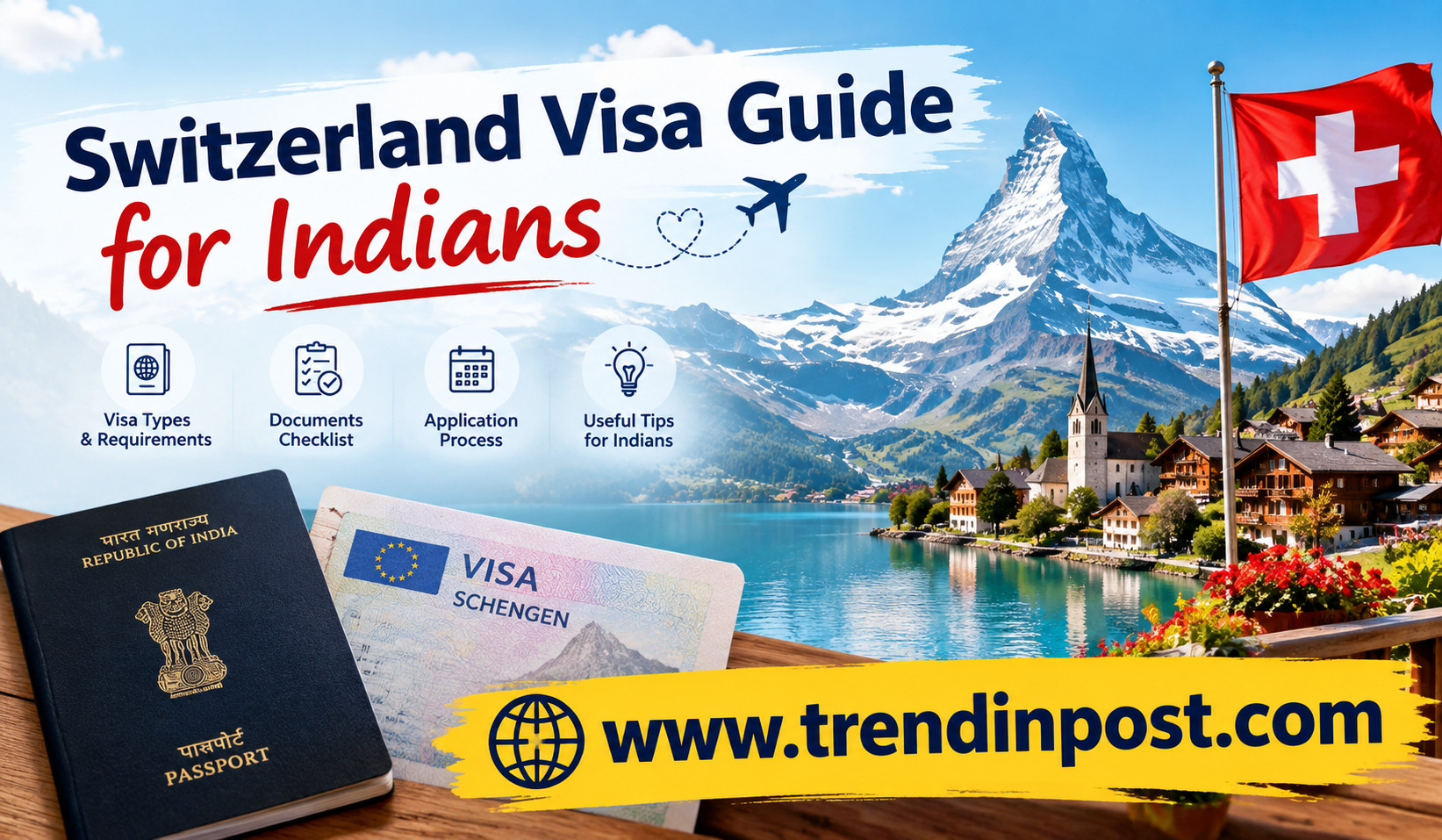
Switzerland Visa Guide for Indians
Switzerland is the kind of destination that can make your travel plans feel straight out of a postcard. Snow-covered Alps, peaceful lakes, charming villages, scenic train journeys and cities like Zurich, Geneva and Lucerne attract thousands of Indian travellers every year. But before you start planning your Swiss itinerary, there is one important thing you need to sort out: your visa.
If you are travelling from India for a holiday, you will generally need a Schengen visa for Switzerland for a short stay. Switzerland is part of the Schengen Area, and a short-stay visa normally allows you to stay for up to 90 days within a 180-day period.
This Switzerland Visa Guide walks you through the process in simple language, from choosing the right visa and preparing your documents to submitting your application and avoiding common mistakes.
Do Indians Need a Visa for Switzerland?
Yes. If you are an Indian passport holder travelling to Switzerland for tourism, you generally need to obtain a Schengen visa before your journey.
For a normal holiday, you will usually apply for a Schengen Type C visa, which covers short stays of up to 90 days within a 180-day period. This can be used for purposes such as tourism, visiting family or friends, attending conferences and certain other short-term activities.
The important thing to remember is that a Switzerland visa is not necessarily only for Switzerland. A Schengen visa can allow you to travel through other Schengen countries as well, provided your travel plans follow the applicable Schengen rules.
However, you should apply through the country that is your main destination according to your actual itinerary. Don’t simply choose Switzerland because you think its visa will be easier to obtain.
Which Switzerland Visa Should You Apply For?
The visa you need depends on why you are travelling.
For a holiday, sightseeing trip or honeymoon, the tourist Schengen visa is generally the relevant option.
You may need a different category if you are:
- Visiting family or friends
- Travelling for business
- Attending an event or conference
- Going to Switzerland for medical treatment
- Studying for a short period
- Planning to stay for more than 90 days
If you are planning to live, study or work in Switzerland for more than 90 days, you generally need to look at the appropriate national visa, rather than the short-stay Schengen visa.
Where Should You Apply From India?
For applicants residing in India, Switzerland visa applications are handled through VFS Global on behalf of the Embassy of Switzerland in New Delhi. The Swiss Embassy states that applications from across India are processed by the Embassy in New Delhi.
Application centres are available in several Indian cities, including Mumbai, Pune, Delhi, Ahmedabad, Bengaluru, Chennai, Hyderabad, Kolkata and others.
This makes the process more convenient because you don’t necessarily have to travel to Delhi just to submit your application.
Before booking an appointment, check the current VFS instructions and the centre applicable to your place of residence.
Documents You Usually Need
Preparing your documents carefully is one of the most important parts of your application. A missing or inconsistent document can create unnecessary delays or questions.
For a tourist application, you should generally prepare documents such as:
1. Valid Passport
Your passport should meet the Schengen requirements, including sufficient validity beyond your planned return date and blank pages for visa processing.
Make sure your passport is in good condition and that your personal details are consistent across all your documents.
2. Completed Visa Application Form
You need to complete the visa application form accurately and sign it as required.
Don’t rush through this part. Small differences between your application form, flight bookings, hotel reservations and other documents can raise questions.
3. Recent Photograph
You will need a recent passport-style photograph meeting the required specifications.
Follow the official photo requirements rather than assuming that any standard passport photograph will be accepted.
4. Flight Reservation
You may need to provide your proposed travel itinerary and flight reservation.
Your dates should make sense when compared with your hotel bookings, leave approval and travel insurance.
5. Hotel or Accommodation Proof
Provide evidence of where you plan to stay during your trip.
If you’re travelling between several Swiss cities or other Schengen countries, your accommodation documents should match your itinerary.
6. Travel Insurance
Travel medical insurance is an important part of a Schengen visa application. You should purchase insurance that meets the applicable Schengen requirements and covers your complete travel period.
The Embassy of Switzerland in India also publishes information on approved Indian travel insurance companies.
7. Financial Documents
You need to demonstrate that you can financially support yourself during the trip.
Depending on your circumstances, this may include recent bank statements, income documents, tax-related documents and employment or business evidence. The exact requirements can differ according to your situation.
The goal isn’t simply to show a large bank balance. Your financial documents should present a believable picture of your regular income, savings and planned travel expenses.
8. Employment or Occupation Proof
If you’re employed, documents such as an employment letter, leave approval or salary-related records may help establish your professional situation.
If you’re self-employed, you may need appropriate business and financial documents.
Students, retirees and unemployed applicants can have different documentation requirements.
How Much Does a Switzerland Visa Cost?
Visa fees can change, so you should always check the latest official fee before submitting your application.
For reference, the Swiss/VFS visitor checklist currently lists a Schengen visa fee of EUR 90 for adults, EUR 45 for children aged 6–12, while children under 6 are listed as free of charge. VFS service charges may be additional.
VFS Global has also stated that its Switzerland visa service fee in India was revised to INR 3,100 effective 27 April 2026, reflecting exchange-rate changes.
Because fees can change, check the official VFS page immediately before paying.
How to Apply for a Switzerland Visa from India
The application process becomes easier when you follow it step by step.
Step 1: Decide your visa category.
For a normal holiday, this is generally the short-stay tourist Schengen visa.
Step 2: Prepare your documents.
Create a checklist based on your personal situation and make sure the information is consistent throughout.
Step 3: Complete the application form.
Enter your information carefully and review everything before submission.
Step 4: Book your appointment.
Submit your application through the appropriate VFS Global centre.
Step 5: Attend your appointment.
You may need to provide fingerprints and a facial image as part of the biometric process. Applicants whose fingerprints were collected within the previous 59 months may, under applicable conditions, not need to provide them again.
Step 6: Submit your application and documents.
The application is forwarded for processing.
Step 7: Track your application.
Use the available tracking facility to monitor the status of your application.
How Long Does Processing Take?
Processing times can vary depending on the application and circumstances.
The Embassy of Switzerland in India currently states that normal processing at the Embassy is generally 10–15 working days after submission at a VFS centre, while another Swiss Embassy application page gives a current estimate of 7–10 calendar days after submission.
Because processing can take longer in individual cases, especially if additional checks or documents are required, you shouldn’t leave your application until the last minute.
The Swiss authorities recommend starting the process early and state that applications should not be submitted more than six months before the intended entry date.
Common Mistakes You Should Avoid
A good application is not only about having many documents. It is about presenting a clear and consistent travel story.
Avoid these common mistakes:
- Giving incorrect information on the application form
- Providing fake or unverifiable documents
- Showing an itinerary that doesn’t match your hotel bookings
- Forgetting travel insurance
- Submitting unclear financial documents
- Booking non-refundable travel arrangements too early
- Applying through the wrong Schengen country
- Waiting until the last few days to apply
- Ignoring requests for additional information
One particularly important point is your travel itinerary. If you say you’ll spend eight days in Switzerland but your hotel bookings show most of your trip elsewhere, your application may require additional explanation.
Tips to Make Your Application Stronger
Before submitting your application, take some time to review everything as if you were checking someone else’s application.
Your itinerary should be realistic. If you are visiting Zurich, Lucerne, Interlaken and Zermatt in a short trip, make sure your transport and accommodation plans actually make sense.
Your finances should also match your travel plans. A luxury itinerary supported by very limited financial evidence can create questions. At the same time, you don’t need to exaggerate your finances.
Most importantly, be honest. A genuine, well-organised application is far better than trying to make your profile look stronger with questionable documents.
What Happens After You Get the Visa?
Getting your visa is exciting, but remember that a visa does not automatically guarantee entry.
At the border, you may still be asked to provide relevant travel documents and demonstrate that you meet the conditions of entry.
For short stays, Schengen rules generally limit your stay to 90 days within a 180-day period.
Switzerland is also participating in Europe’s Entry/Exit System (EES), which records information about eligible non-EU travellers entering and leaving participating European countries. The Swiss authorities state that EES has been fully operational since 10 April 2026.
Final Thoughts
Applying for a Swiss visa from India may seem complicated at first, but it becomes much more manageable when you break the process into simple steps. Start by identifying the correct visa category, prepare your documents carefully, make sure your itinerary is genuine and consistent, and apply well before your planned trip.
The biggest takeaway from this Switzerland Visa Guide is simple: don’t treat your visa application as a formality. Give your documents the same attention you would give your flight tickets and holiday plans.
Once the paperwork is sorted, you can focus on the enjoyable part—planning your Swiss adventure, from riding scenic trains through the Alps to exploring charming towns and enjoying views that make Switzerland one of Europe’s most memorable destinations.
Related Post

Dubai 5-Day Itinerary: Places to Visit and Things to Do
Planning a Dubai trip can feel a little overwhelming at first. The city is huge,…